The library
Look things up: plants by their task in the system, the trees of Sardinia, the people who paved the way, and every article by theme.
168 articles
Plants by their task
Nitrogen fixers and helpers
They feed the soil, give shade and make room for the plants that come after them.
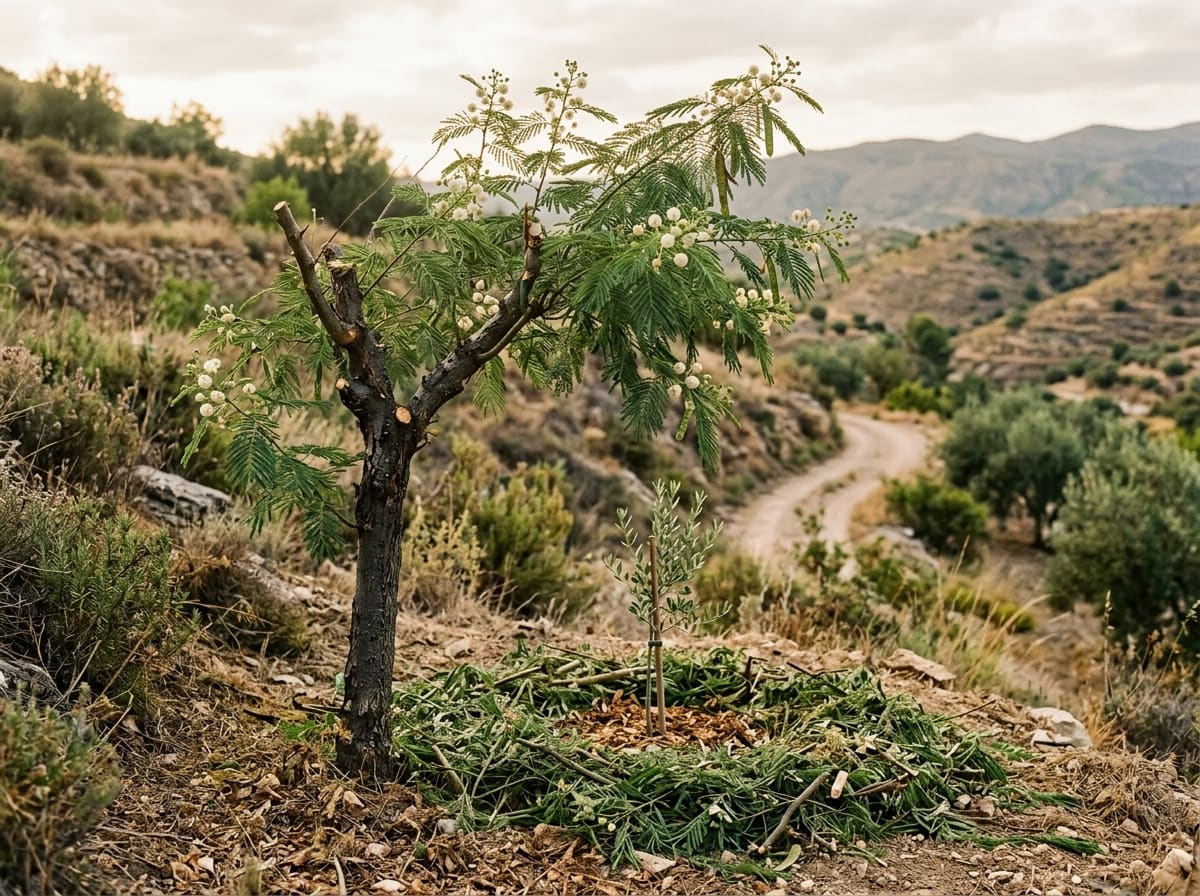
LeucaenaA fast-growing legume tree from Mexico, one of the strongest nitrogen fixers and fodder trees of the tropics, and a notorious invasive species in many places.
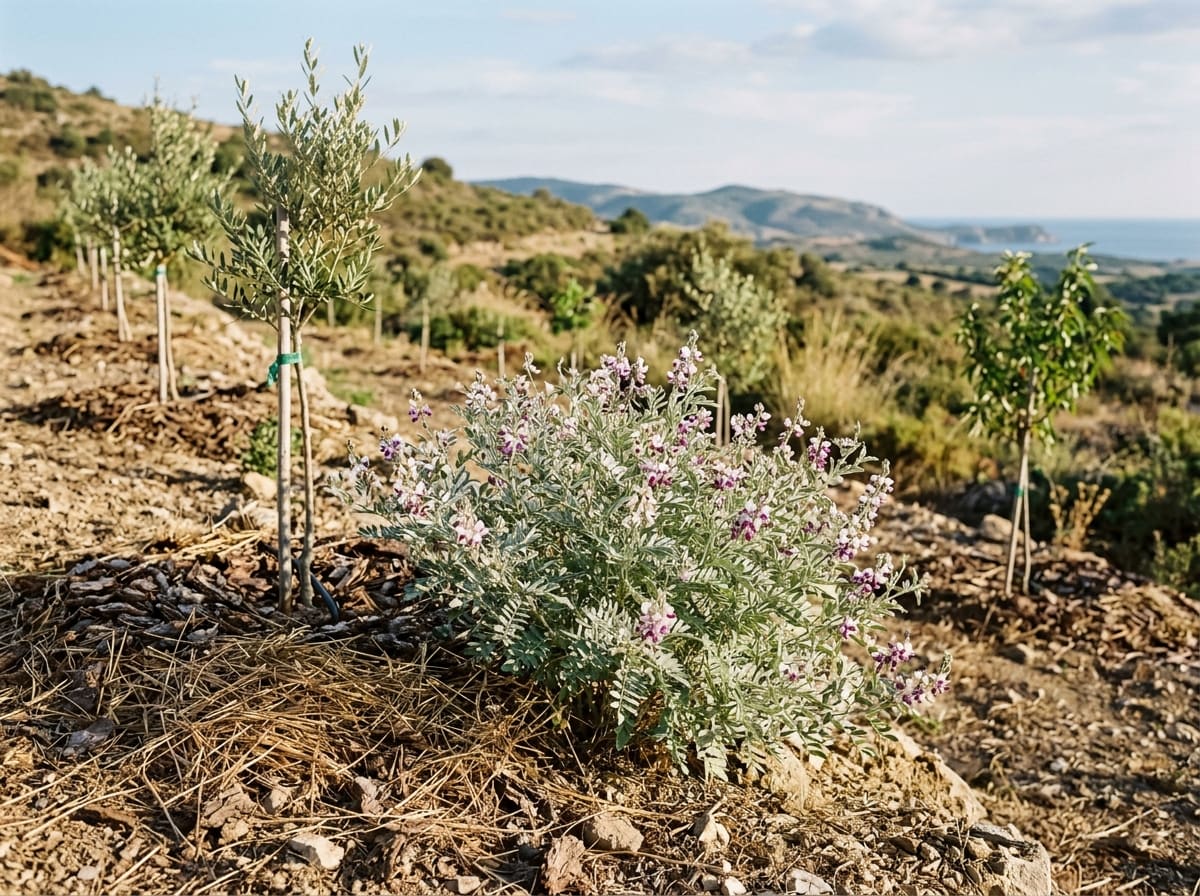
TephrosiaA fast-growing leguminous shrub that fixes nitrogen and yields soft, nitrogen-rich prunings; its leaves contain fish-poisoning rotenoids.
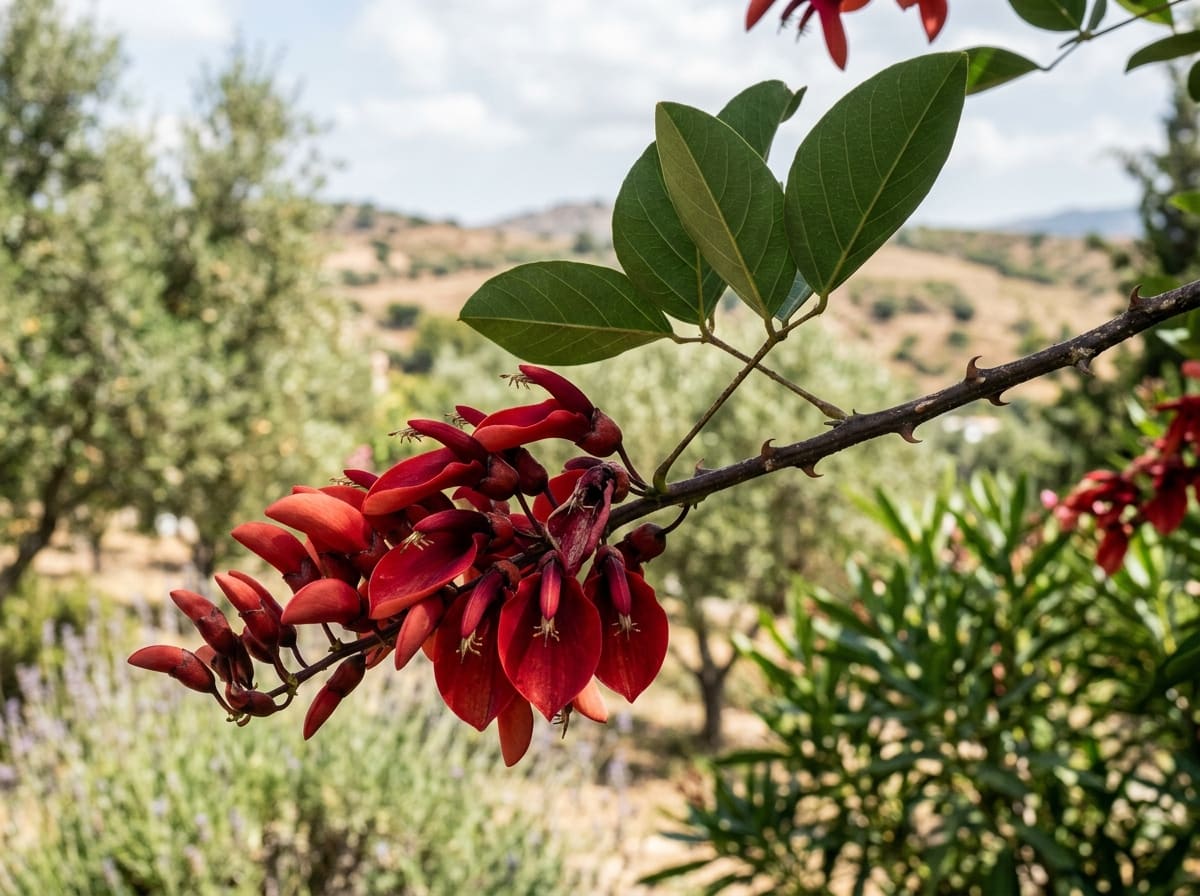
Coral TreeA deciduous legume tree from the river landscapes of southern South America, with red flowers and nitrogen-fixing root nodules; it tolerates hard pruning.
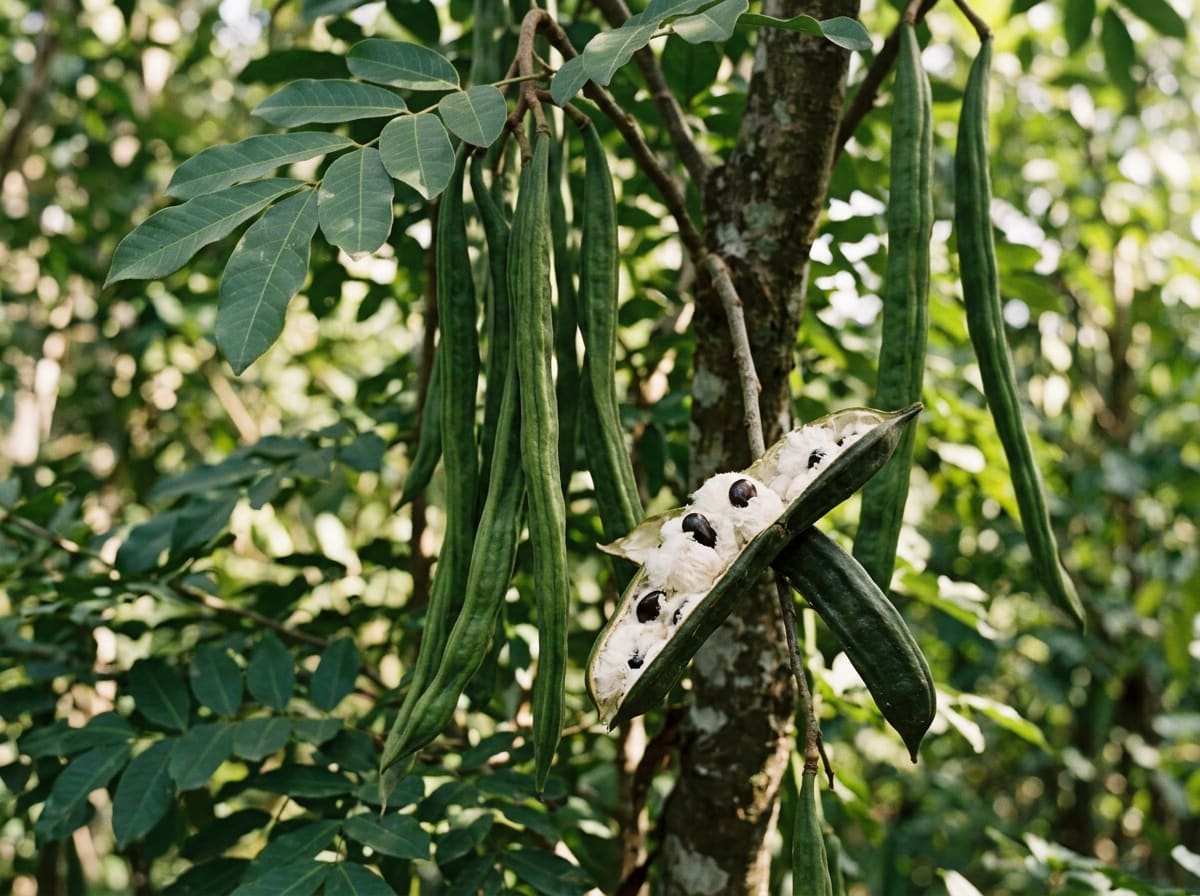
Inga (Ice-Cream Bean and Pacay)Tropical legume trees with long pods of sweet, cottony pulp; they fix nitrogen, resprout after pruning and leave a slowly decaying, soil-protecting litter.
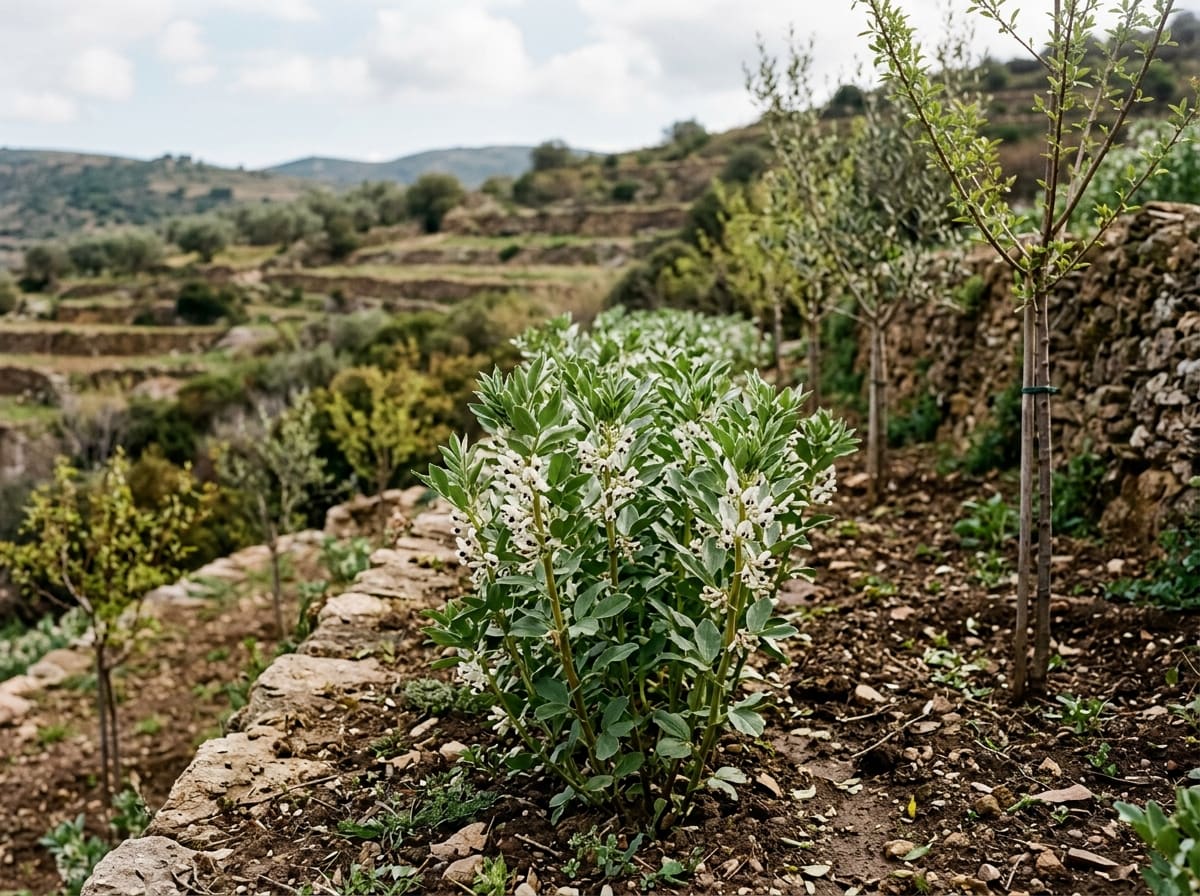
Fava BeanOne of the oldest crops of the Mediterranean and Near East: a winter-grown legume that draws most of its nitrogen from the air and leaves soil richer.
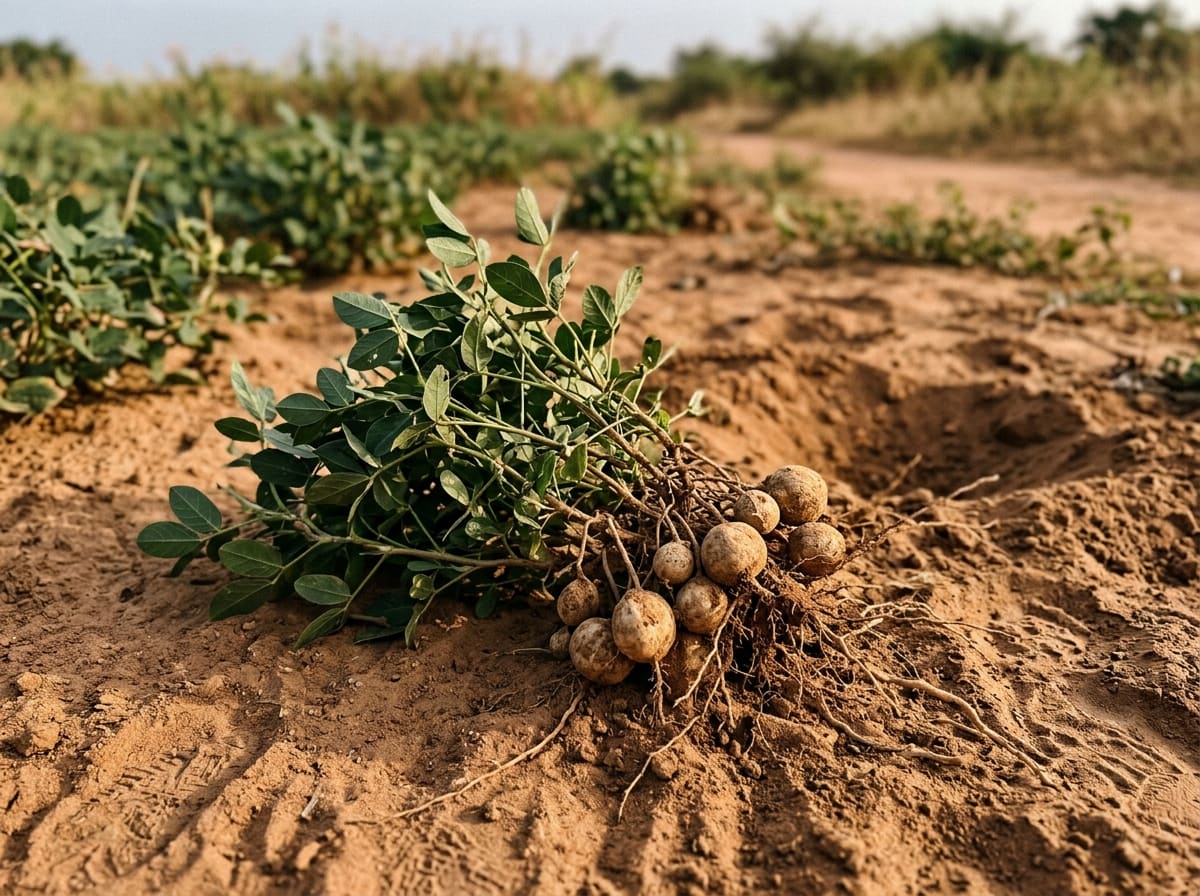
Bambara GroundnutAn African legume whose pods ripen underground like peanuts; drought-tolerant, nitrogen-fixing and grown for its hard, protein-rich seeds.
Fruit trees for the Mediterranean
Fruit that copes with long dry summers once it is established.
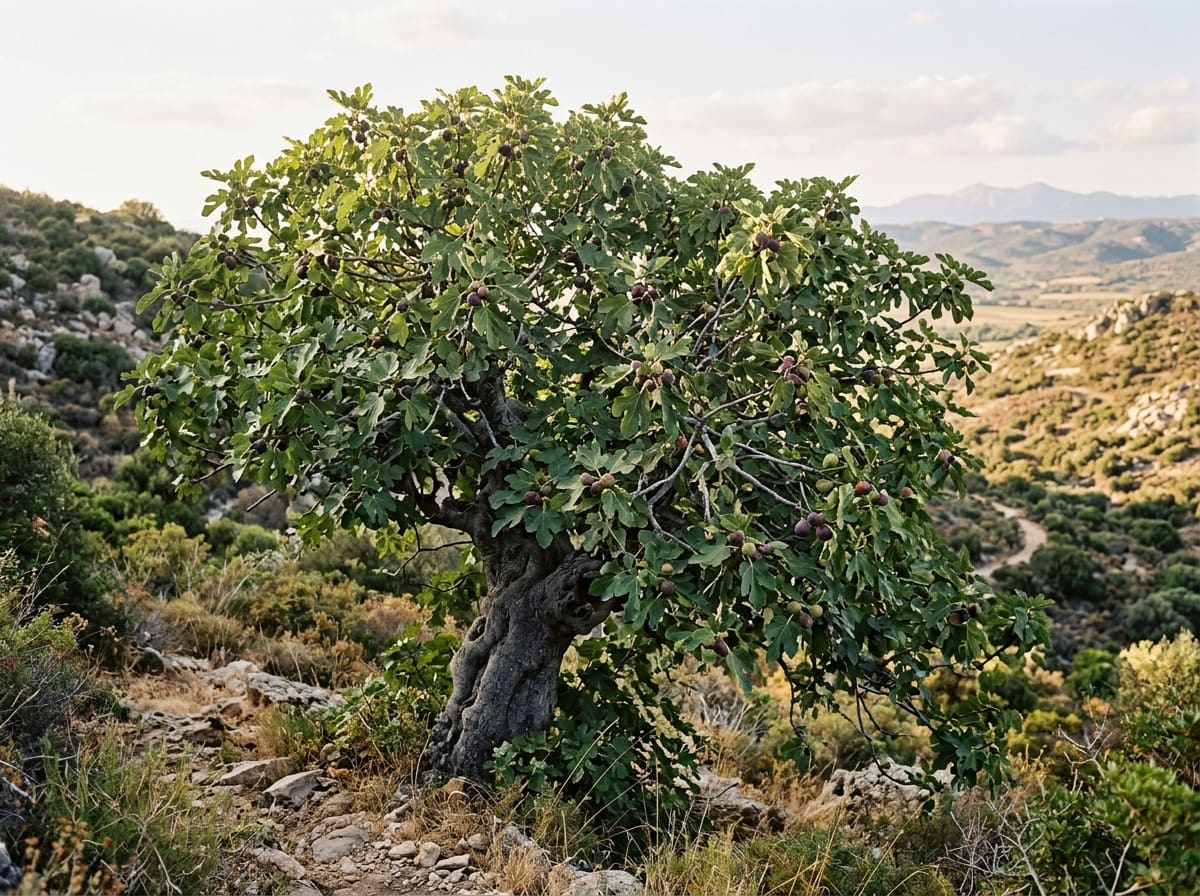
FigA deciduous fruit tree of the mulberry family and one of the oldest cultivated plants; it copes with dry summers and light frost.
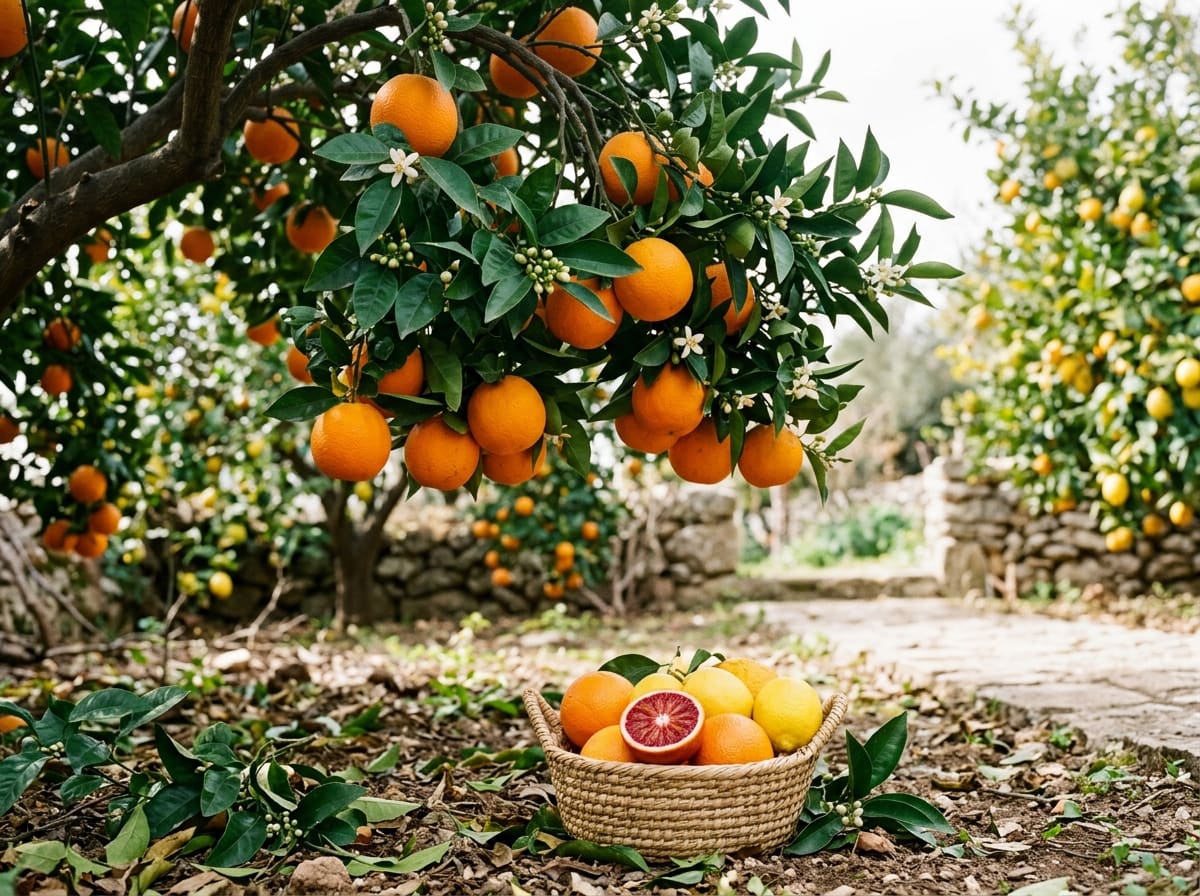
CitrusEvergreen fruit trees of the rue family. Orange, lemon and grapefruit are hybrids of a few South-east Asian wild ancestors; the finger lime is Australian.
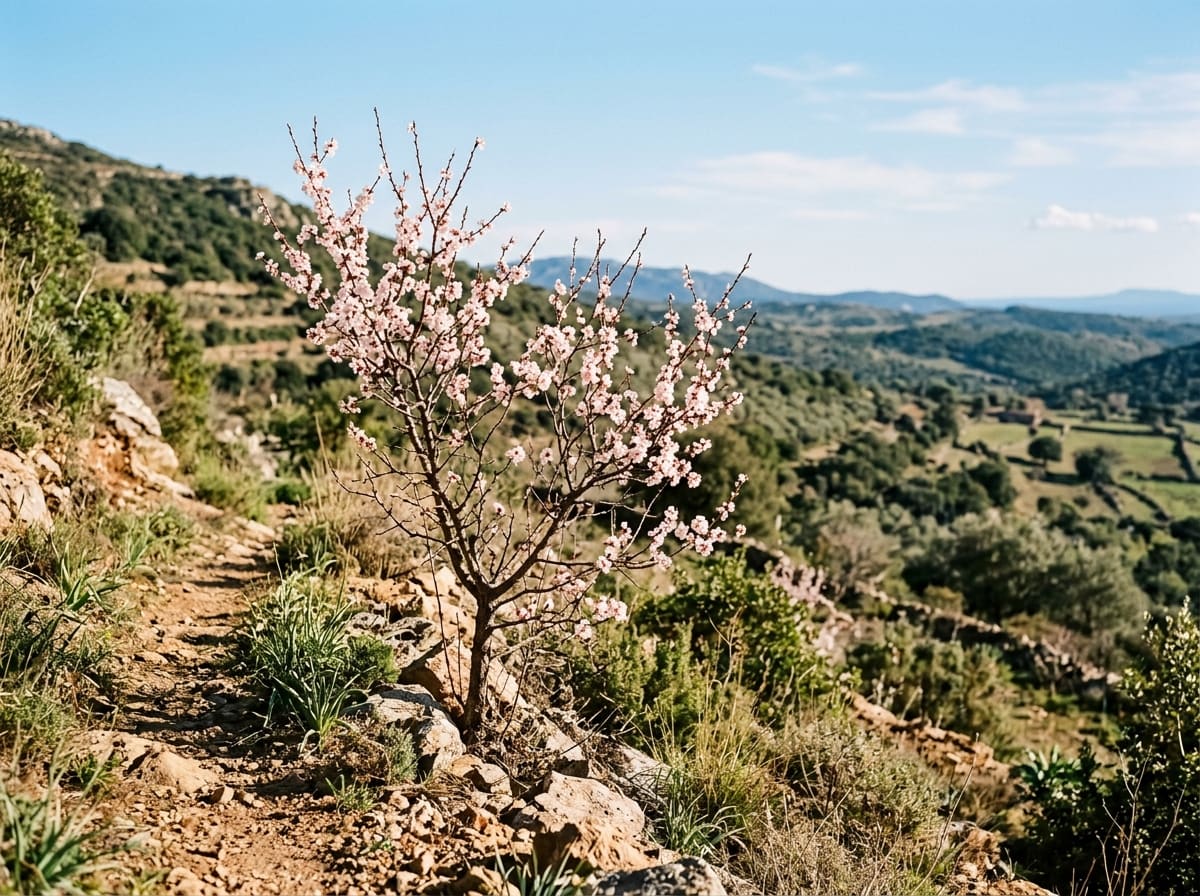
ApricotA deciduous fruit tree of the rose family from Central Asia; it flowers very early, so late frost and too little winter chill are its two risks.
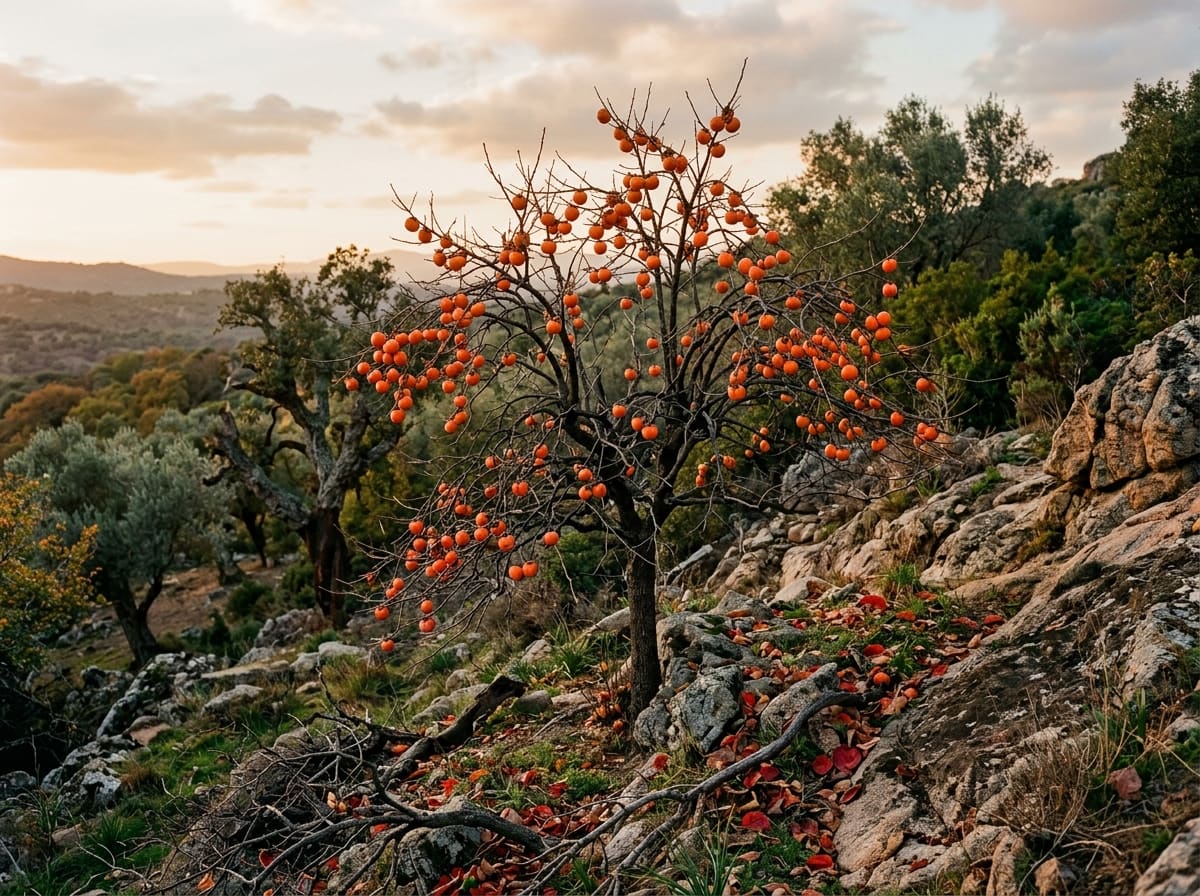
PersimmonA deciduous fruit tree from East Asia whose orange fruit hangs on bare branches into winter; astringent kinds become sweet only when soft or treated.
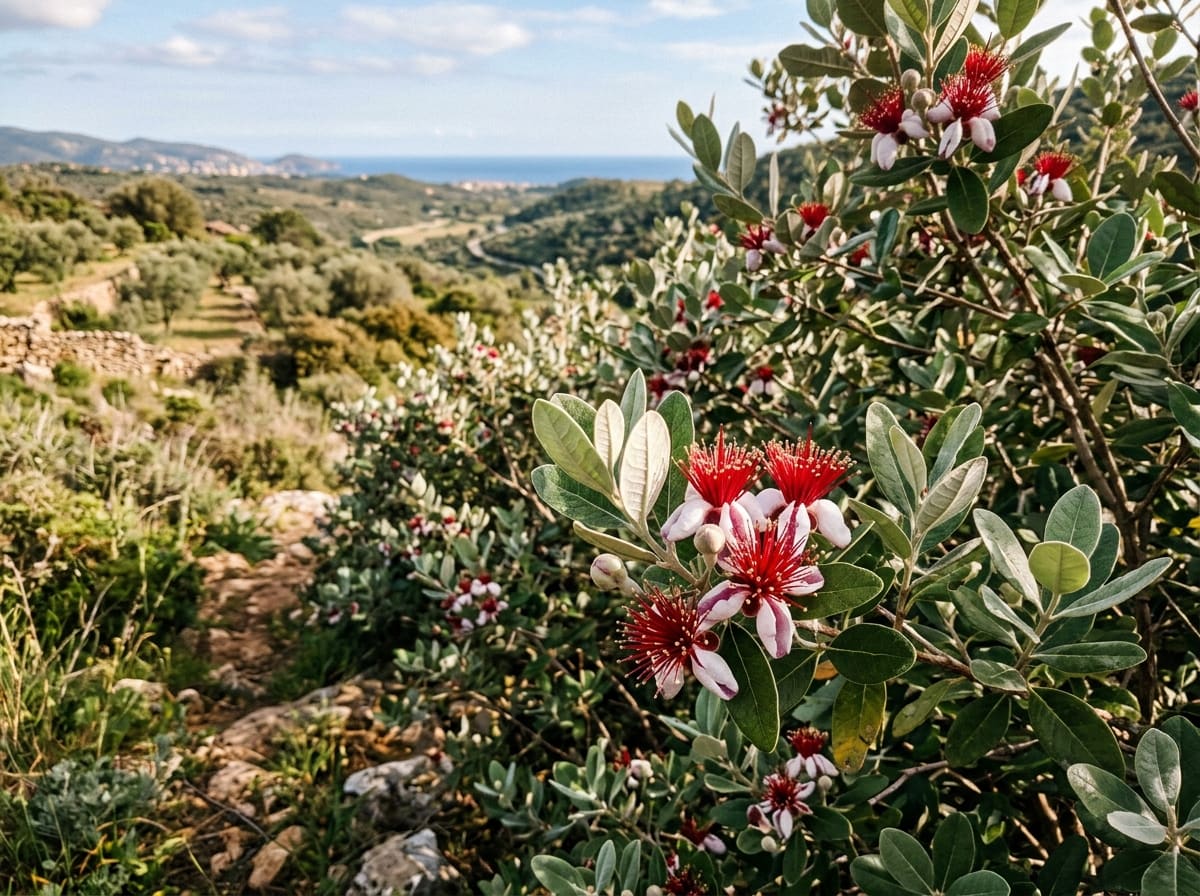
FeijoaAn evergreen shrub of the myrtle family from southern Brazil and Uruguay; fairly frost-hardy, with edible petals and aromatic green fruit in autumn.
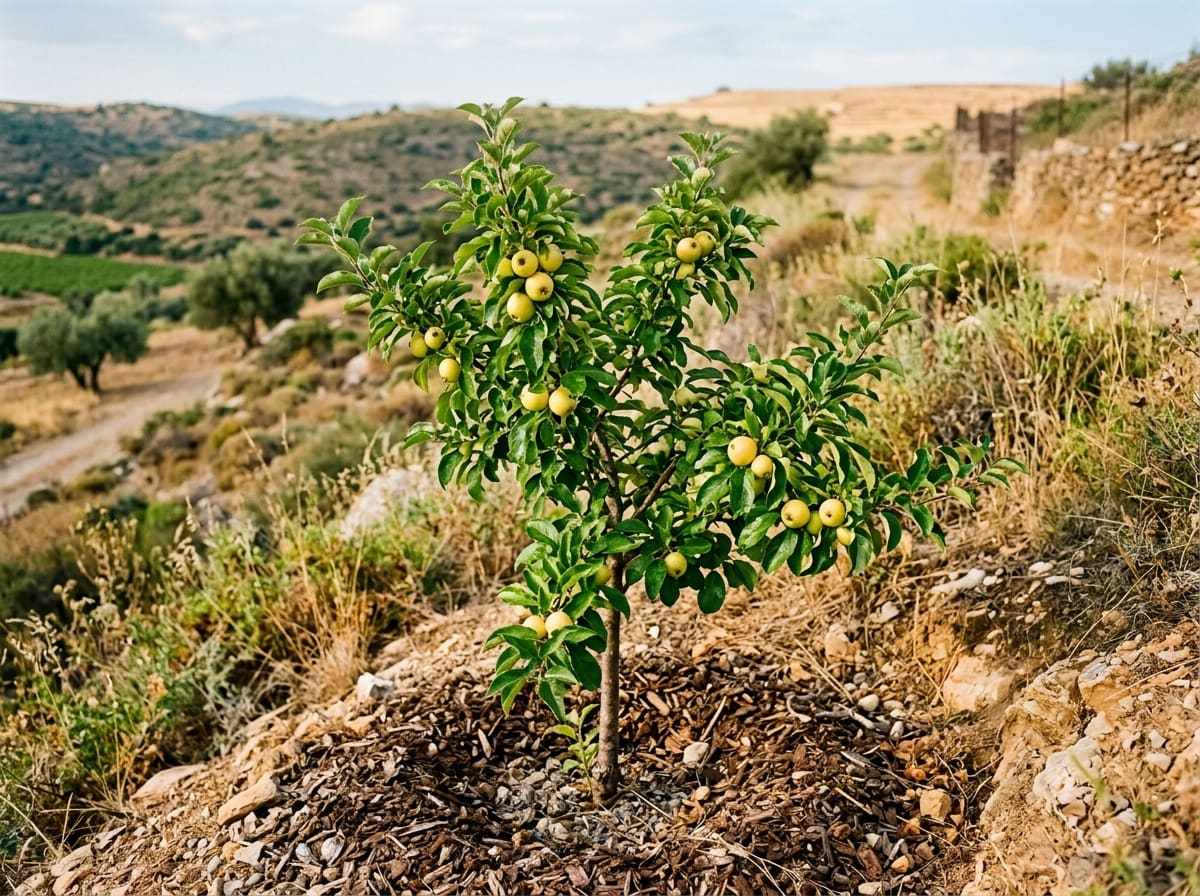
AppleA deciduous fruit tree of the rose family from Central Asia; most varieties need cold winters, a few low-chill ones fruit in mild climates.
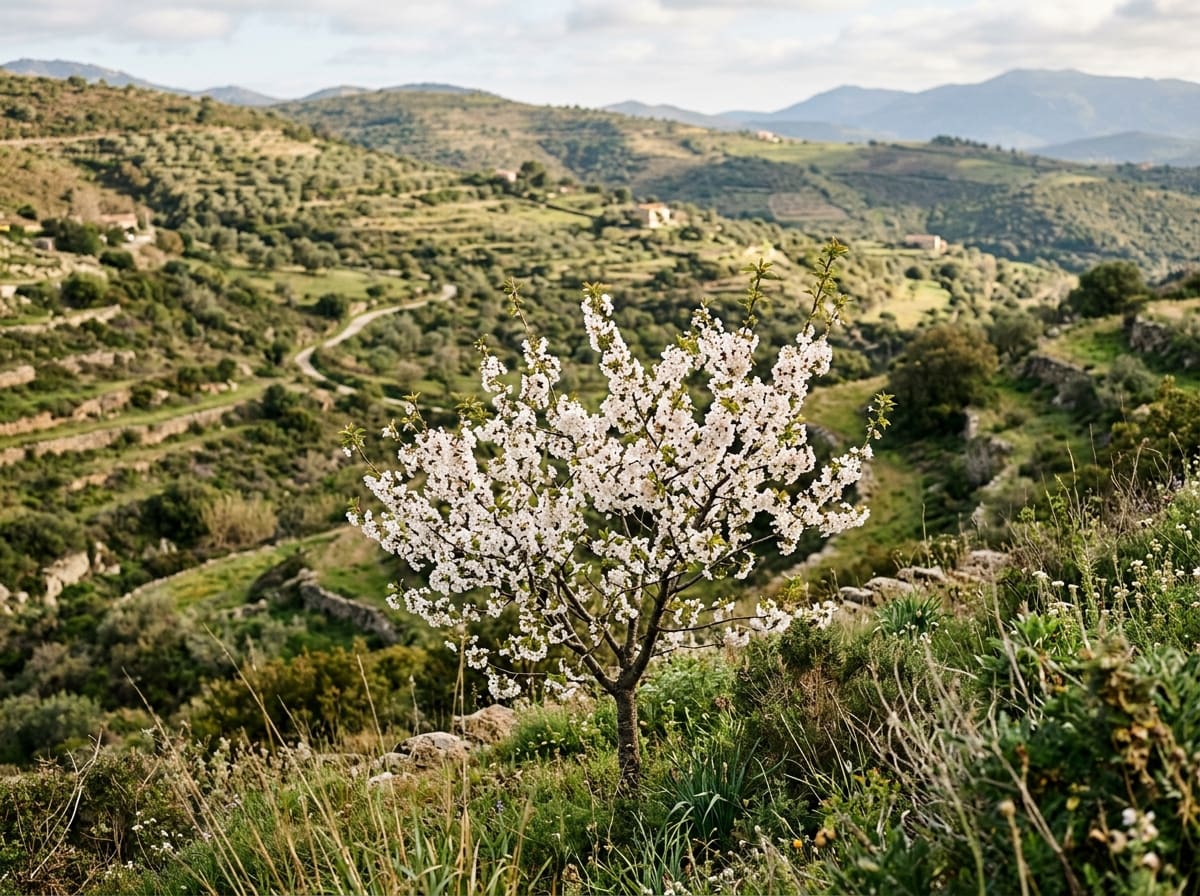
Sweet CherryA deciduous fruit tree of the rose family from Europe and western Asia; its sweet fruit needs cold winters, which makes mild Mediterranean sites a test.
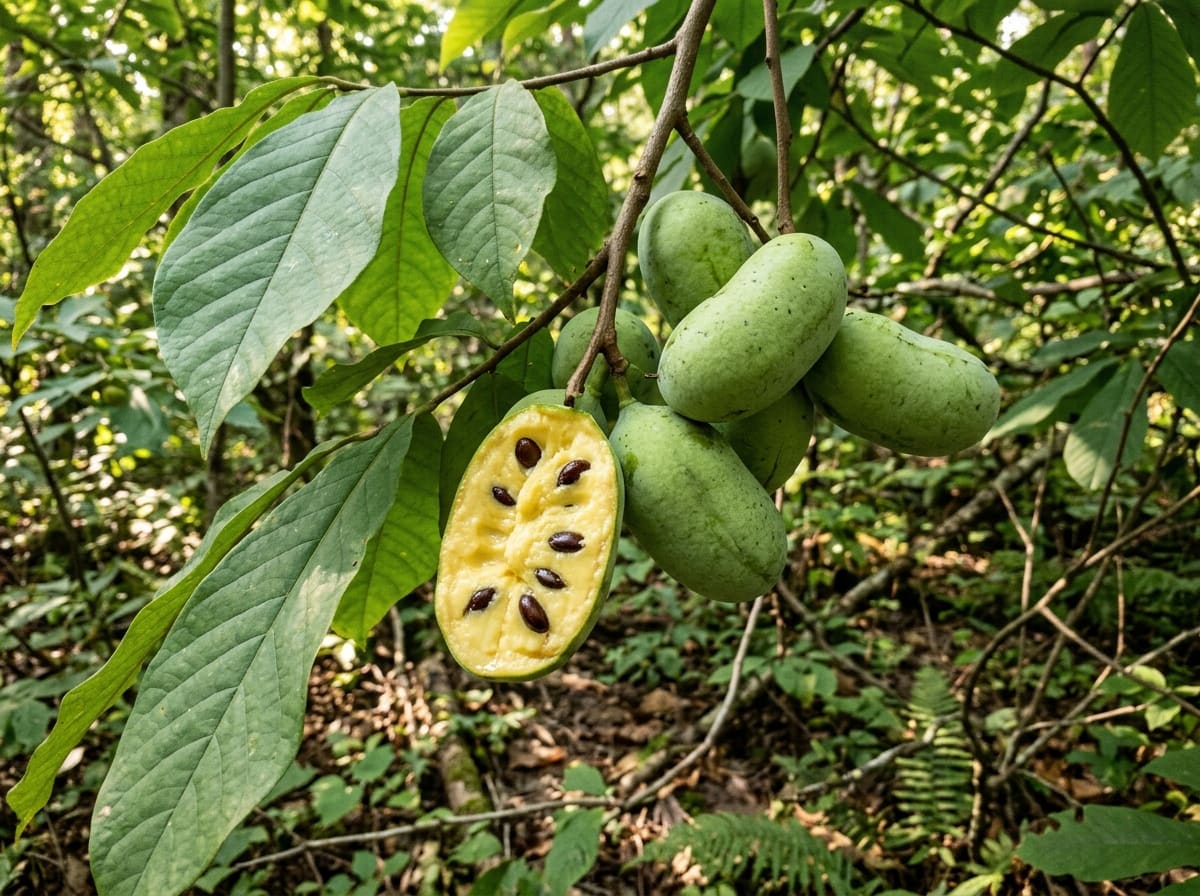
PawpawA frost-hardy North American relative of the cherimoya. Its large green fruit has a soft, yellow, custard-like flesh with a taste of banana and mango.
Subtropical fruit on trialon trial
Fruit that can grow in the frost-free climate of Sardinia's east coast. Whether it proves itself at Sa Medada is a trial, not a promise.
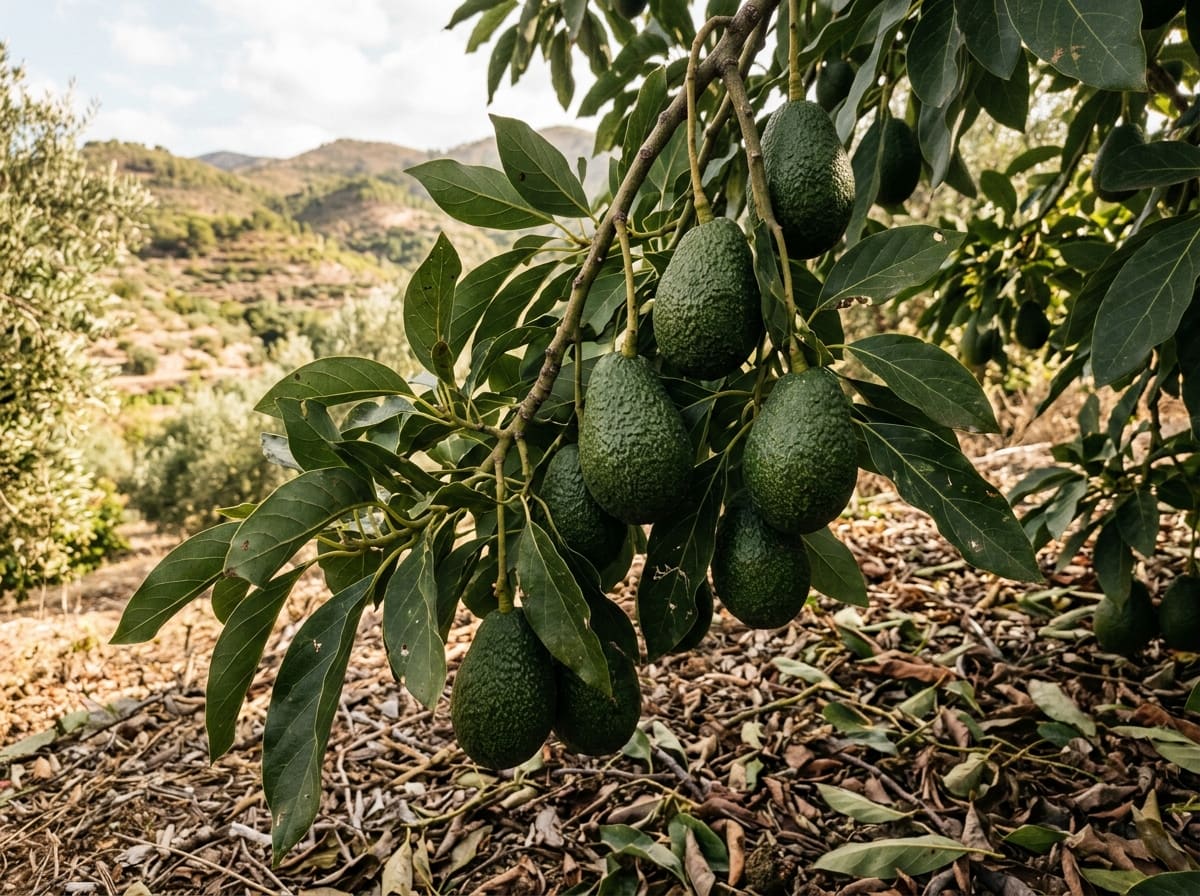
AvocadoAn evergreen laurel-family tree from Mexico and Central America with oily fruit; thirsty, shallow-rooted and sensitive to waterlogging, salt and frost.
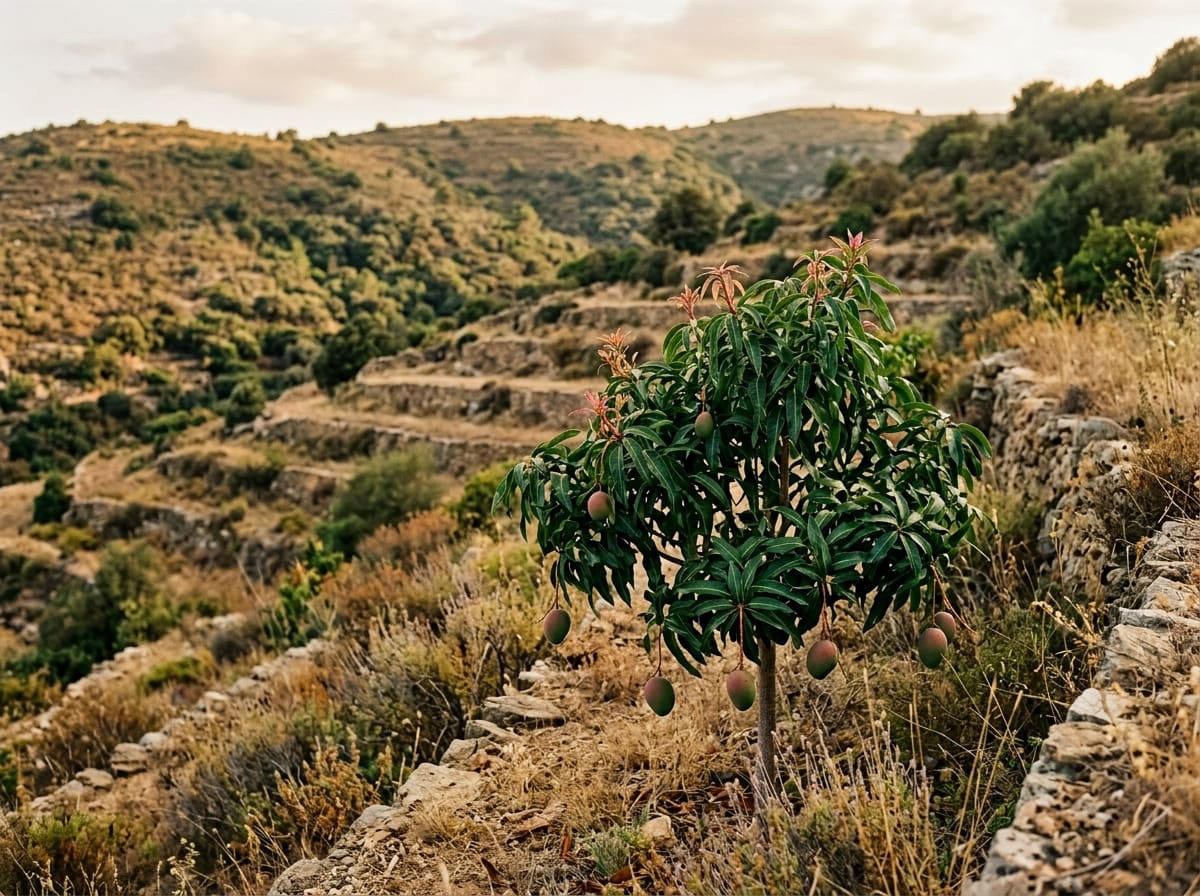
MangoAn evergreen fruit tree from South Asia, related to cashew and mastic; it needs a dry spell to flower and is damaged by even light frost.
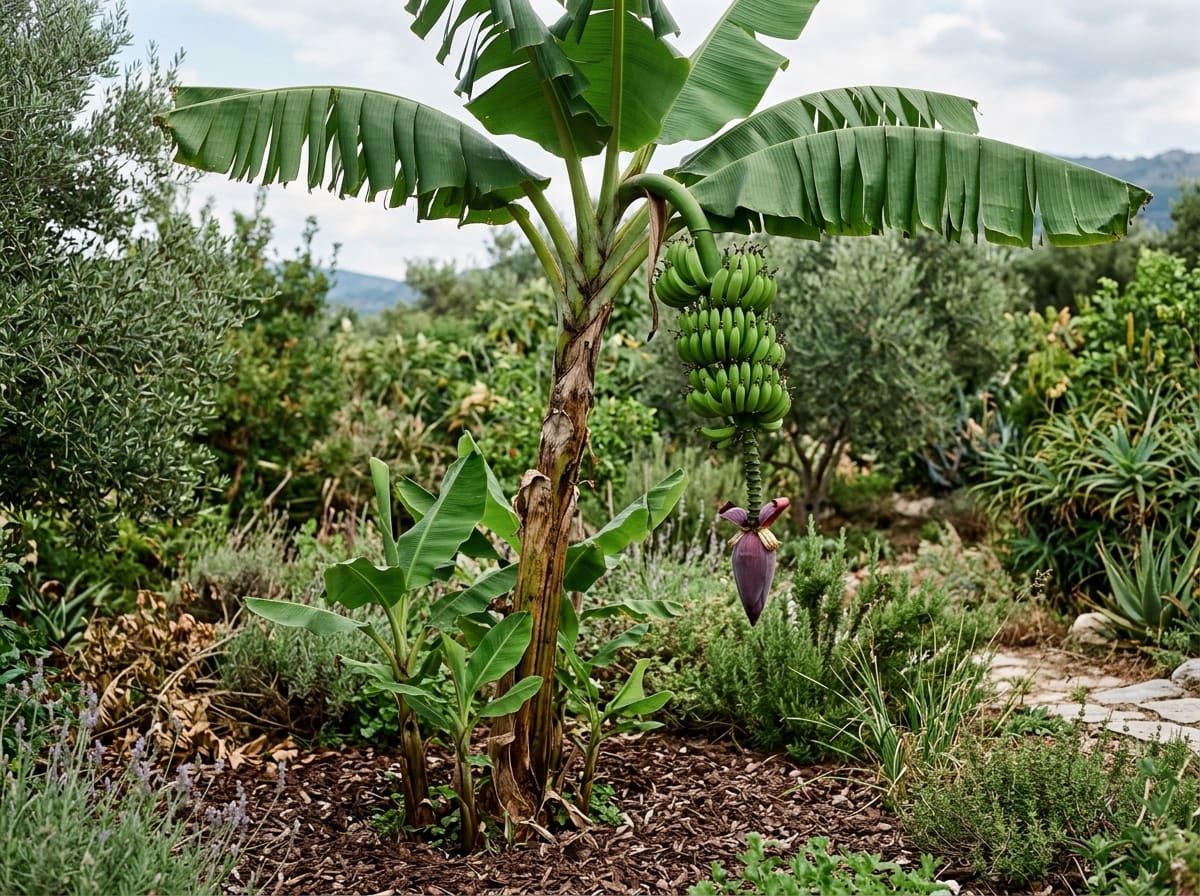
BananaA giant herb, not a tree: each false stem of rolled leaf sheaths flowers once, bears one bunch and is replaced by suckers from the underground corm.
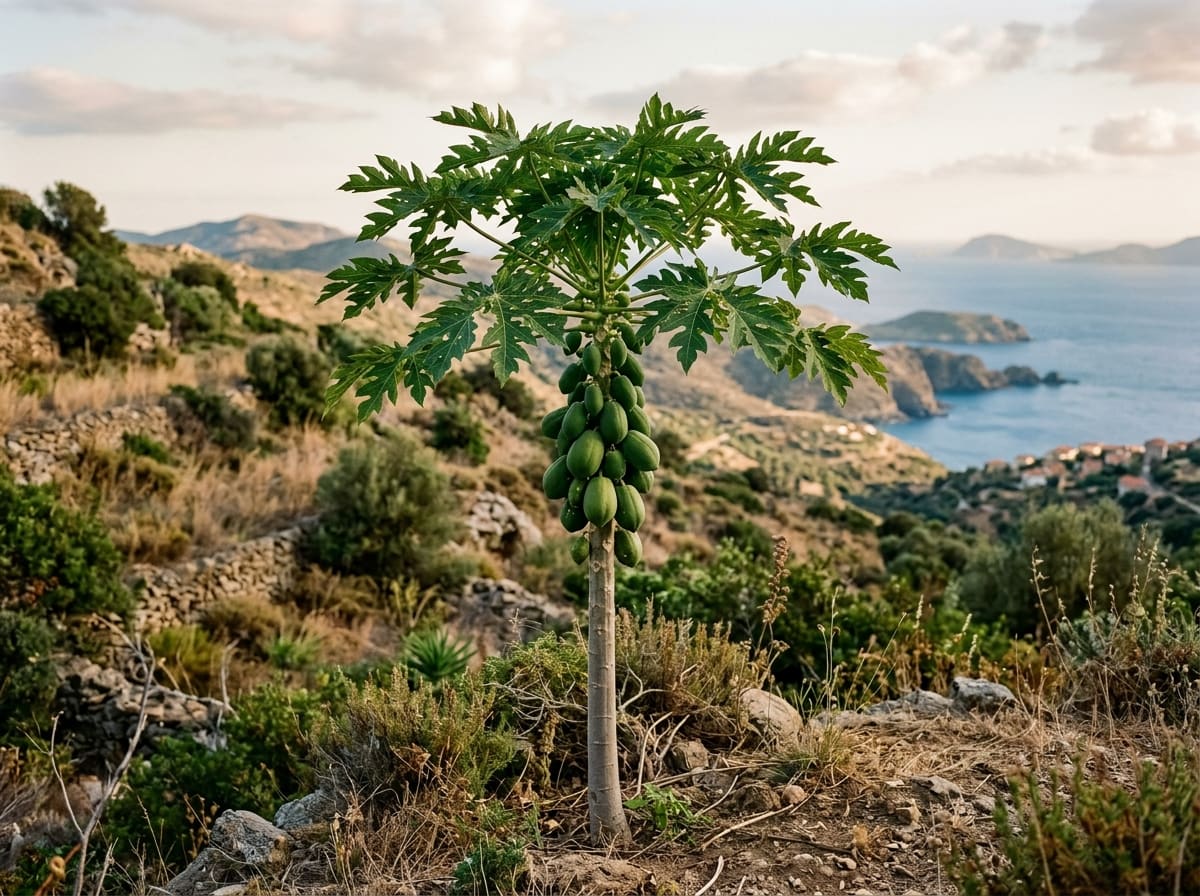
PapayaA fast, short-lived, tree-like plant from tropical America that fruits within a year; it cannot stand frost or wet feet and contains irritant latex.
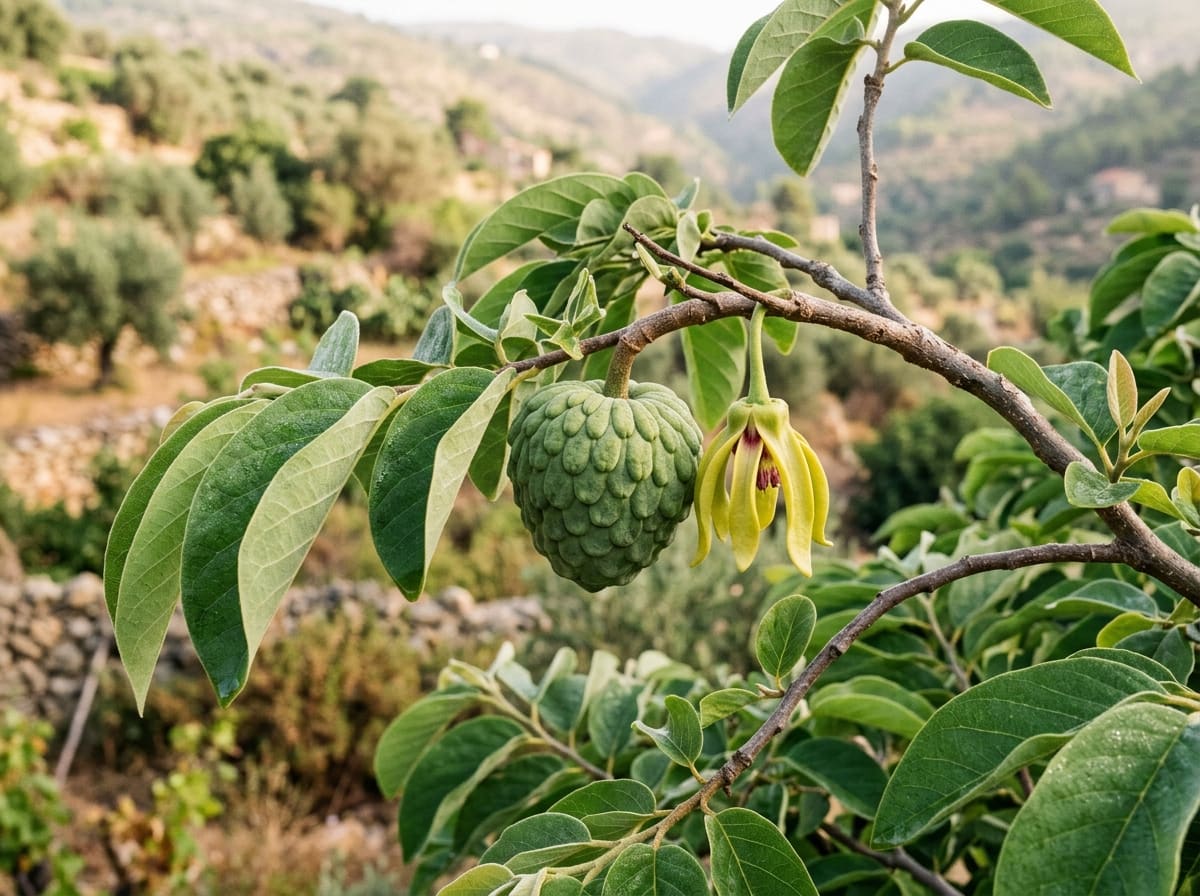
CherimoyaA subtropical fruit tree of the custard apple family with creamy fruit; it tolerates light frost, but its flowers often need help from hand pollination.
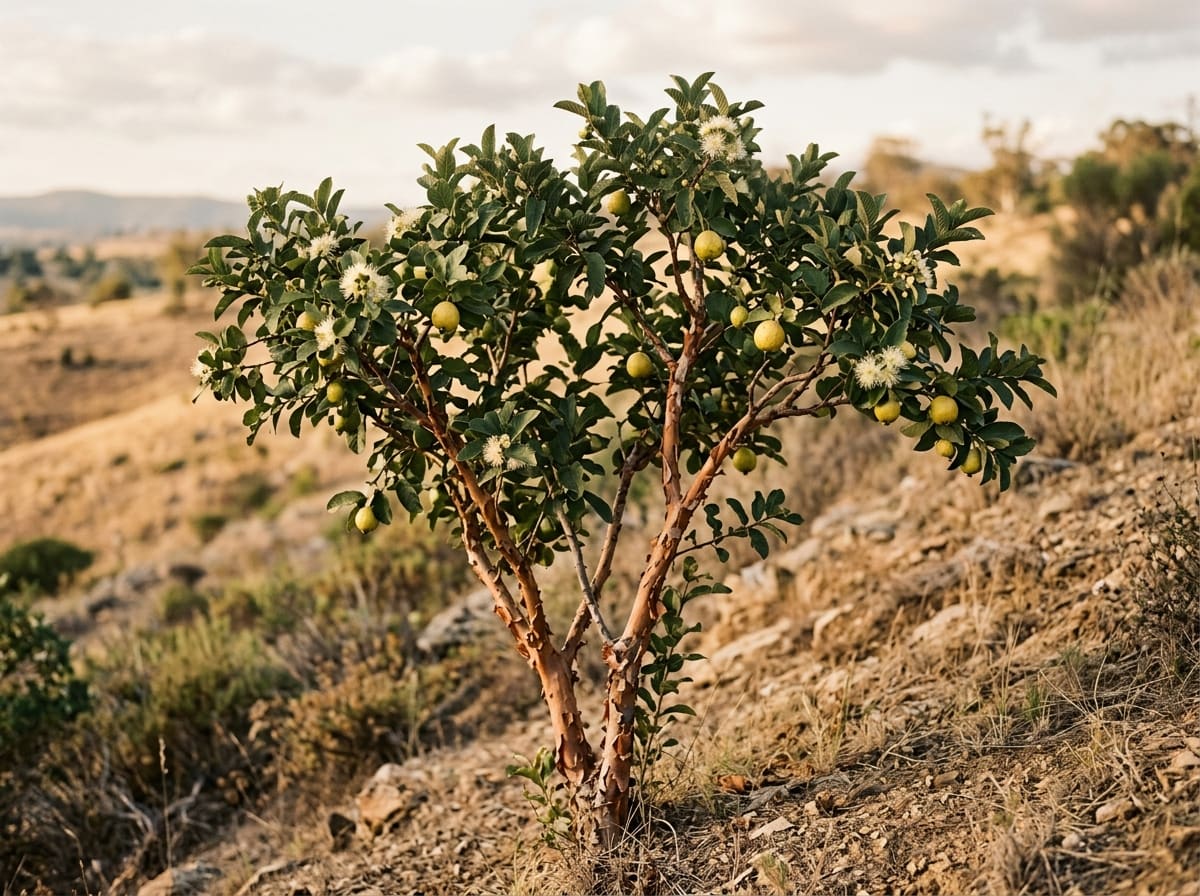
GuavaA small, tough tree of the myrtle family from tropical America with fragrant fruit; it tolerates drought, but is invasive in many tropical regions.
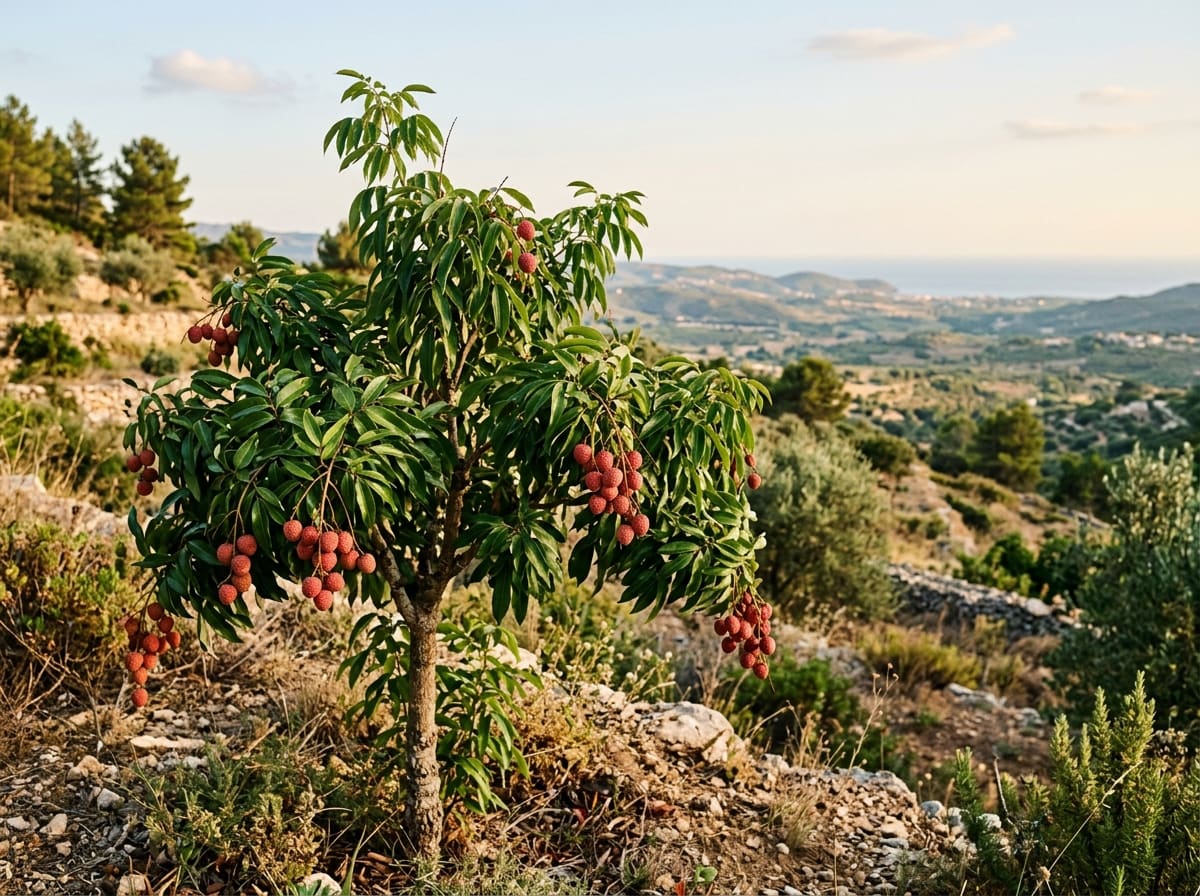
LycheeAn evergreen fruit tree from southern China whose rough red shell hides a translucent, sweet aril; it needs a cool, dry winter to flower but no frost.
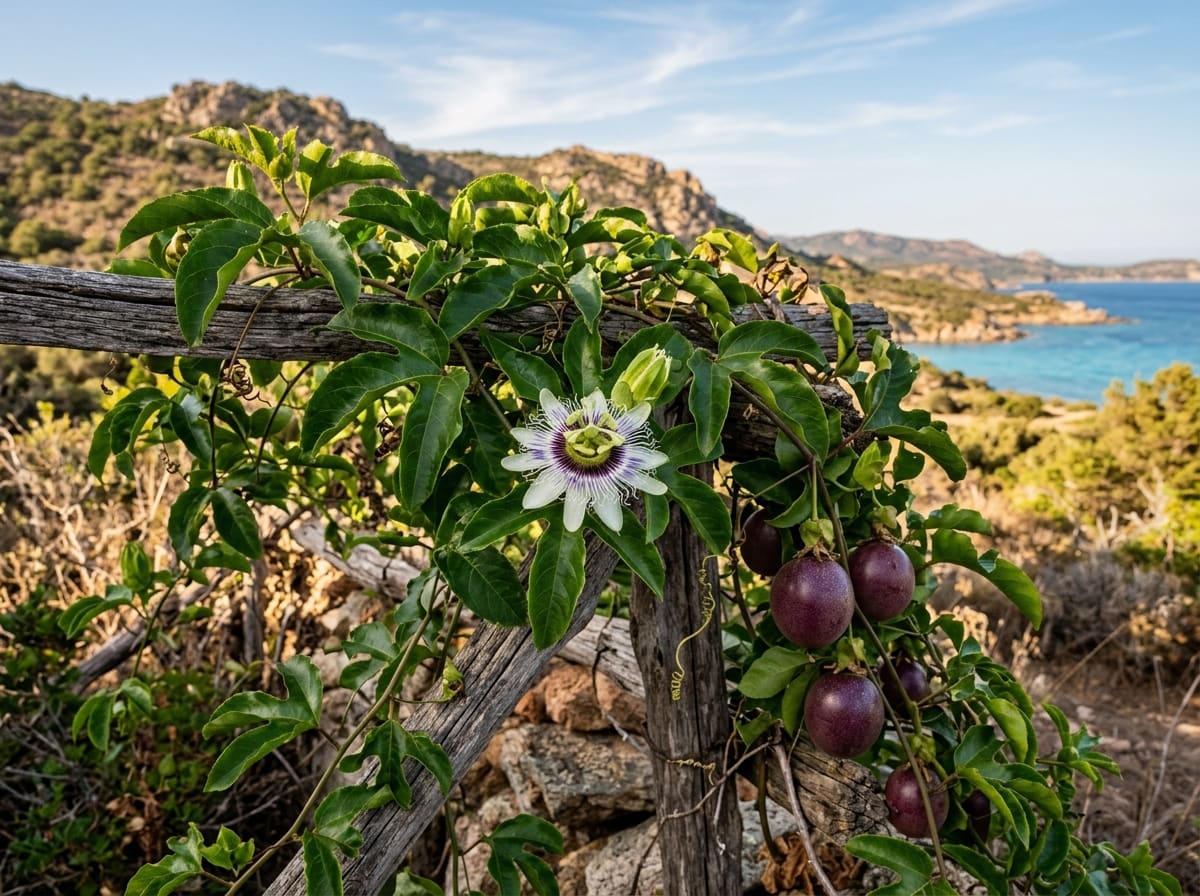
Passion FruitEvergreen tendril climbers of the genus Passiflora from South America, grown for their aromatic, seed-filled fruit; several species with very different needs.
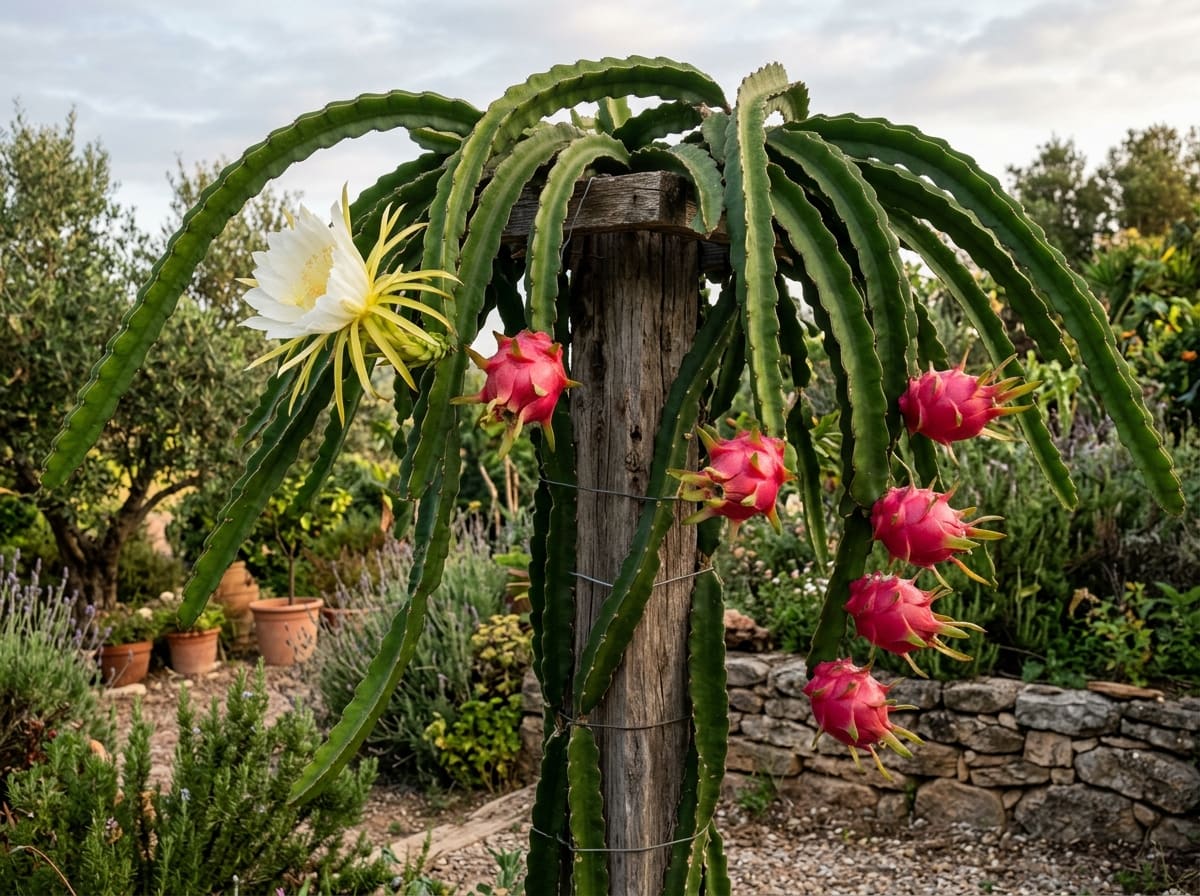
Dragon FruitA climbing cactus from Mexico and Central America whose night-blooming flowers give way to scaly pink or yellow fruit with white or red flesh.
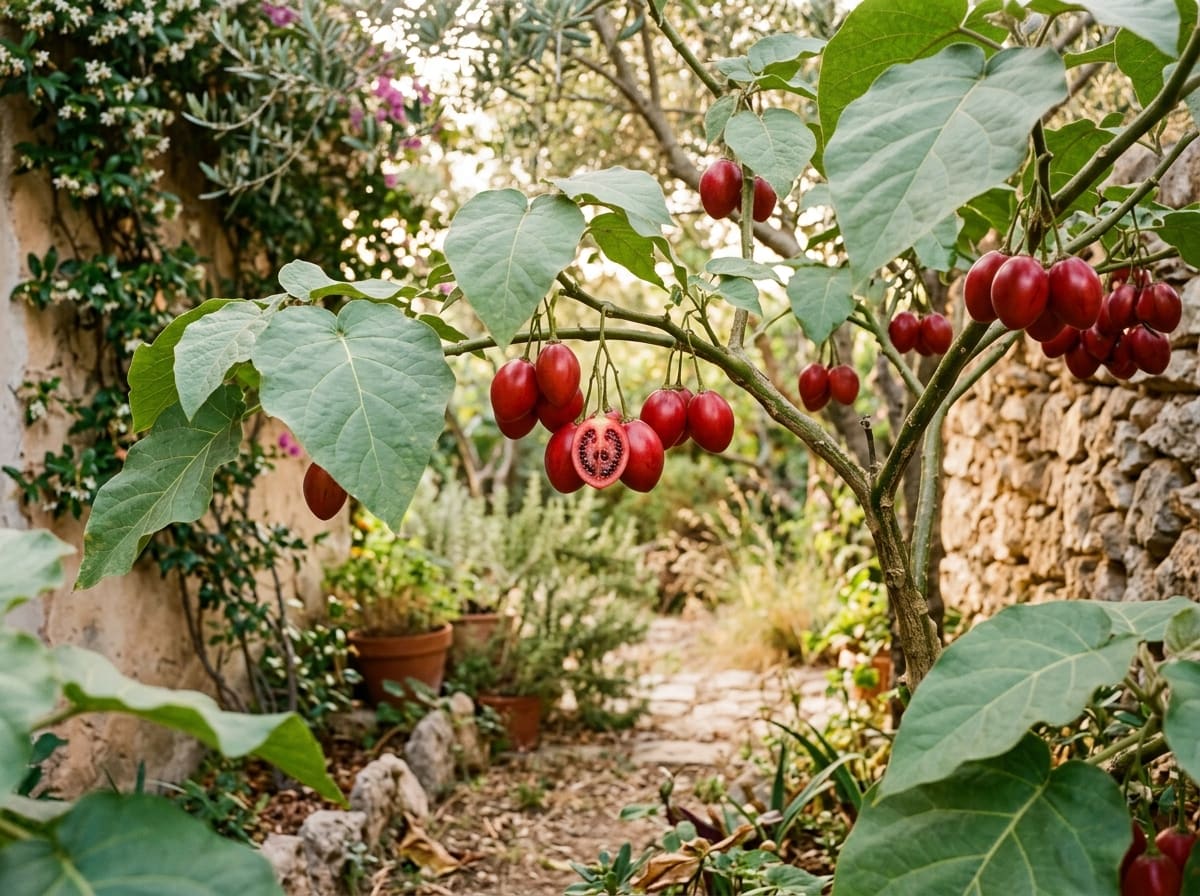
TamarilloA fast-growing, short-lived small tree of the nightshade family from the Andes, bearing smooth, egg-shaped fruit with a tart, slightly resinous flesh.
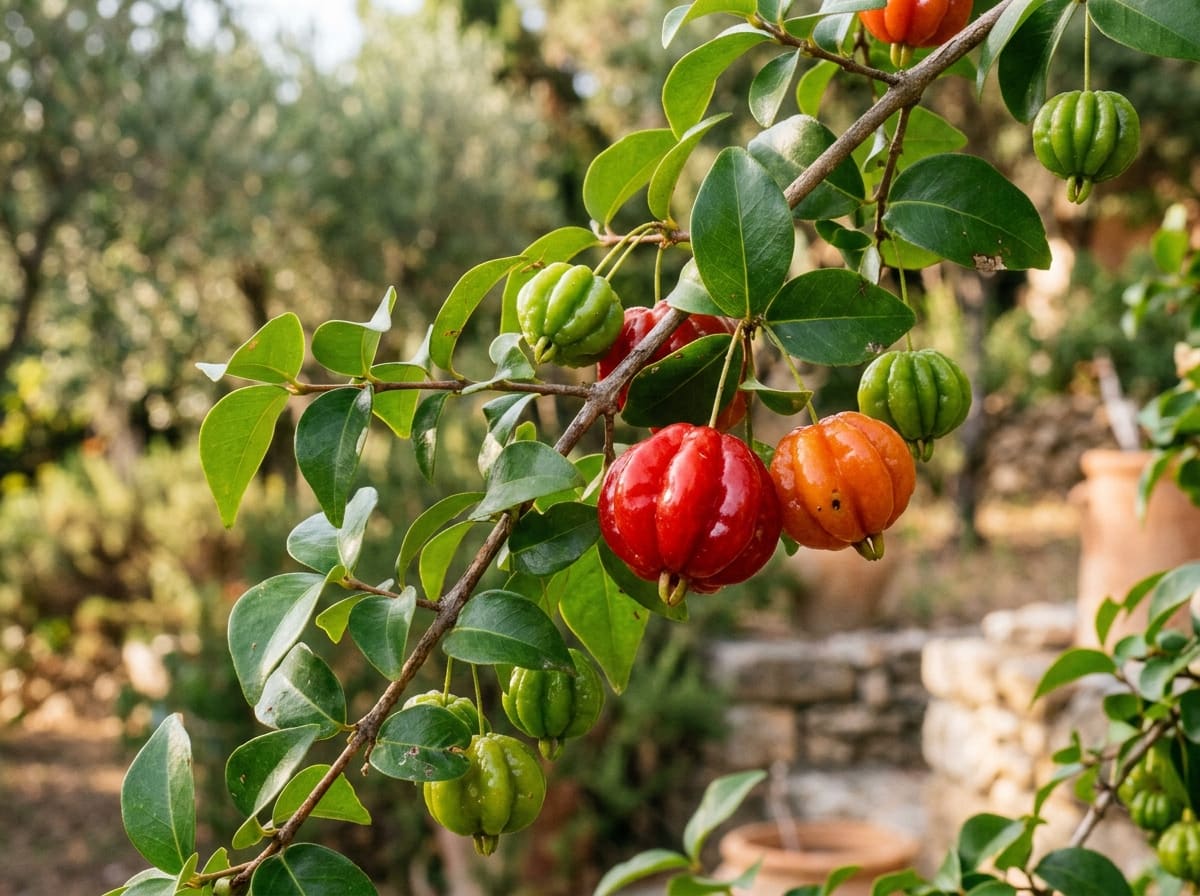
Surinam Cherry (Pitanga)An evergreen shrub of the myrtle family from eastern South America with ribbed, cherry-like fruit; invasive in Florida and on several islands.
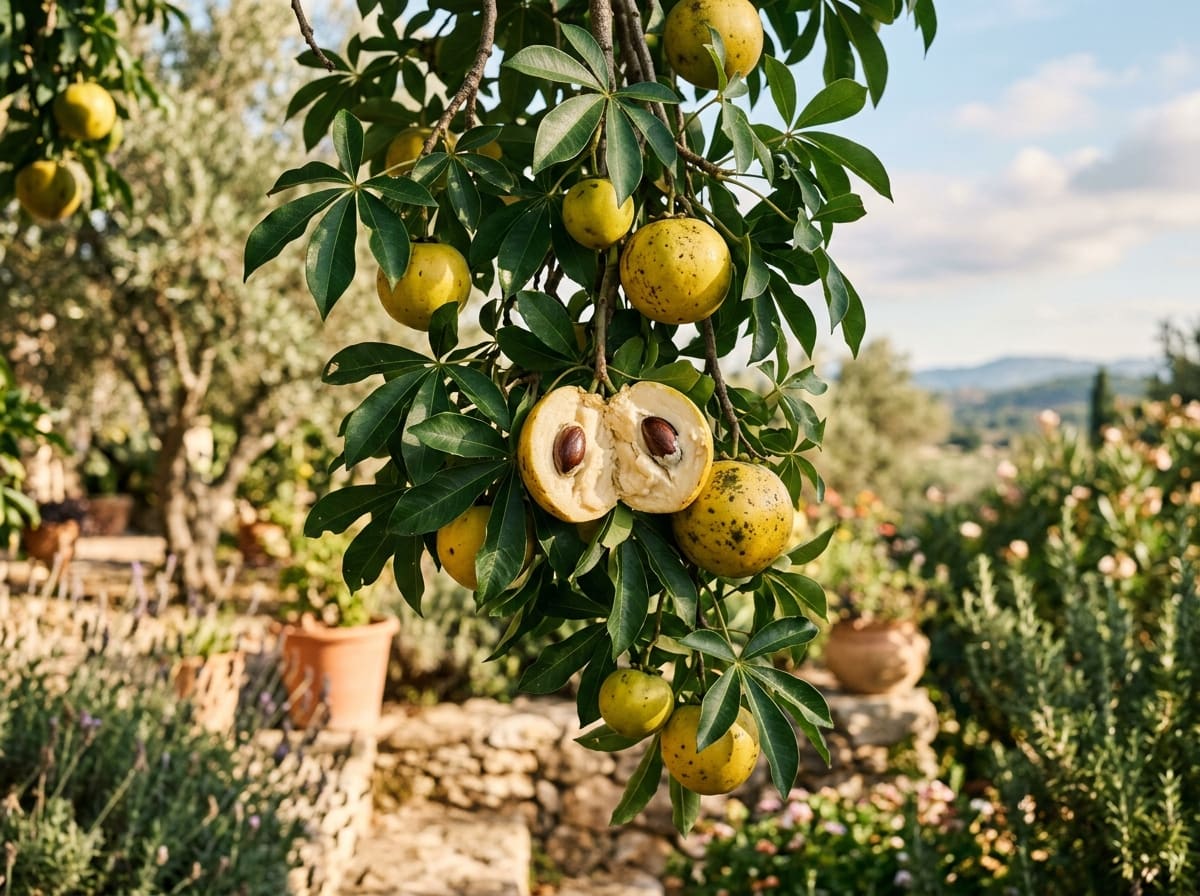
White SapoteA subtropical tree of the citrus family from the Mexican highlands. Its green to yellow fruit has a soft, creamy white flesh that tastes of banana and pear.
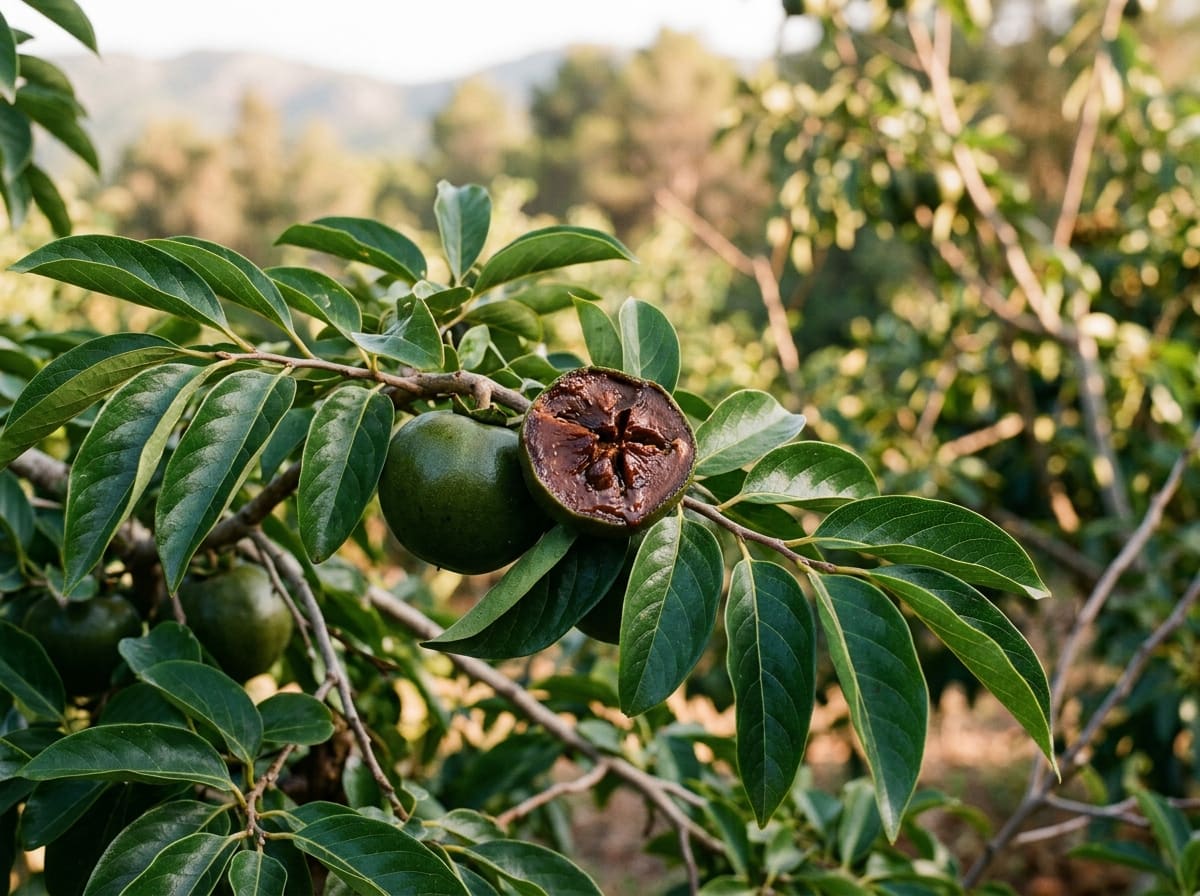
Black SapoteAn evergreen persimmon relative from Mexico and Central America whose fully ripe, almost black flesh is soft and sweet, hence chocolate pudding fruit.
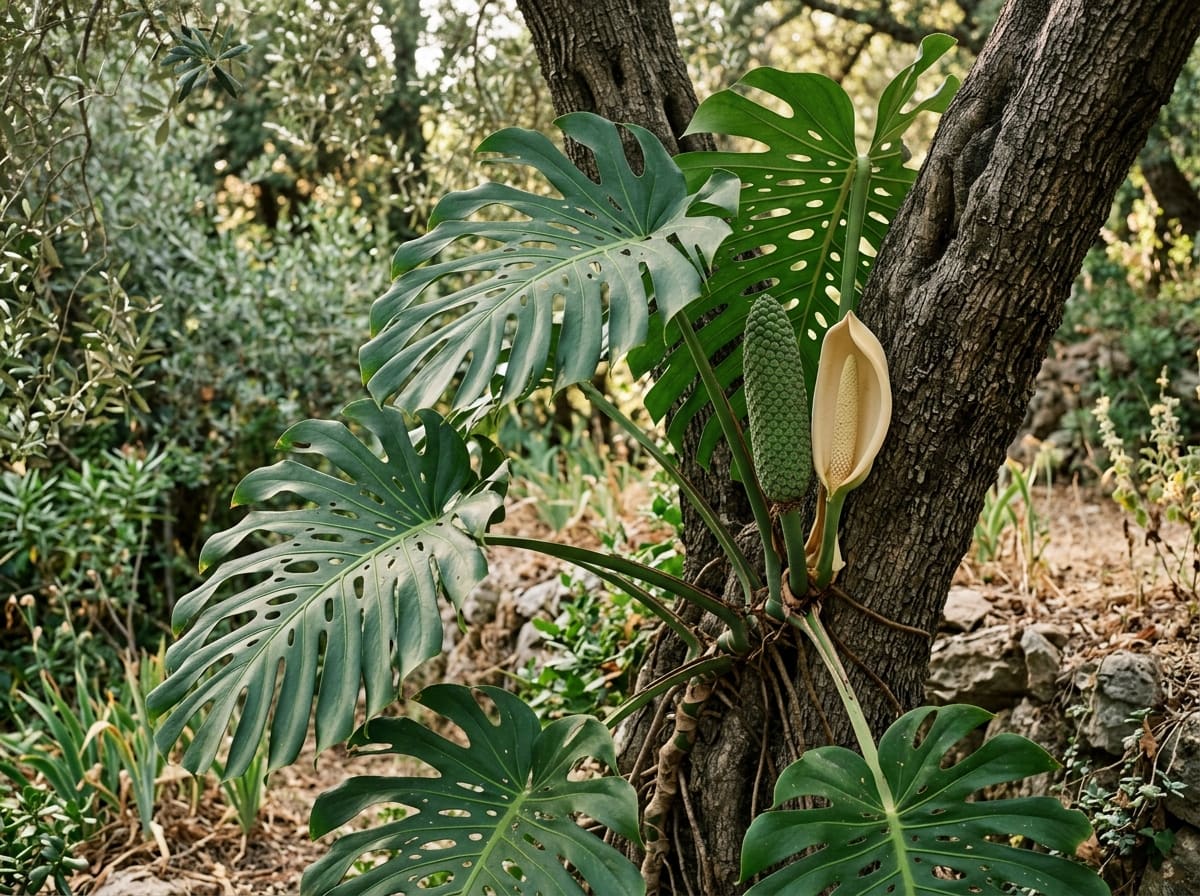
MonsteraA climbing arum from the rainforests of Central America with slit, perforated leaves and a long fruit that tastes of pineapple and banana once fully ripe.
Useful and medicinal plants
Plants with many uses in the kitchen, the garden and everyday life.
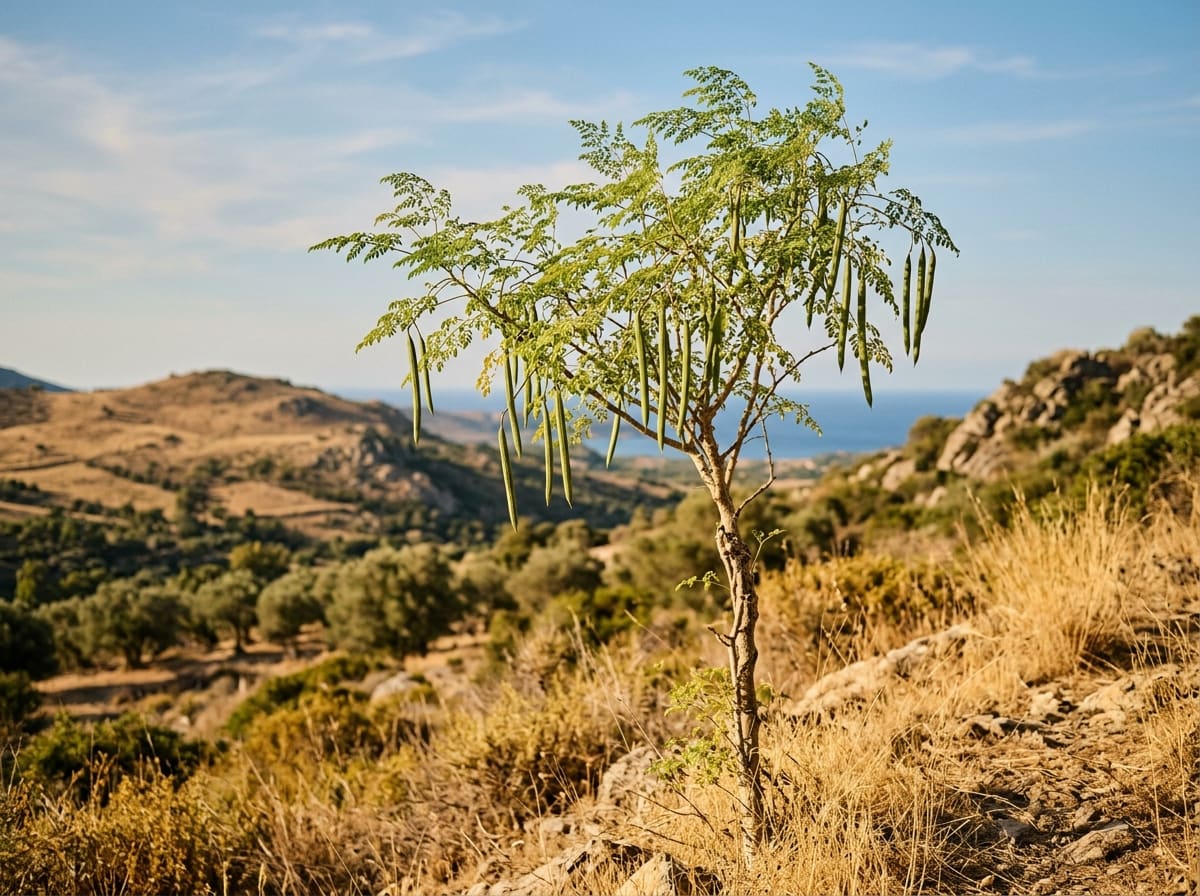
MoringaA fast-growing, drought-hardy tree from north-western India whose leaves, pods and seeds are eaten and whose seeds can clarify cloudy water.
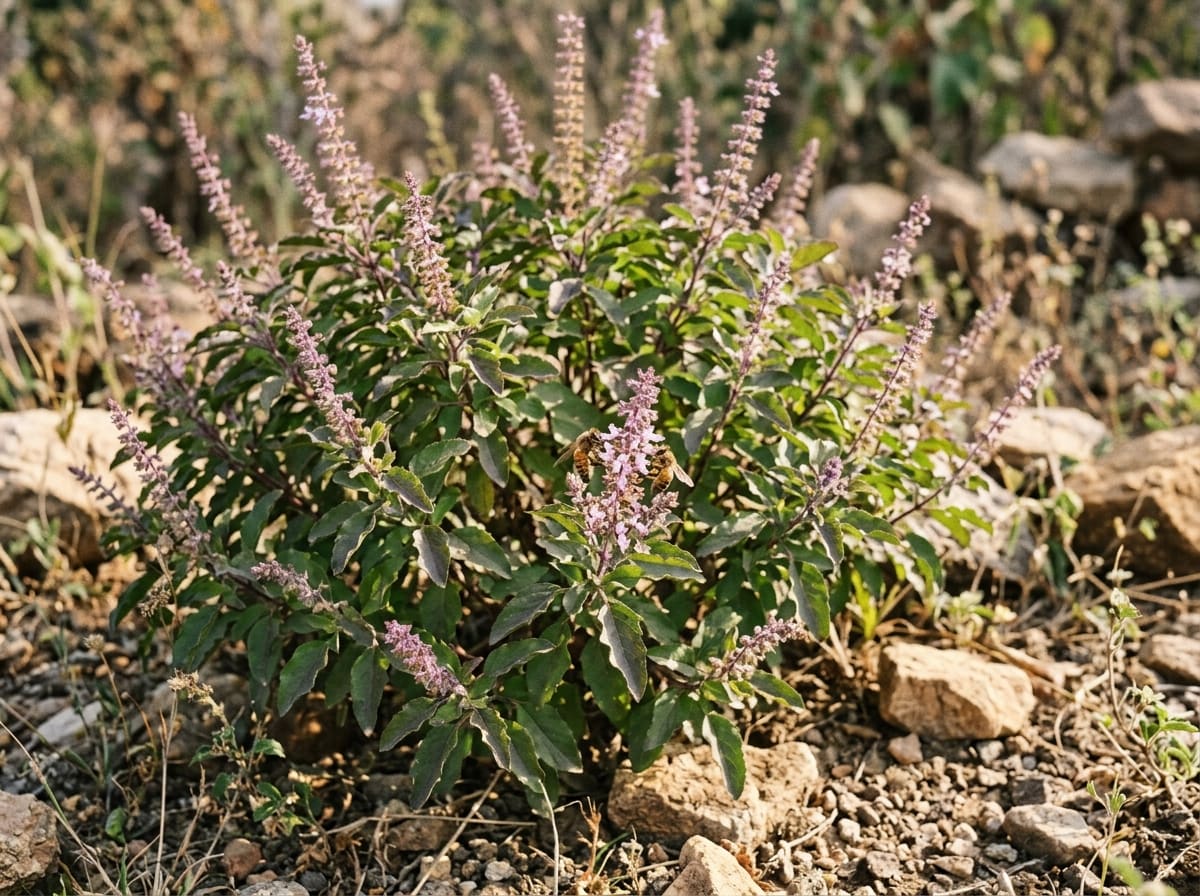
Tulsi (Holy Basil)An aromatic, shrubby basil from tropical Asia, sacred in Hinduism and a staple of Ayurveda, with clove-scented leaves and a long season of flowers.
Trees
Trees of Sardinia
The old and native trees that shape the island's landscape.
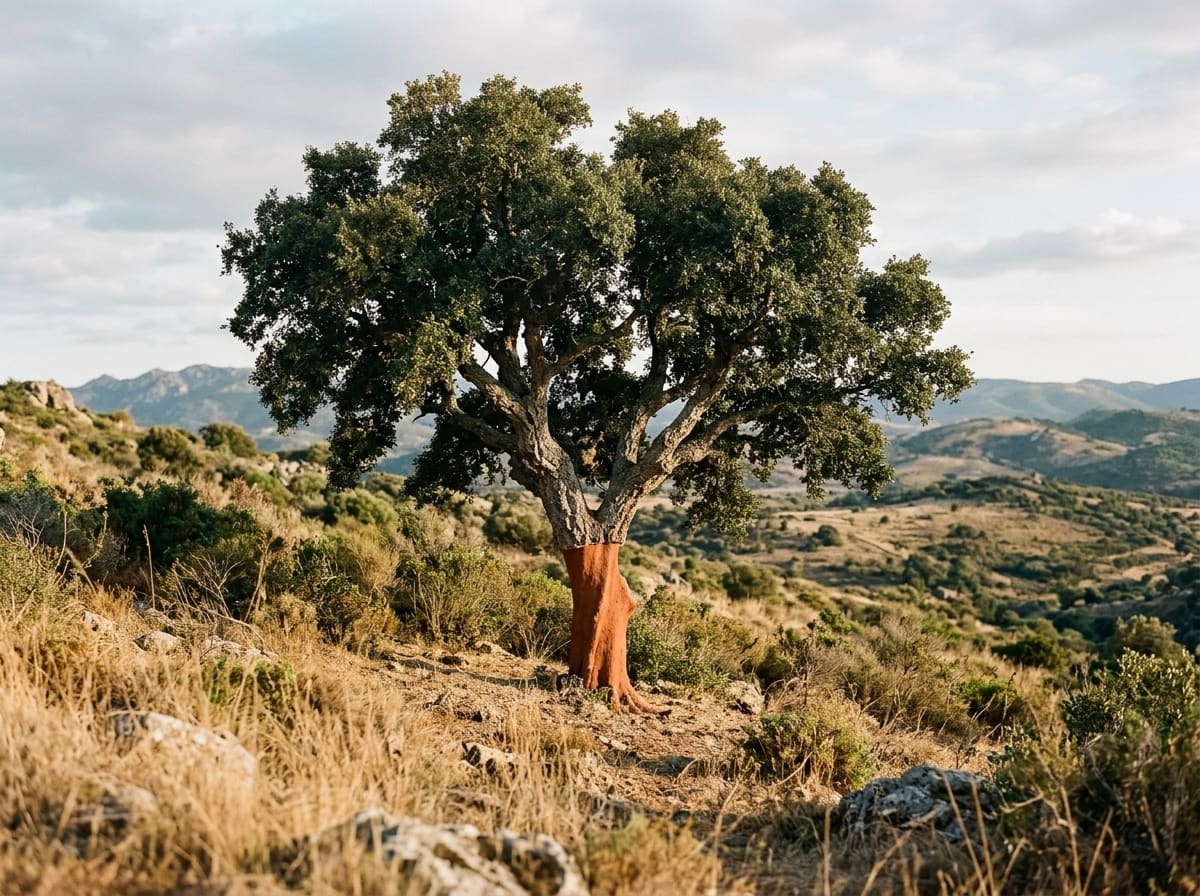
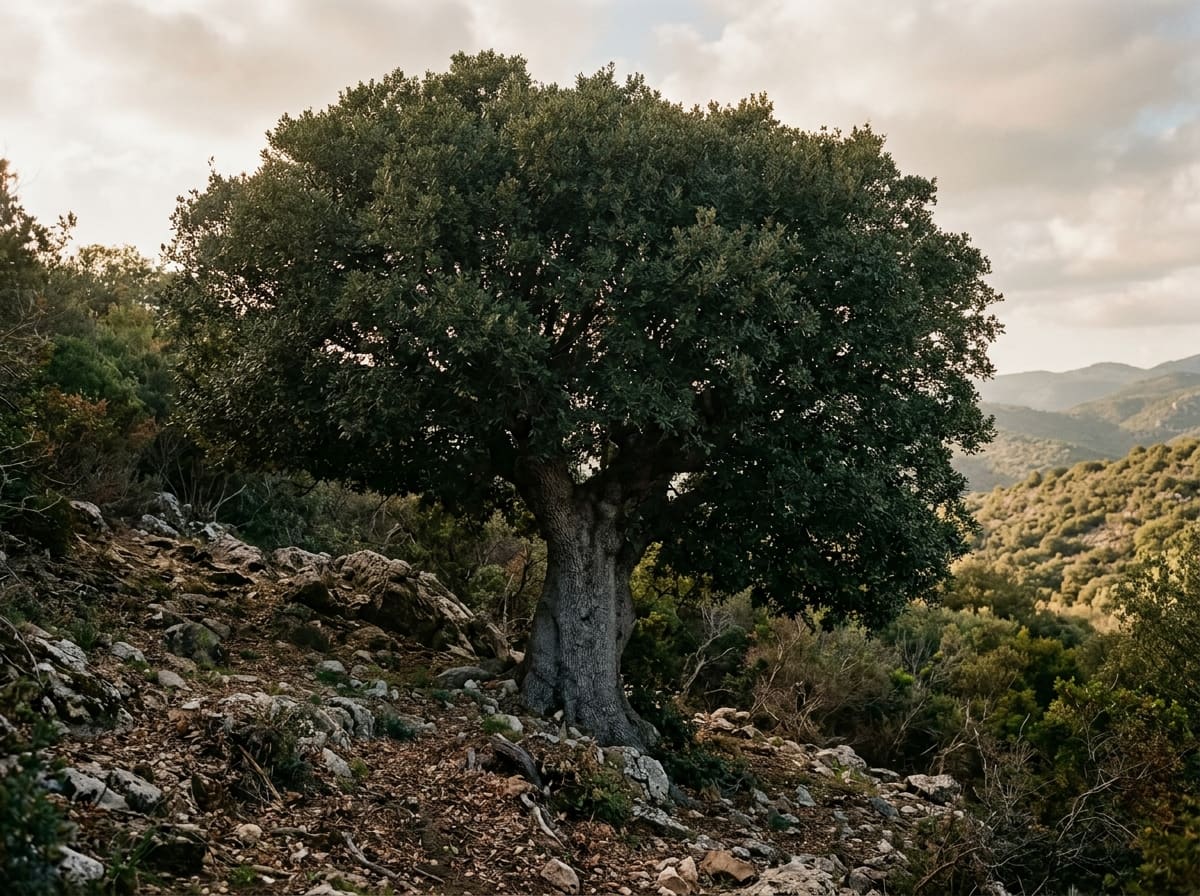
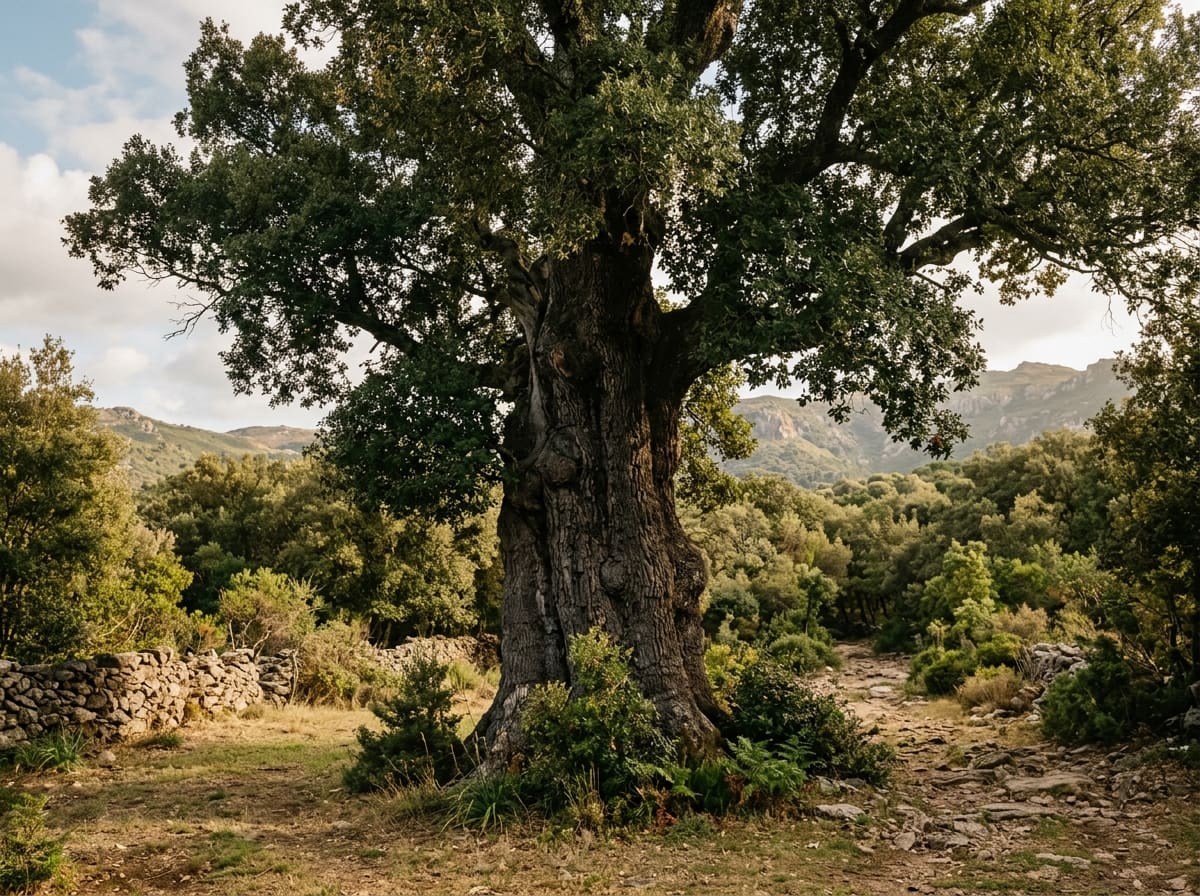
Cork OakA Mediterranean evergreen oak whose thick insulating bark can be harvested every decade without harming the tree, and which survives fire.
Holm OakThe evergreen oak of the Mediterranean, dense-shading and deep-rooted, the tree the landscape returns to when it is left the chance.
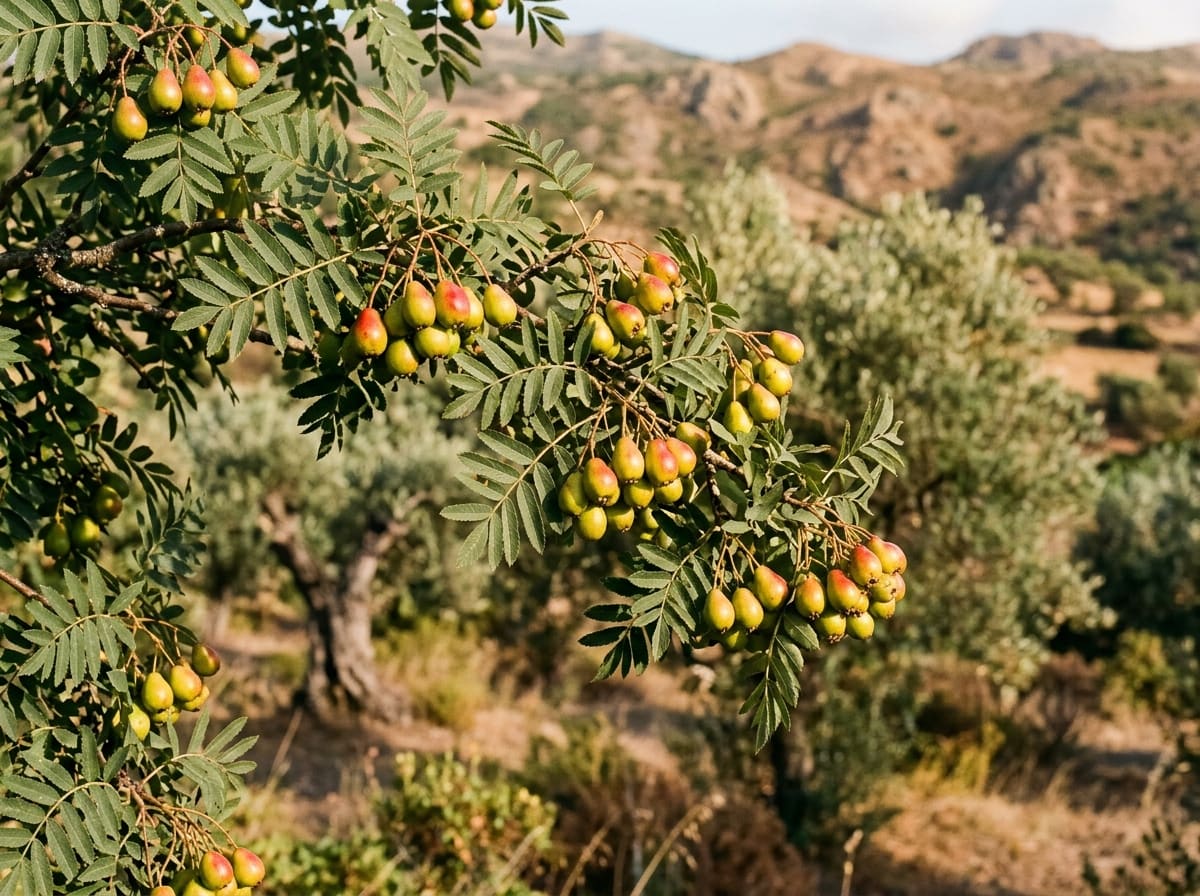
Service TreeOne of Europe's rarest cultivated trees (Sorbus domestica): deep-rooted, heat- and drought-hardy, a quiet favourite of the climate-forestry debate.
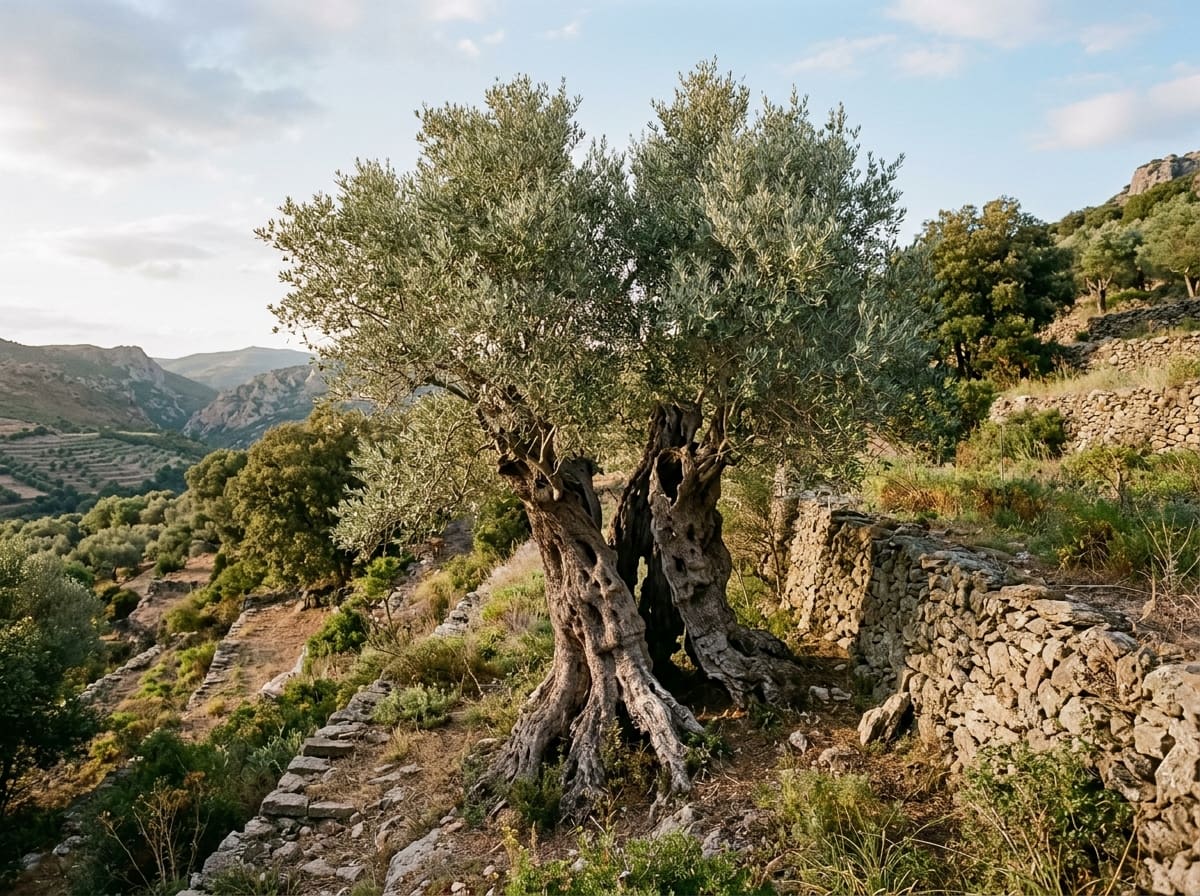
Millennial Olive TreesOlive trees over a thousand years old, including Sardinia's ancient wild olives (olivastro) among the oldest living trees in the Mediterranean.
Monumental TreesTrees officially recognised for their great age, size, rarity or cultural value, and protected as living natural monuments, in Italy under Law 10/2013.
The pioneers
People whose work shaped permaculture and the renaturation of land.
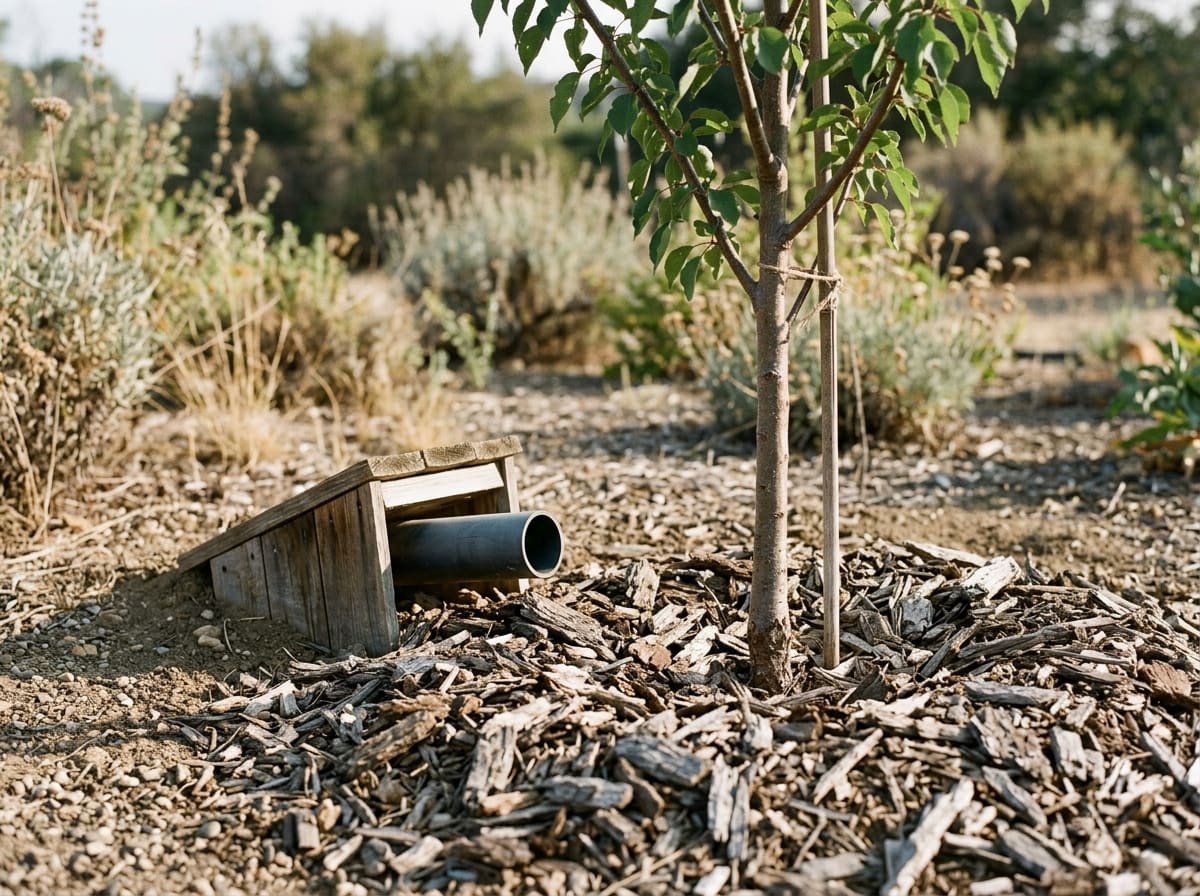
Art Ludwigin chapter 6Ecological designer from California whose simple, open greywater designs helped make the reuse of household water legal and common.
Bill Mollisonin chapter 1Australian naturalist and teacher (1928 to 2016) who founded permaculture with David Holmgren and carried it around the world through his courses.
Brad Lancasterin chapter 6Rainwater harvester and author from Tucson, Arizona, who showed how rain and street runoff can grow shade trees and food in the desert.
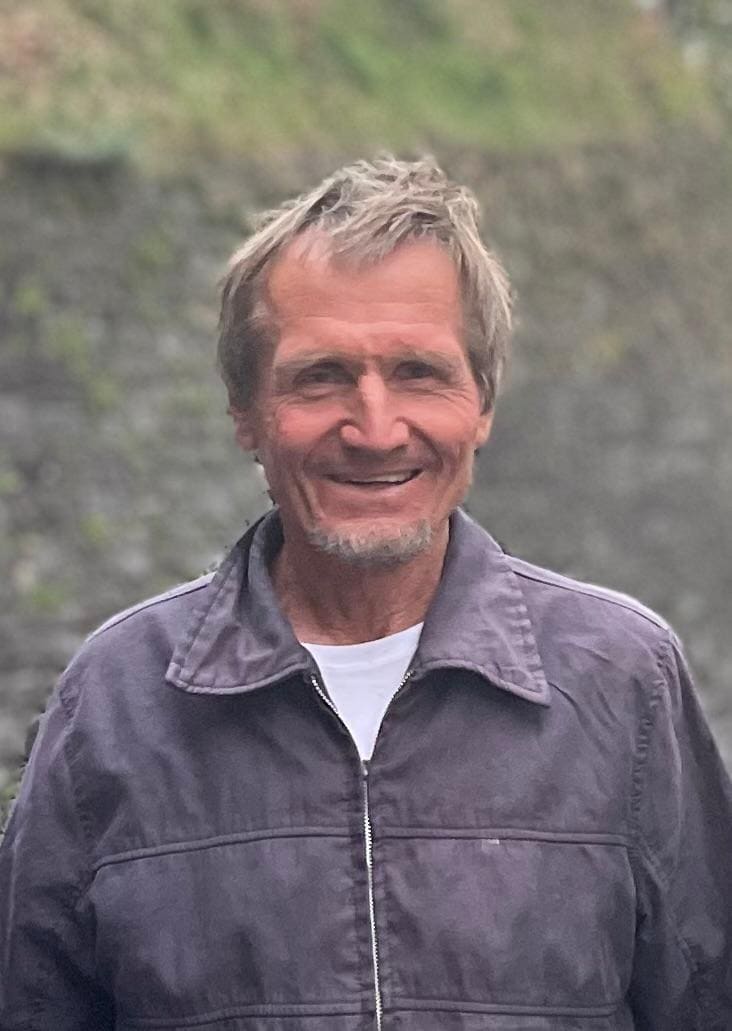
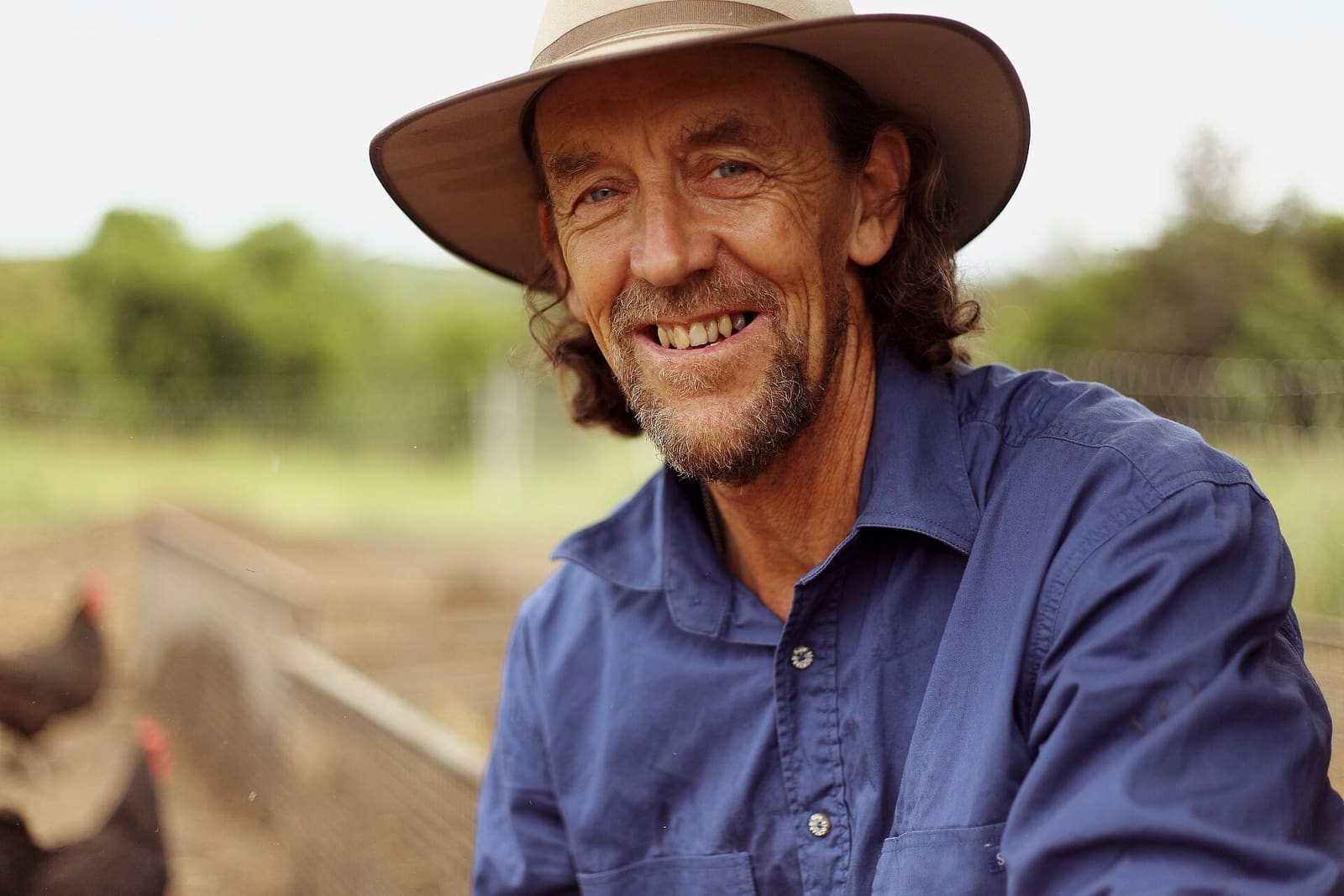
David Holmgrenin chapter 1Australian environmental designer, born 1955, co-founder of permaculture and author of its twelve design principles; lives and works at Melliodora in Victoria.
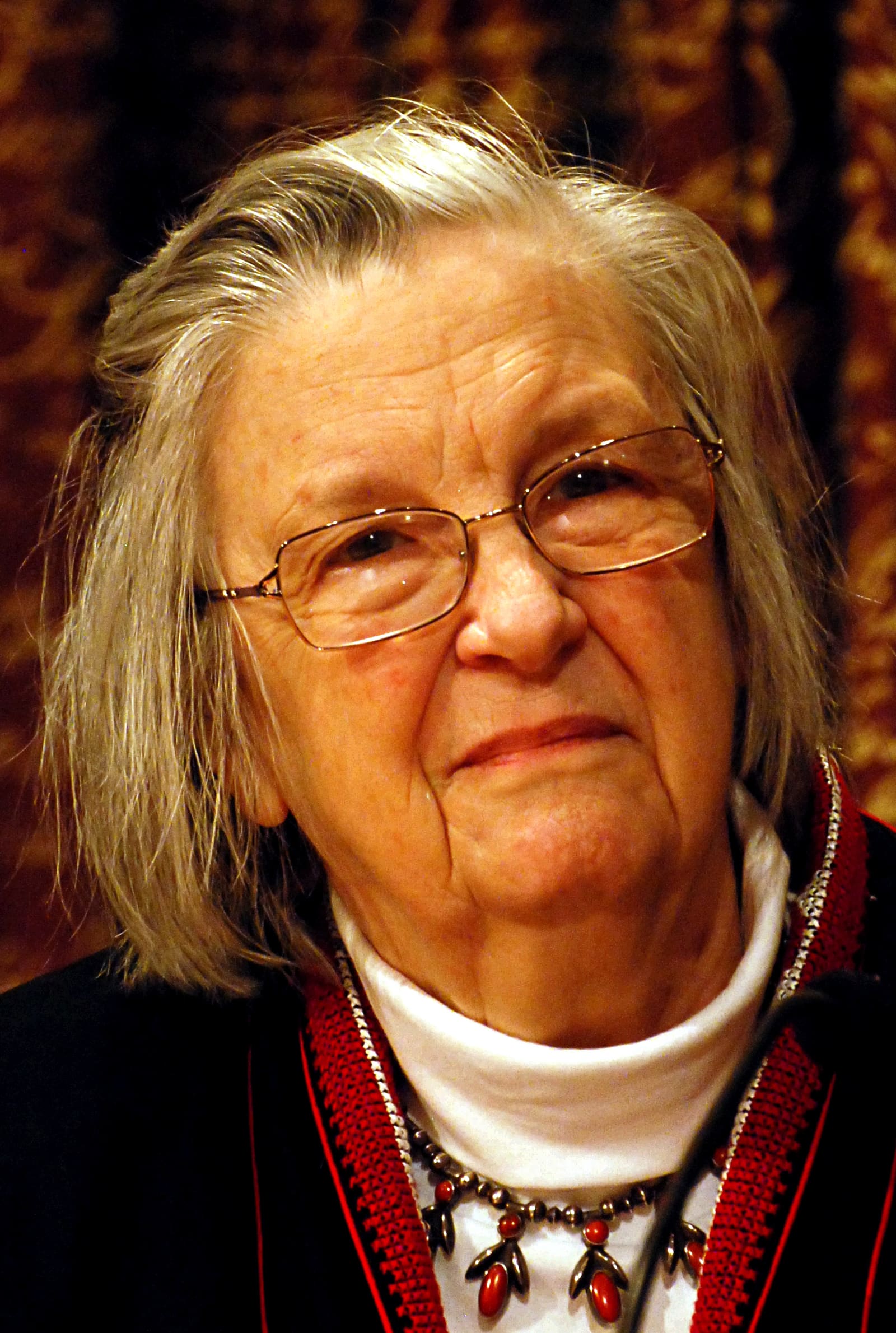
Elinor Ostromin chapter 11American political scientist who showed how communities govern commons over generations. In 2009 the first woman to win the Nobel prize in economics.
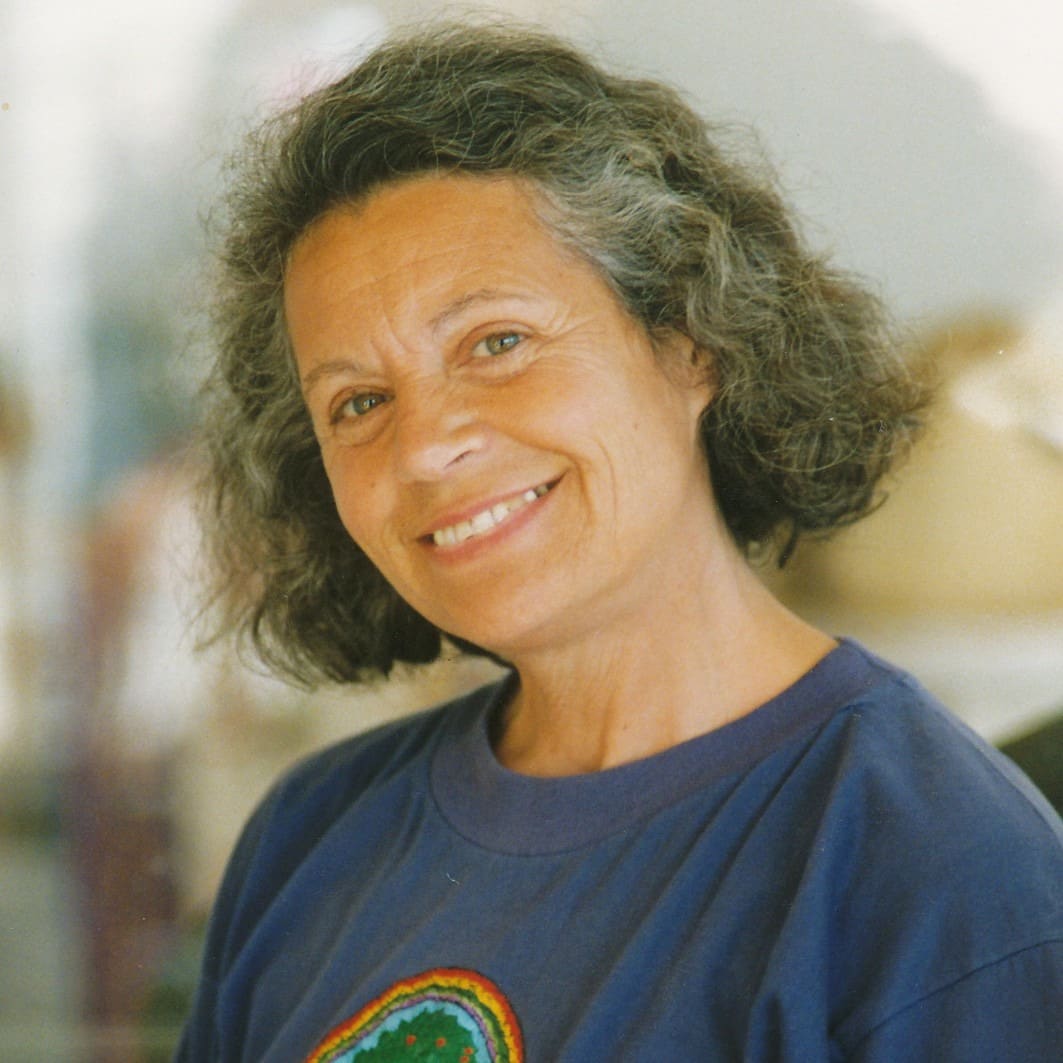
Emilia Hazelipin chapter 1Catalan gardener (1937 to 2003) who adapted Fukuoka's natural farming to the Mediterranean climate and founded synergistic gardening on permanent mulched beds.
Ernst Götschin chapter 1Swiss farmer and researcher who developed syntropic agriculture in Bahia, Brazil: growing food by speeding up the natural succession of a forest.
Geoff Lawtonin chapter 1English-born Australian permaculture designer and teacher, born 1954, known for Greening the Desert in Jordan and his work on restoring dry land.
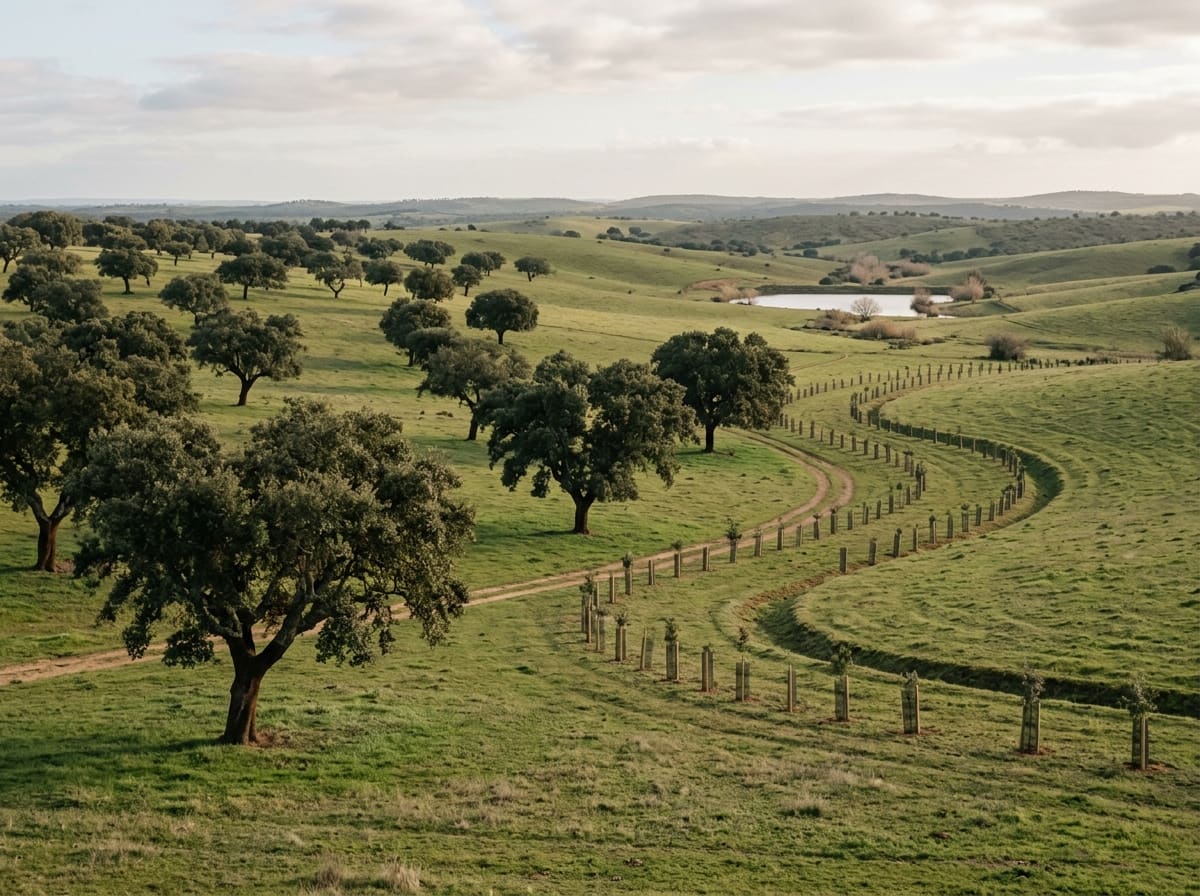
Herdade do Freixo do Meioin chapter 11Organic estate of 584 hectares in Portugal's Alentejo that renews the montado oak landscape with keyline lines, small retention basins and agroforestry.
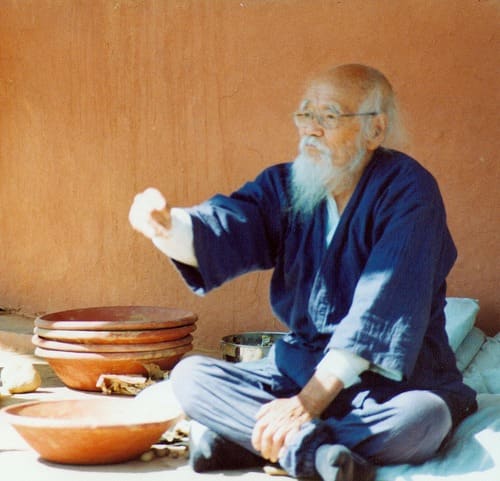
Masanobu Fukuokain chapter 1Japanese farmer and thinker (1913 to 2008) who developed natural farming without ploughing, fertiliser or sprays and wrote The One-Straw Revolution.
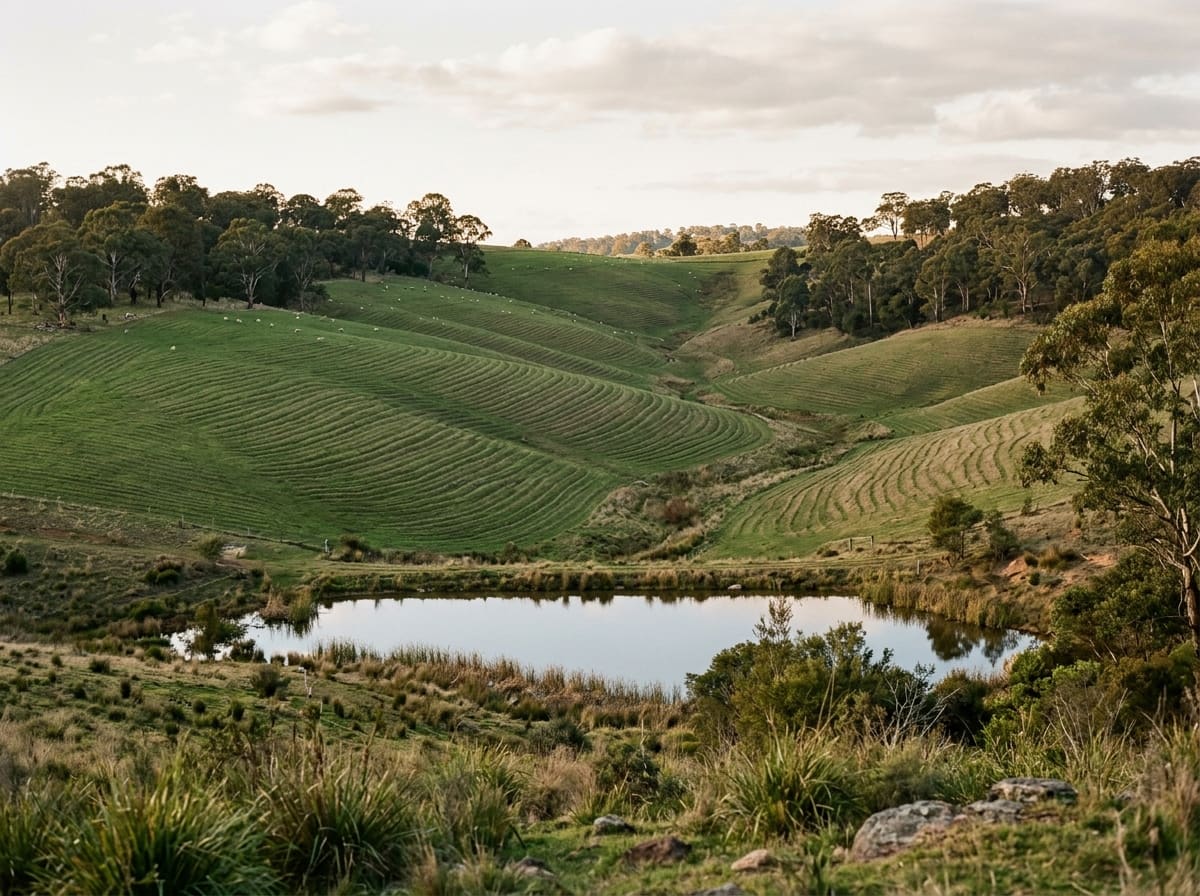
P. A. Yeomansin chapter 1Australian mining engineer and farmer (1905 to 1984) who developed Keyline design: reading the shape of the land to hold and spread rain on the slope.
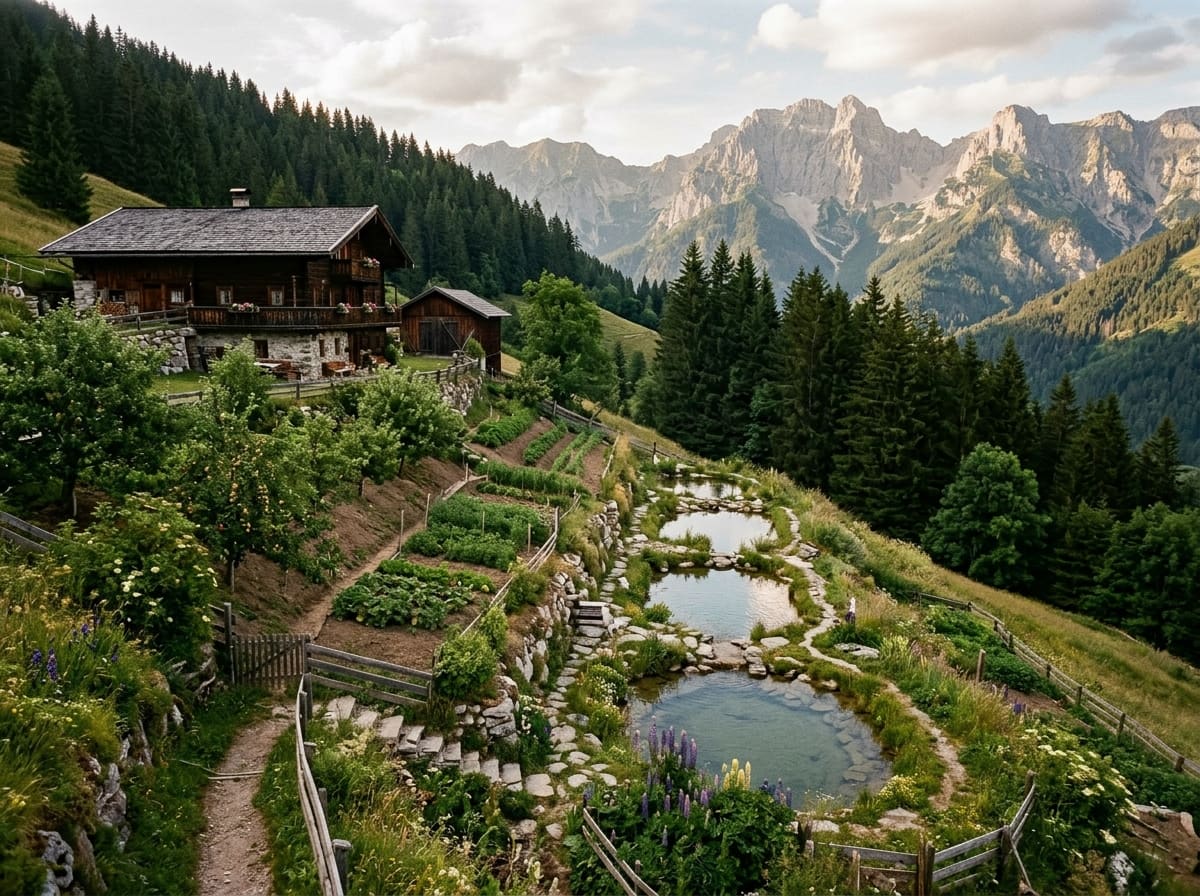
Sepp Holzerin chapter 1Austrian mountain farmer, born 1942, who turned a steep farm in the Lungau into a landscape of ponds, terraces and mixed plantings at up to 1,500 metres.
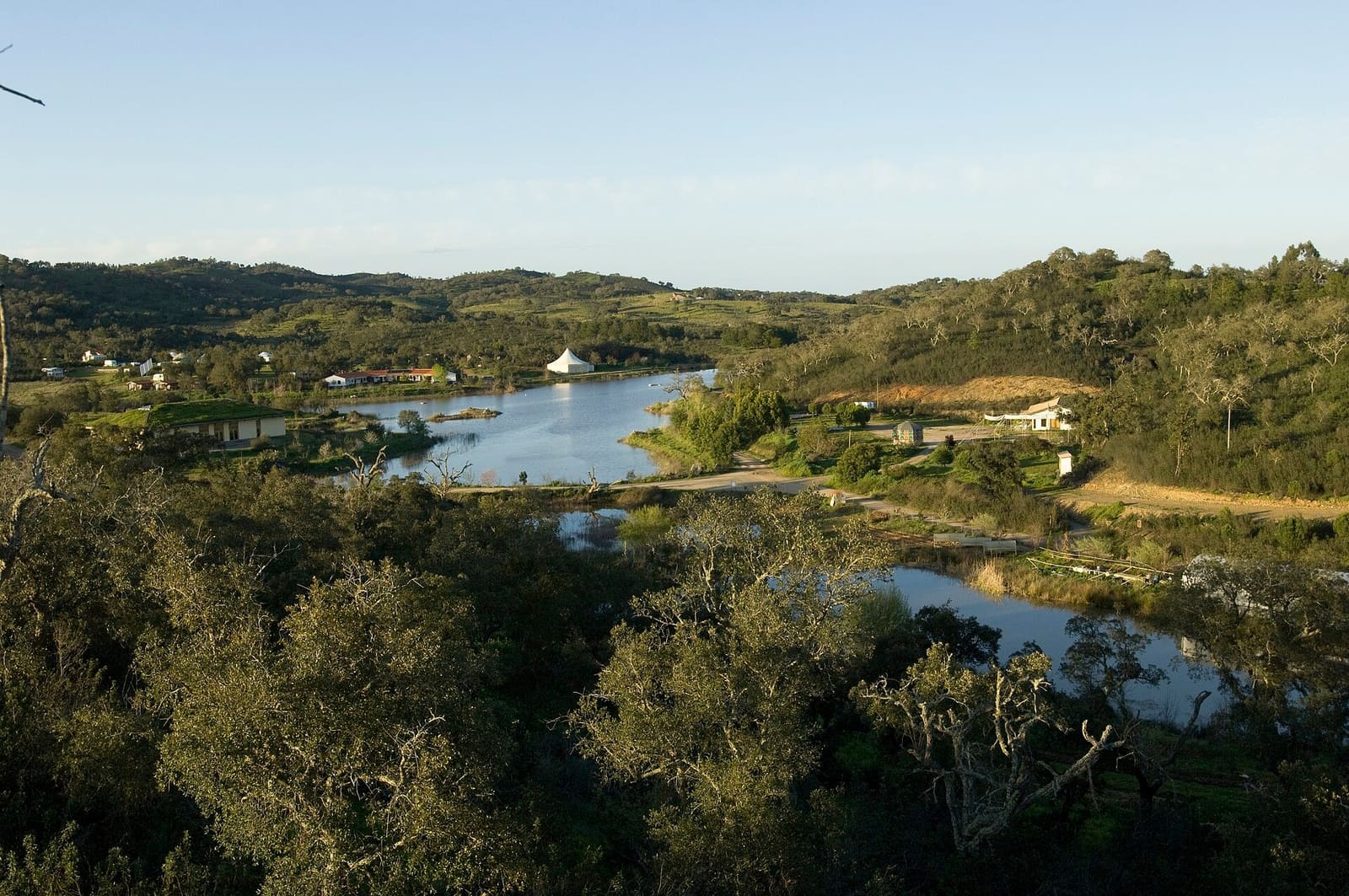
Tamerain chapter 11Living and research community in Portugal's Alentejo, best known for the water retention landscape it has built since 2007 to keep rain on the land.
Tony Rinaudoin chapter 12Australian agronomist who discovered the 'underground forest' of living tree stumps in Niger and spread farmer-managed natural regeneration worldwide.
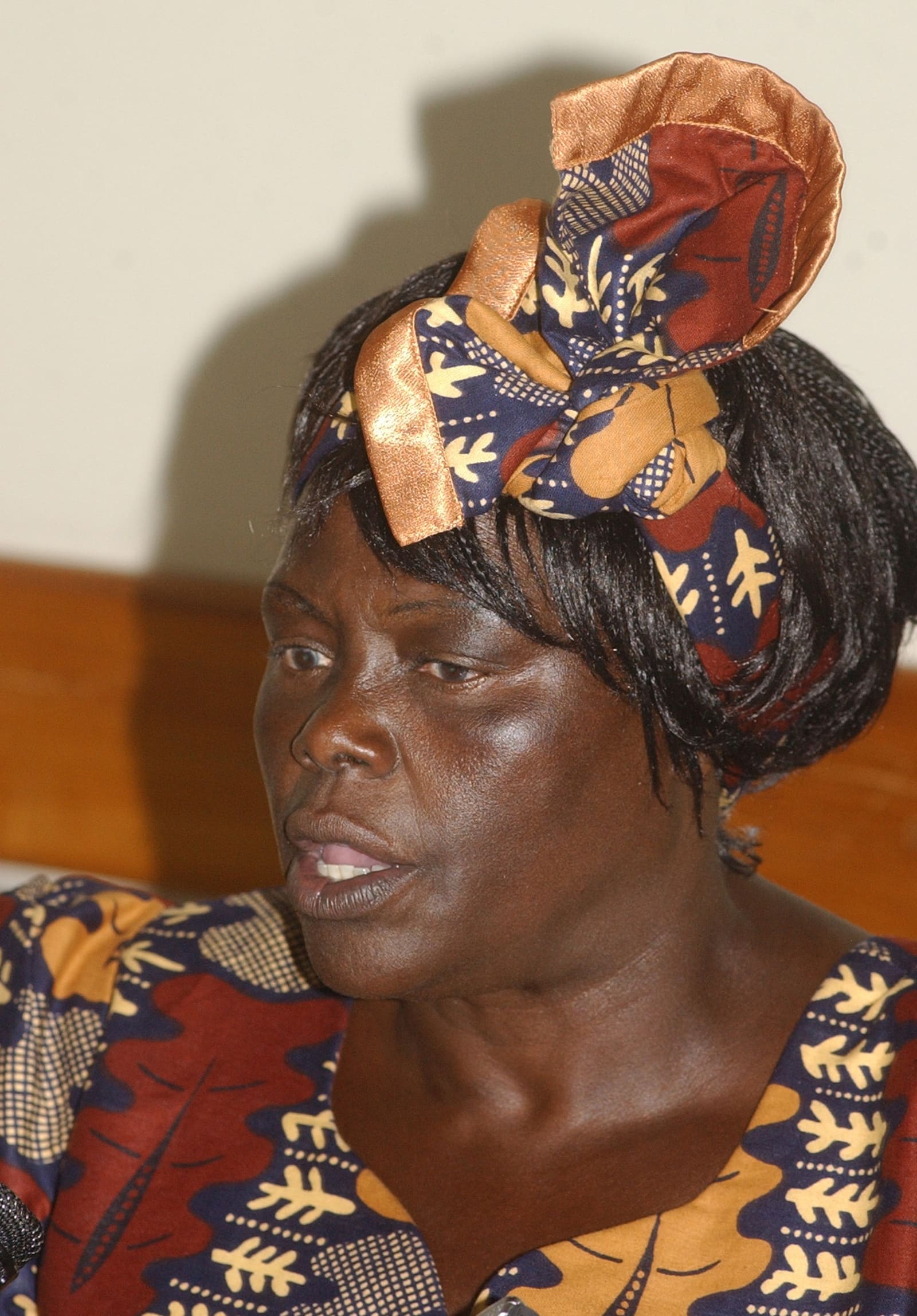
Wangari Maathaiin chapter 12Kenyan biologist who founded the Green Belt Movement, had women plant millions of trees and received the Nobel Peace Prize in 2004.
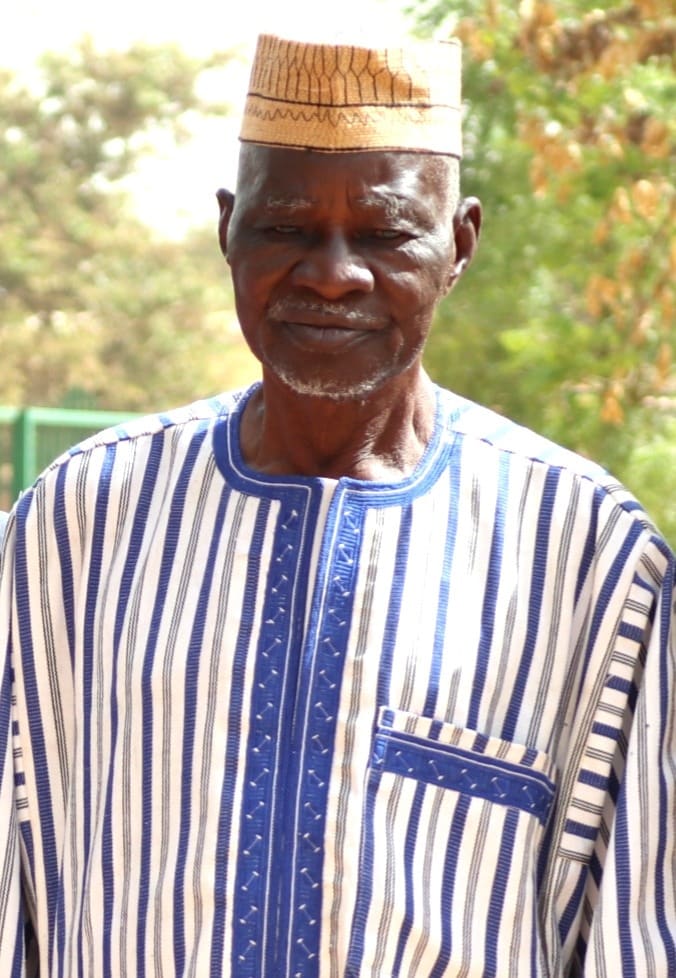
Yacouba Sawadogoin chapter 12Farmer from Burkina Faso who improved the traditional zaï planting pits, grew a forest on barren land and taught the method to thousands.
Every article by theme
Each theme in the order it reads best: from understanding to doing.
- Soil and life31
- Water and slope17
- Food forest and growing8
- Trees of Sardinia9
- Nature in transition13
- Plant portraits30
- Pioneers16
- Closing the cycles8
- Designing with permaculture36
Soil and life
What works below the surface: humus, fungi, bacteria.
- HumusFoundation
- Soil StructureFoundation
- Soil Food WebFoundation
- Mycorrhiza
- Rhizobia
- Nitrogen-Fixing Plants
- Biological Soil Crust
- Indicator Plants
- Spade Test
- Texture by Feel
- Soil Analysis
- Soil Water Holding Capacity
- Soil Compaction
- Soil Water Repellency
- Soil Erosion
- Mulch
- Sheet Mulching
- Living Mulch
- Rock Mulch
- Chop and Drop
- Biomass Plants
- Dynamic Accumulator
- Cover Crop
- Green Manure
- Compost
- Composting toilet
- Hügelkultur
- Biochar
- Terra Preta (Amazonian Dark Earth)
- Soil Bioengineering
- Vetiver Grass
Water and slope
How rain is held before it runs off.
- Infiltration
- DesertificationFoundation
- Regreening & Reversing Desertification
- Rainwater HarvestingFoundation
- Keyline Design
- Swale
- Terracing
- Dry Stone Walls
- Microcatchment (Negarim)
- Half-Moon (Demi-lune)
- Zaï Pit
- Retention Pond
- Water Retention Landscape
- Roof water and cisterns
- Greywater
- Olla Irrigation
- Drought-Tolerant Landscaping (Xeriscaping)
Food forest and growing
Food in layers, modelled on the forest.
- PermacultureFoundation
- Polyculture
- Plant GuildFoundation
- Food ForestFoundation
- Syntropic Agriculture
- Agroforestry
- Silvopasture
- Herb Spiral
Trees of Sardinia
Oaks, olives, macchia and the trees of tomorrow.
Nature in transition
Succession, restoration, and people as part of it.
Plant portraits
What already grows at Sa Medada: fruit, nitrogen fixers, trees.
Pioneers
People and places we learn from.
Closing the cycles
Water, nutrients, carbon, energy, material and seed: where cycles break and how to close them.
- Cycle thinking in permacultureFoundation
- The Water CycleFoundation
- Water balance: when rain exceeds evaporationFoundation
- The Nutrient CycleFoundation
- Carbon and humusFoundation
- Biomass and material
- Energy: The Flow That Drives Everything
- The Seed Cycle
Designing with permaculture
Ethics, principles and tools: the journey through permaculture.
- The three ethics of permacultureFoundation
- Observe and interact
- Catch and store energy
- Obtain a yield
- Apply self-regulation and accept feedback
- Use and value renewable resources and services
- Produce no waste
- Design from patterns to details
- Integrate rather than segregate
- Use small and slow solutions
- Use and value diversity
- Use edges and value the marginal
- Creatively use and respond to change
- Mollison's design principlesFoundation
- The design processFoundation
- Design methods
- Base map and overlays
- Element analysis
- Zones in permacultureFoundation
- Sectors in permaculture
- Scale of permanenceFoundation
- MicroclimateFoundation
- Stacking in space and time
- The Mediterranean garden year
- Bees and pollinators
- Chickens in the system
- Managed grazingFoundation
- Farmer managed natural regeneration (FMNR)
- Seed saving and exchange
- Vermicompost
- Ecosystem services
- Invisible structuresFoundation
- CommonsFoundation
- Sociocracy
- Community supported agriculture (CSA)
- Local Currency