
In brief
How to plant a young tree on a dry slope so that it roots in the wet season and survives its first summer: timing, hole, basin, mulch, shade and water.
Why the first summer decides
Planting a tree takes an hour. Whether it lives is decided in the months that follow, and on a dry slope above all in its first summer. In a Mediterranean climate the rain falls in the cool half of the year, while the summer brings months of heat with hardly any water. A young tree enters that season with the roots it has managed to grow before it.
Spanish forestry research has put this into a simple model. Pedro Villar-Salvador and colleagues, looking at plantations across the Mediterranean, name summer drought as the main cause of death in young trees and link survival to strong growth during the wet season: a plant that grows well while the soil is moist builds the deep, large root system that carries it through the dry months. Almost every step below serves that one goal. The tree should root as fast and as deep as possible while water is there, and lose as little as possible once it is gone. The rhythm of the year behind it is described in the Mediterranean garden year.
When to plant
Where the rain falls in winter, the planting season begins with the first autumn rain and runs through the winter, as long as the soil is moist and can be worked. Gardeners in California, which shares the climate, give the same advice: plants set out in autumn root with the winter rain and need only a few supplementary waterings in their first summer or two.
Warmth-loving subtropicals are the exception. The University of California Statewide IPM Program advises planting containerised avocados after the last frost in spring, so that they establish before the hot weather. For avocado, citrus and similar species, spring is the window, into soil that has warmed up. In both cases planting in late spring or early summer is the worst choice: the tree meets the heat with roots that have hardly left the root ball.
Choosing the plant
A young, well-grown plant settles faster than an old one that has spent years in a small pot. Size alone is no warning sign: Villar-Salvador and colleagues found that in Mediterranean plantations larger seedlings with a higher nitrogen content tend to survive better than small, poorly fed ones. What matters is the balance between top and roots and the state of the roots.
Container plants can be planted outside the dormant season but, according to the Royal Horticultural Society, may need more aftercare. Roots that hit the wall of a plastic pot turn and circle around the root ball. Christopher Enroth of the University of Illinois Extension also observes that most trees already sit too deep in their container when they are bought; removing the top few centimetres of potting soil until the first structural root appears shows where the real surface lies. Bare-root trees are lifted while dormant and are only on sale in the cooler months, which in a winter-rain climate coincides with the planting season.
The planting hole
Before digging it is worth knowing the soil. A spade test shows how deep it is and where it is compacted; the texture by feel tells sand from clay. On heavy clay the hole must not become a basin that holds water around the roots after a storm.
The hole is wide and shallow. The Royal Horticultural Society recommends three times the width of the root ball and exactly its depth; the Alabama Cooperative Extension System gives two to three times the width and stresses that the hole should never be deeper than the root ball. The point where the roots meet the trunk ends up level with the soil or slightly above it. The width gives the young roots loose soil to spread sideways into, which matters more than depth. Smooth, glazed walls, which a spade leaves in clay, are roughened with a fork.
Circling roots are loosened or cut. Alabama extension recommends shaving one to two inches, about three to five centimetres, off the outside of a root-bound ball and teasing out the roots by hand. The hole is then refilled with the soil that came out of it. Linda Chalker-Scott of Washington State University advises against amending the planting hole in any way: rich compost confined to the hole keeps the roots inside it. The soil is firmed with the heel and watered thoroughly, so that no air pockets remain.
Basin, mulch and shade
A low ring of earth around the tree holds the water where the roots are. For avocados the University of California places the basin about 30 centimetres from the trunk and keeps the trunk itself as dry as possible. On a slope a closed ring is hard to keep level; the earth bank goes mainly on the downhill side, open towards the slope, as in the half-moon. Larger forms of the same idea are the microcatchment, which leads the runoff of a whole patch to one tree, and the zaï pit, which combines water with compost. On heavy soils Brad Lancaster places the plant slightly above the lowest point of the basin, so that it does not stand in water. The FAO water harvesting manual advises checking the bunds after every heavy rain and repairing breaches at once.
Mulch covers the basin. The Royal Horticultural Society recommends a layer of five to eight centimetres of organic material and a gap of ten centimetres around the trunk. A cone of mulch heaped against the trunk, the so-called mulch volcano, keeps the bark moist; the Illinois Extension compares it to planting too deep.
Shade is the third protection. In a meta-analysis of field plantings in the Sierra Nevada of southern Spain, Gómez-Aparicio and colleagues found that shrubs used as nurse plants improved the survival of young trees in their first summer, the most critical period for reforestation in Mediterranean areas. Spanish trials with holm oak point the same way: seedlings shaded only in summer survived better than unshaded ones. Existing shrubs are therefore not cleared but used, and fast nurse trees or pioneer plants can be planted to give shade and break the wind.
Watering in the first summer
Even a tree planted in autumn usually needs some water in its first summer. The rule is rarely and deeply. The Royal Horticultural Society advises watering less often but more thoroughly, so that the water reaches the roots 20 to 30 centimetres down, and letting the surface dry before the next watering; it warns against fixed routines such as watering once a week regardless of the weather. Deep, occasional watering encourages deep roots. Newly planted trees need it in their first year during dry spells, large ones for up to three summers.
Where water has to be carried by hand, an olla can help: an unglazed clay pot buried next to the tree releases water slowly into the soil around it, under the mulch and out of the sun. In hot weather it is refilled every few days. David Bainbridge called the method little known but very efficient. Like every aid of this kind it is a bridge for the first summers, until the roots have followed the moisture down.
Stake and guard
A stake is needed only if the tree cannot stand on its own. The Alabama Cooperative Extension System names an unstable tree, a windy or exposed site or the risk of damage as reasons, ties the trunk low and flexibly so that it can sway, and recommends removing the stake as soon as the tree stands by itself, usually after one growing season and at the latest after 12 to 18 months. A trunk that moves in the wind grows stronger.
Animals are often the greatest danger. Tube shelters were developed against browsing; in Mediterranean plantations they also improve survival, in a trial with holm oak mainly through the shade they give in summer. Where goats, sheep, cattle or deer graze, a sturdy guard or fence is part of the planting from the first day.
Common mistakes
Too deep. A tree planted too deep does not die at once; the buried trunk base slowly rots. The Illinois Extension describes such trees as looking like a telephone pole stuck into the ground, without a visible root flare.
Root ball not loosened. Circling roots keep circling in the ground and can later constrict the trunk.
Mulch volcano. Mulch against the bark has the same effect as planting too deep.
Watering little and often. Shallow watering keeps the roots in the hottest layer of soil.
Planting in early summer. The tree meets the drought before it has rooted.
How Terra Humana understands planting
For Terra Humana planting a tree is the beginning of a relationship with a place, and on a dry slope its success is measured over years, not in the hour of planting. The aim is a tree that lives on the winter rain stored in the soil. Basins, mulch, shade and the first waterings are bridges to that point; the less a tree still needs them after a few summers, the better it was planted. That is why the season, the soil and the shade are chosen with as much care as the tree itself, and why we watch each planting through its first summers.
Sa Medada
What this looks like at Sa Medada
Sa Medada lies on the eastern side of Sardinia, and the dry season runs from about May to September. For a young tree the first summer is the hardest test. The first tree planted on the land, a service tree, went into the ground in 2024 on a very hot southern flank. Our first nurse is a Leucaena, now two metres tall, which shades two avocados. Tagasaste has been raised from seed since August 2026 and is to be planted out with the winter rain.
More about Project EdenPlants in this entry
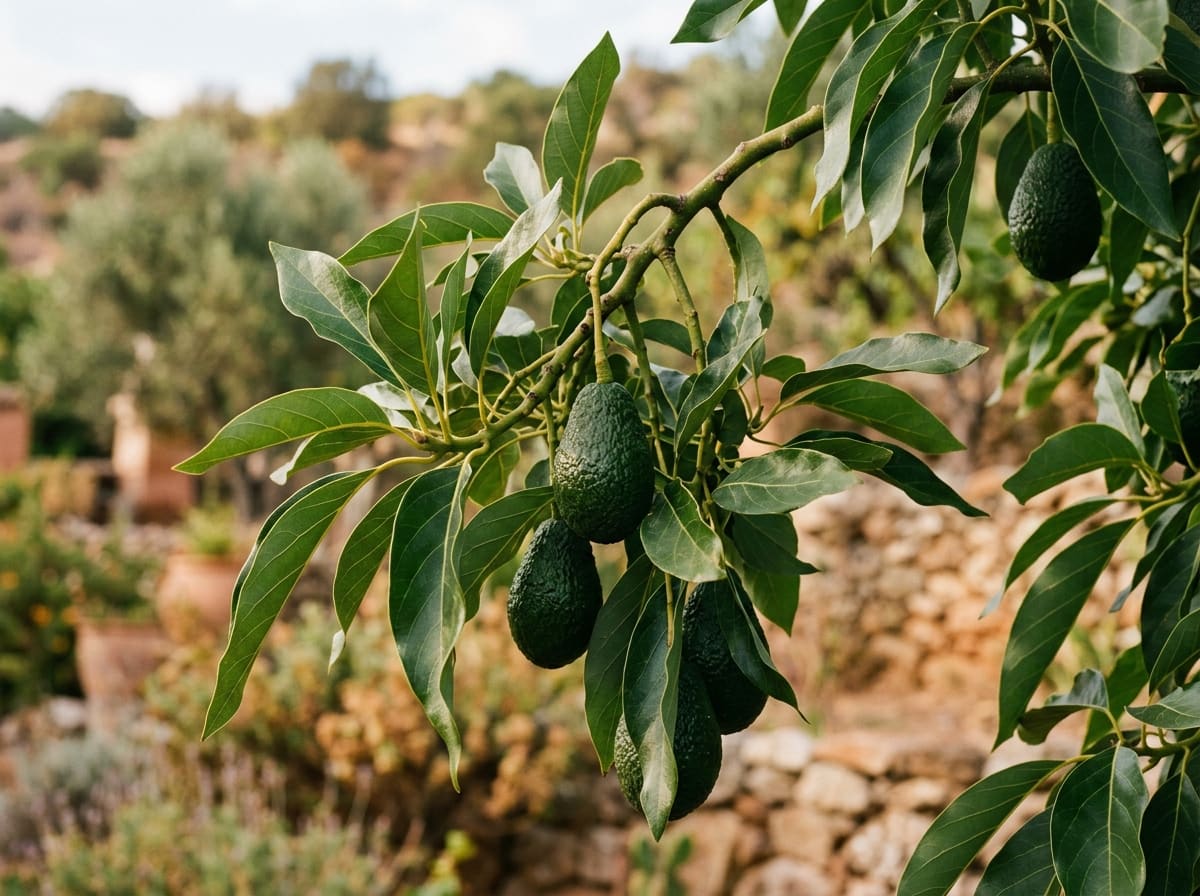
- AvocadoPersea americana
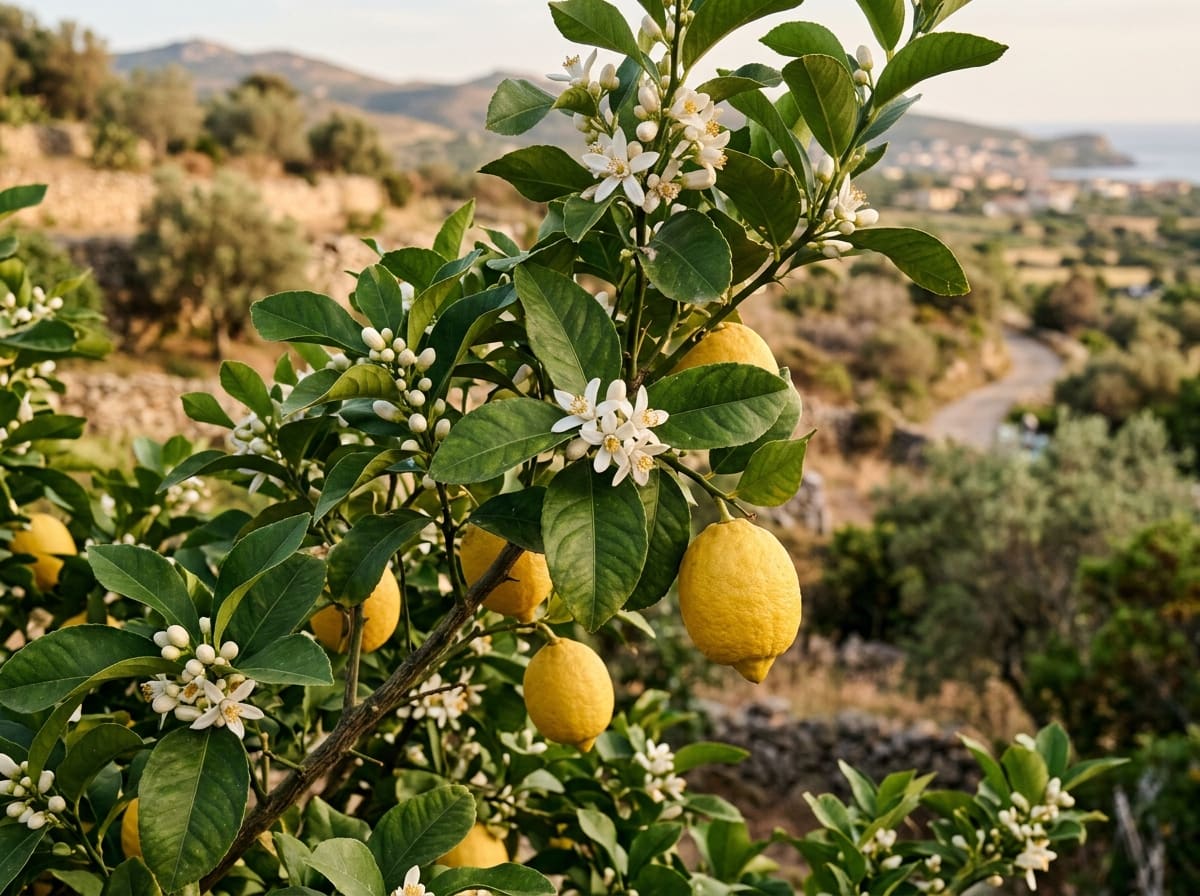
- CitrusCitrus
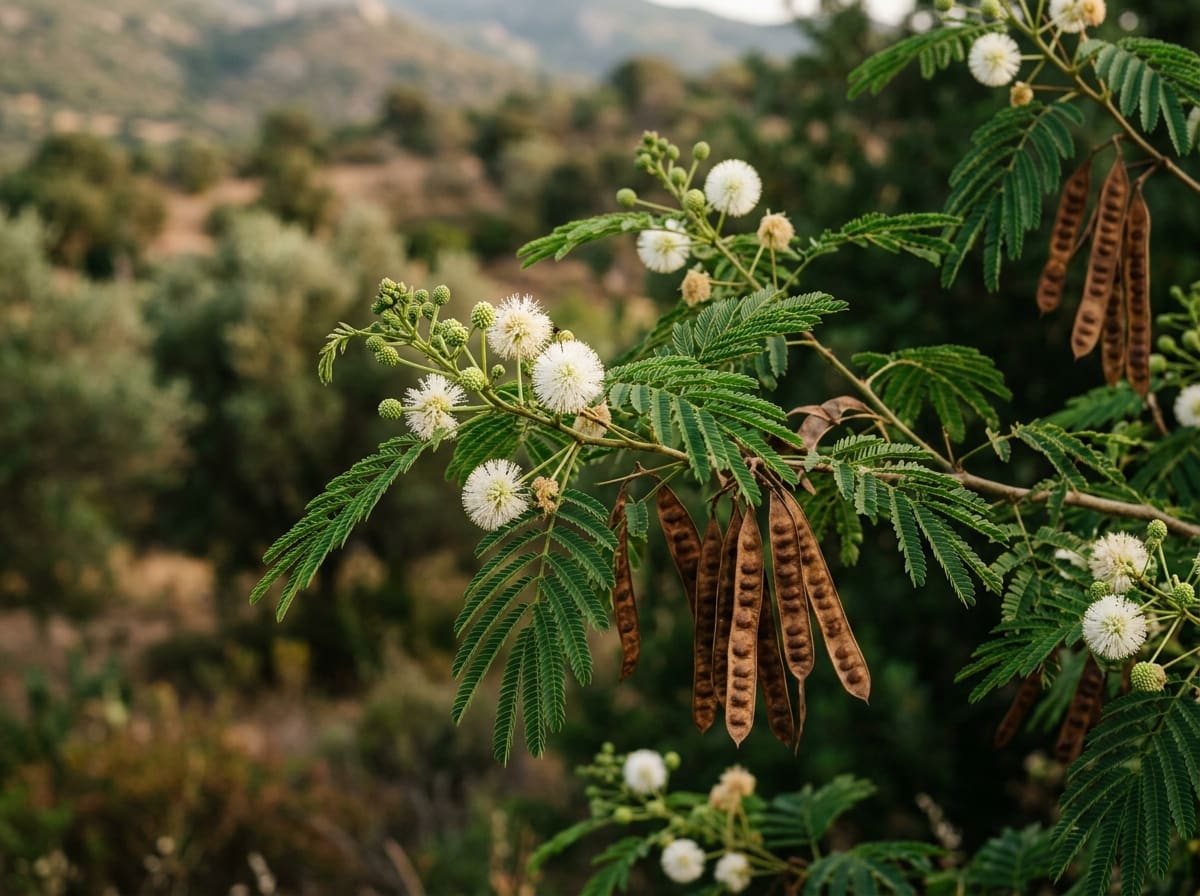
- LeucaenaLeucaena leucocephala
TagasasteChamaecytisus proliferus


Frequently asked
When is the best time to plant a tree in a dry climate?
Where the rain falls in winter, with the first autumn rain and through the winter, as long as the soil is moist and workable. A tree planted then has the whole wet season to root into moist soil before its first summer. Research on Mediterranean plantations in Spain links the survival of young plants above all to how well they grow during the wet season, while summer drought causes most losses. Warmth-loving subtropicals are the exception: the University of California advises planting containerised avocados in spring, once the last frost is over, so that they establish before the hot weather.
How big should the planting hole be?
Wide rather than deep. The Royal Horticultural Society recommends a hole three times as wide as the root ball and exactly as deep; extension services in the United States give two to three times the width. The point where the roots meet the trunk ends up level with the surrounding soil or slightly above it. Loosening the sides of the hole with a fork helps the roots grow out, especially in clay, where a spade can leave smooth walls.
Should compost go into the planting hole?
Usually not. Linda Chalker-Scott of Washington State University advises against amending the planting hole in any way and recommends refilling it with the native soil. Rich material confined to the hole can keep the roots inside it instead of letting them spread into the surrounding ground. Organic matter belongs on top, as mulch over a wide area, where it feeds the soil from above.
How often should a newly planted tree be watered in summer?
Rarely and deeply. The Royal Horticultural Society advises watering less often but more thoroughly, so that the water reaches 20 to 30 centimetres down where the roots grow, and then letting the surface dry before the next watering. Newly planted trees need this in their first year in dry spells, large ones for up to three summers. Frequent small amounts keep the roots near the surface, exactly where the summer heat is strongest.
Does a young tree need a stake?
Only if it cannot stand on its own, for example on a windy, exposed site or with a large crown on a small root ball. The Alabama Cooperative Extension System recommends removing stakes as soon as the tree stands by itself, usually after one growing season and at the latest after 12 to 18 months. The tie stays low and flexible, so that the trunk can move in the wind and grow stronger.
What are the most common mistakes when planting a tree?
Planting too deep, often because the tree already sat too deep in its pot. Leaving circling roots as they are. Piling mulch against the trunk in a cone. Watering little and often instead of rarely and deeply. Planting in late spring or early summer, so that the tree meets the heat with roots that have hardly left the root ball. And leaving the tree unprotected where animals graze.

Related terms


Mentioned in
See this in practice
Sources
- Villar-Salvador, P. et al., Increase in size and nitrogen concentration enhances seedling survival in Mediterranean plantations. Insights from an ecophysiological conceptual model of plant survival, New Forests 43 (2012)
- McDaniel, P., Fall is Time for Planting Natives, California Native Plant Society, Channel Islands Chapter (first published in the Ventura County Star, November 2007)
- University of California Statewide IPM Program, Planting Avocados, ipm.ucanr.edu (accessed October 2026)
- Royal Horticultural Society, How to plant a tree, rhs.org.uk (accessed October 2026)
- Royal Horticultural Society, Watering plants wisely, rhs.org.uk (accessed October 2026)
- Arseniou, G., Best Practices for Successful Tree Planting, Alabama Cooperative Extension System, FOR-2192 (2026)
- Enroth, C., Tree troubles usually start at the base of the trunk, Good Growing, University of Illinois Extension (30 June 2020)
- Chalker-Scott, L., The Informed Gardener, University of Washington Press (2008), as cited by the Elisabeth C. Miller Library, University of Washington, Best procedures for preparing planting holes
- Gómez-Aparicio, L. et al., Applying plant facilitation to forest restoration: a meta-analysis of the use of shrubs as nurse plants, Ecological Applications 14 (2004)
- Puértolas, J., Oliet, J. A., Jacobs, D. F., Benito, L. F. and Peñuelas, J. L., Is light the key factor for success of tube shelters in forest restoration plantings under Mediterranean climates?, Forest Ecology and Management 260 (2010)
- Critchley, W. and Siegert, K., Water Harvesting: A Manual for the Design and Construction of Water Harvesting Schemes for Plant Production, FAO (1991)
- Lancaster, B., Rainwater Harvesting for Drylands and Beyond, Vol. 1, 3rd edition, Rainsource Press (2019)
- Bainbridge, D. A., Buried clay pot irrigation: a little known but very efficient traditional method of irrigation, Agricultural Water Management 48 (2001)
Last updated: 2026-10-20