Skip to content

Closing the cycles

A living landscape runs on cycles. Water falls, soaks in and rises again as vapour; nutrients pass from leaf to soil and back into a root. Each page shows how a cycle runs in nature, where ordinary land use breaks it, which techniques close it again and what it looks like at Sa Medada.

Aerial view of a Mediterranean permaculture smallholding at golden hour: a house, a pond, round keyhole beds, a straw-covered compost heap, chickens under fruit trees and a food forest, all linked by pathsStart here: the idea behind itCycle thinking in permacultureThe permaculture view of land as linked loops of water, nutrients, carbon, material and seed, all of them driven by sunlight.Read the introduction
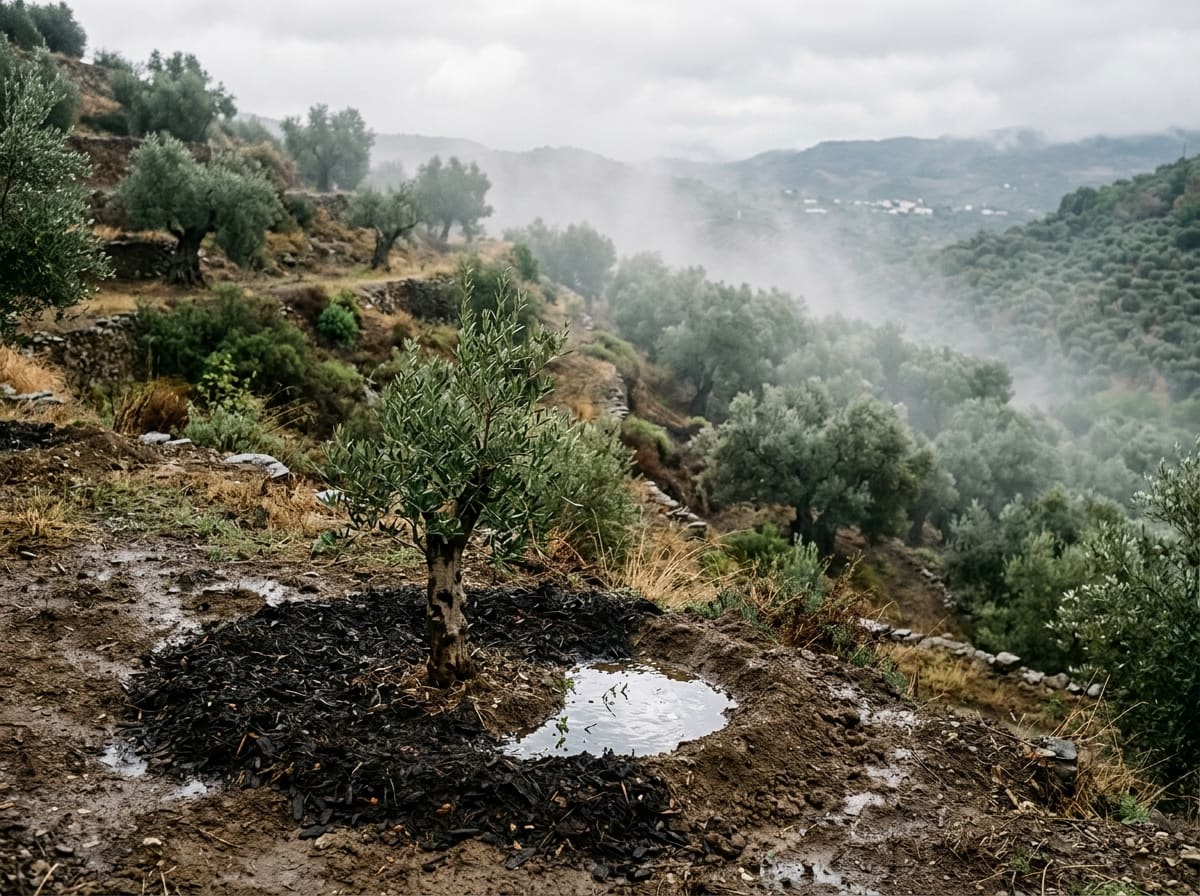
  1. Mediterranean hillside after the first autumn rain, mulched soil around young trees, water in a small earth basin, mist over an old olive grove1The Water CycleHold water where it fallsThe path of water from rain through soil, plants and air back to rain. On land it stays closed only where water is held, soaks in and is passed on by plants.Rain · Soil surface · Soil water · Ponds and groundwater · Plants and roots · House and garden · Vapour and cooling7 stations · 31 techniquesOpen the cycle
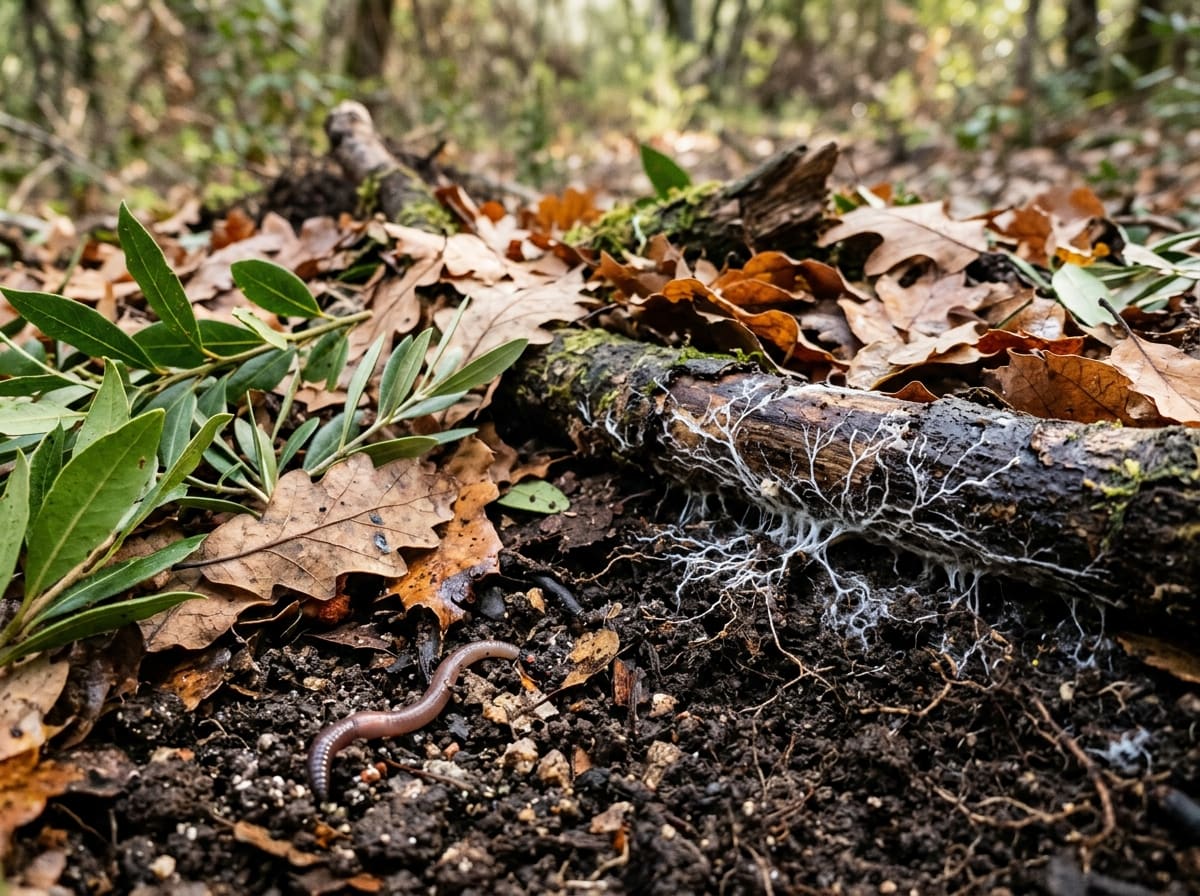
  2. Floor of a Mediterranean forest garden: leaves, freshly cut branches and decaying wood on dark crumbly soil, fungal threads and an earthworm2The Nutrient CycleGive back what you takeThe path of nitrogen, phosphorus and other nutrients from air and rock through plants, animals and soil life back to the roots.Air and rock · Roots and fungi · Growing plants · Harvest and litter · Animals and people · Soil life · Humus store7 stations · 26 techniquesOpen the cycle
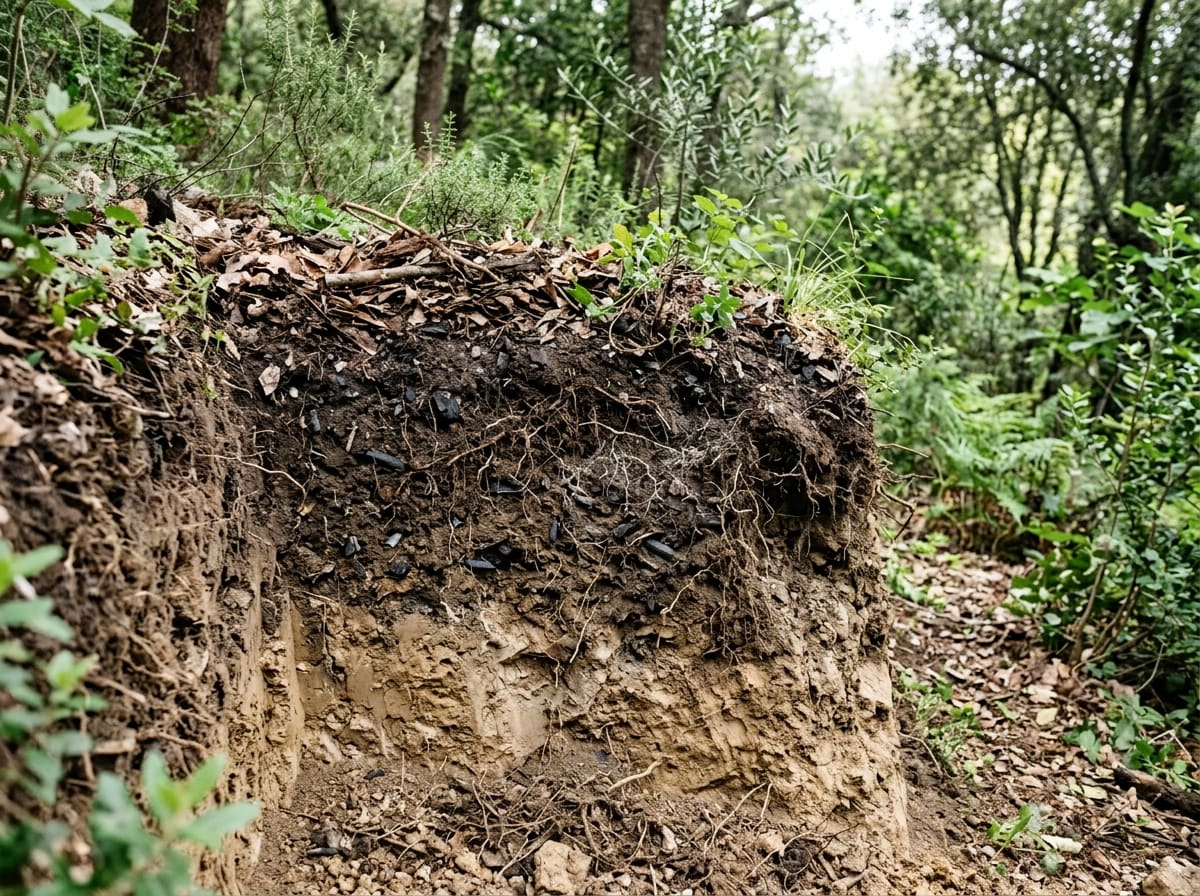
  3. Soil profile under Mediterranean woodland: a dark, humus-rich layer full of roots, fungal threads and bits of charcoal above lighter subsoil3Carbon and humusFrom the air into soilThe path of carbon from the air through leaves, roots and soil life into humus and back, where land use breaks it, and how it can be closed again.Leaves · Wood and trees · Litter and prunings · Roots · Fungi and soil life · Humus · Breathing out7 stations · 30 techniquesOpen the cycle
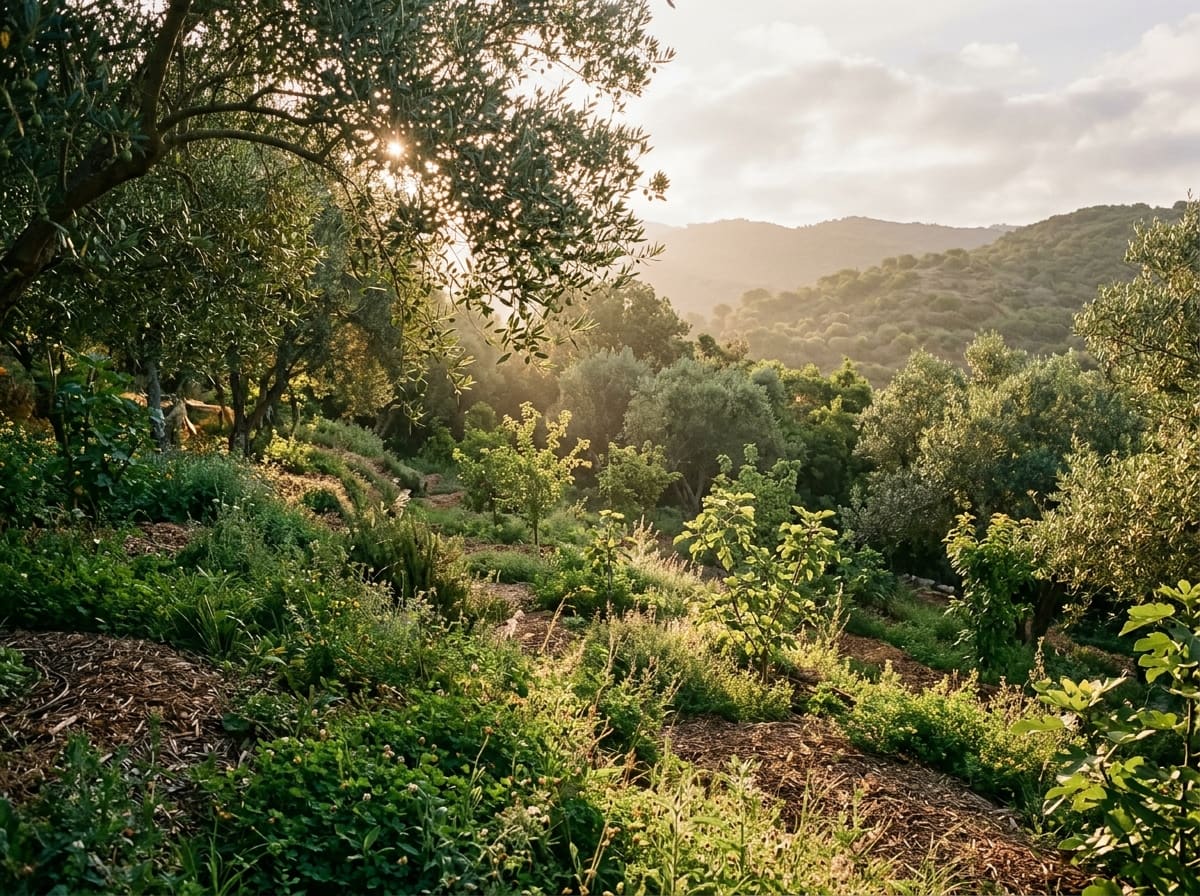
  4. Morning sunlight falls through several layers of leaves onto covered ground on a Mediterranean slope4Energy: The Flow That Drives EverythingCatch sunlight, feed the soilThe one-way path of sunlight through leaves, plants, animals and soil life until it leaves as heat. Energy does not circle; it drives every cycle that does.Sunlight on leaves · Plant growth · Roots and fungi · Animals · Litter and prunings · Soil life · Humus and char · Heat and cooling8 stations · 27 techniquesOpen the cycle
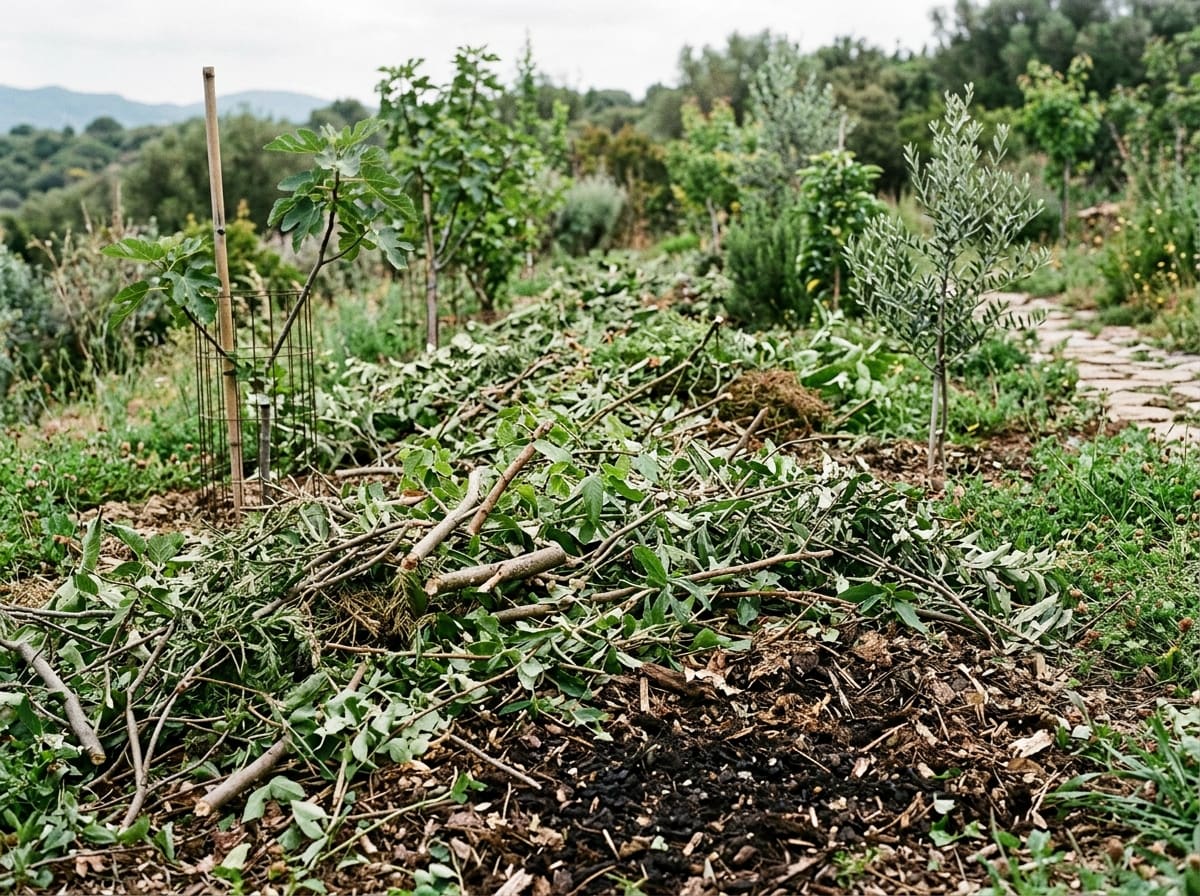
  5. Freshly pruned branches and leaves lie as a thick mulch layer between young fruit trees, older mulch breaking down into dark soil beneath5Biomass and materialWhat grows here staysThe loop of plant matter from growth through pruning, harvest and soil cover to decay and humus, where it is broken by burning and removal, and how to close it.Growth · Pruning and cutting · Harvest and kitchen · Soil cover · Decay · Humus6 stations · 24 techniquesOpen the cycle
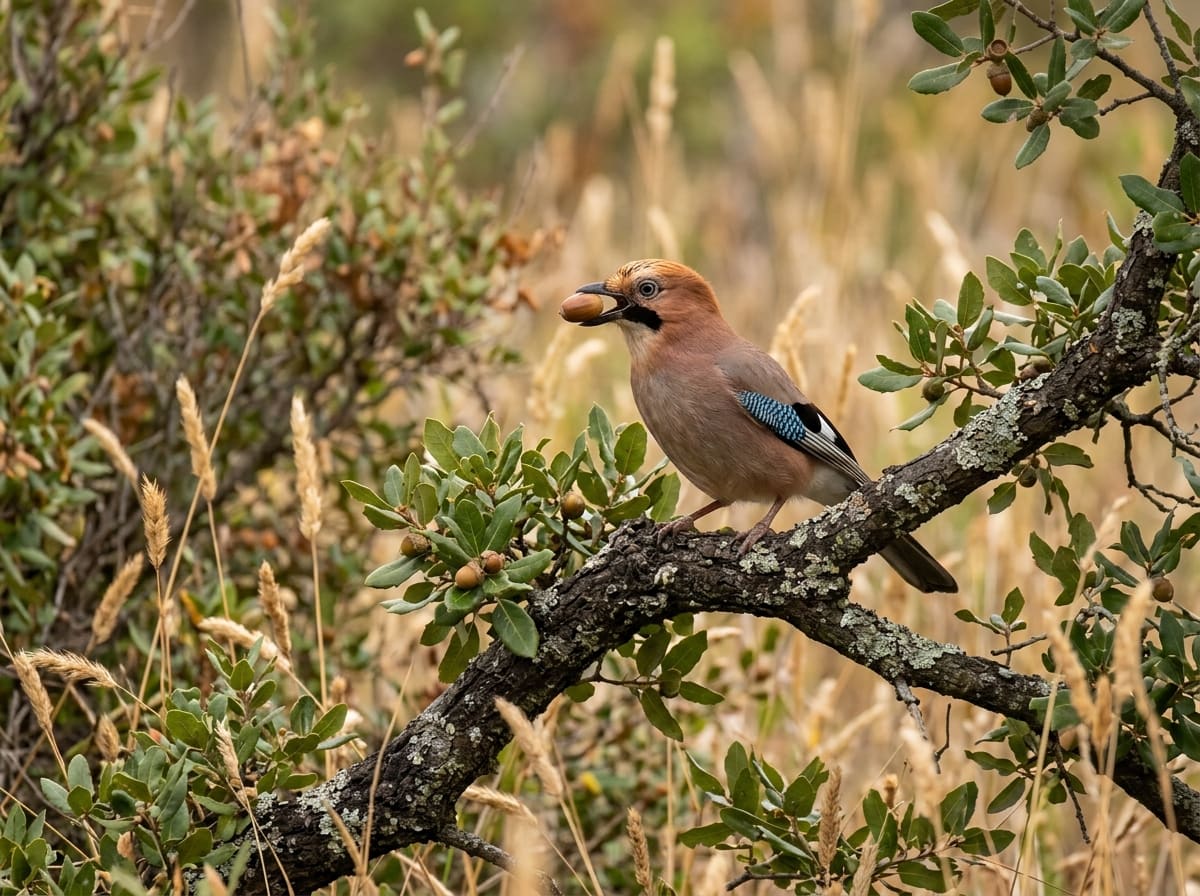
  6. A Eurasian jay holds an acorn on a holm oak branch, with maquis behind it in autumn light6The Seed CycleLet the land sow itselfThe path from flower and pollination through ripe seed, dispersal and the soil seed bank to a young plant that flowers again, a little better adapted.Mother plants · Flowers, pollinators · Ripening seed · Dispersal · Seed bank in the soil · Germination · Young plants · Adaptation8 stations · 27 techniquesOpen the cycle

All of TerraWiki