
In brief
Plants that host bacteria or actinobacteria able to convert atmospheric nitrogen into a form plants can use, fertilising the soil around them.
In the whole: Principles at work 3 Obtain a yield, 5 Use and value renewable resources and services, 8 Integrate rather than segregate, 10 Use and value diversity
What are nitrogen-fixing plants?
Every plant needs nitrogen to grow, yet almost none can use the vast supply of it in the air. Nitrogen-fixing plants solve this quietly, through a partnership millions of years old. In small nodules on their roots they host bacteria that take nitrogen straight from the atmosphere and turn it into forms the plant can absorb. In exchange the plant feeds the bacteria sugars. As leaves, roots and cut material decompose, the captured nitrogen enters the soil, and the plants growing nearby.
This is why they are often called support species or fertility plants. They do for free, and continuously, what a bag of synthetic fertiliser does once, at a cost, and with a heavy industrial footprint. A well-designed planting can build its own soil fertility from the air and the sun.
Two partnerships account for almost all of it. Legumes (family Fabaceae) work with Rhizobium and its relatives, and they span every growth form: trees such as acacia and Robinia, shrubs such as broom and tree medick, and the herbs and ground covers that carry most of the practice, among them clover, vetch, lupin and medick. Actinorhizal plants work with the actinobacterium Frankia instead and are mostly woody: alder, sea buckthorn, oleaster, Casuarina, Ceanothus. Because the ability follows plant lineage rather than growth habit, the older term nitrogen-fixing trees covers only one part of the group. In agroforestry it survives as a useful narrower label, often written as nitrogen-fixing trees and shrubs.
One caution belongs here, because popular planting lists get it wrong: not every legume fixes nitrogen. Large parts of the Caesalpinioideae form no nodules at all, and that includes two Mediterranean favourites, the carob (Ceratonia siliqua) and the Judas tree (Cercis siliquastrum). Both are valuable in their own right. Neither is a nitrogen source.
How Terra Humana understands them
For Terra Humana, nitrogen-fixing plants are the clearest proof that restoration and abundance need not depend on external inputs. A degraded Mediterranean hillside, poor and sun-baked, can begin to rebuild its own fertility the moment the right support species take root. They embody a principle at the heart of our work: that healthy land is a partnership, not a supply chain.
They also matter economically. Fertiliser is one of the largest recurring costs, and largest environmental burdens, of conventional growing. Land that fertilises itself is land that can heal and feed people without depending on volatile global markets.
There is a further reason we speak of plants rather than trees. On a dry southern slope the fastest gains rarely come from the canopy. They come from what covers the ground between and beneath the trees, holding moisture, shading soil and feeding the system season after season while the slower woody plants establish.
Nitrogen-fixing plants in practice
At Sa Medada, near Jerzu in Sardinia, support species are planted alongside the fruit, nut and timber trees of Project Eden rather than in separate plots, and in more than one layer. As the woody support plants grow they are pruned back, and the cut material is left on the ground as mulch, releasing nitrogen exactly where the neighbouring trees can reach it. This "chop and drop" rhythm turns fast-growing support plants into a renewable source of fertility.
Between the olive rows the work happens closer to the ground. Sulla (Hedysarum coronarium) is the classic Sardinian forage legume, deep-rooted, drought-adapted and a strong bee plant; self-seeding medics and subterranean clover return on their own each year once established. At the slope edges native brooms and tree medick hold the soil while they feed it.
The approach is drawn from syntropic agriculture and permaculture, where support species are not a side note but the engine of the system. It is early work, measured in growing seasons, and part of what Terra Humana wants to document: how quickly a poor Mediterranean soil can be rebuilt when the plants themselves are put to work.
Sa Medada
What this looks like at Sa Medada
At Sa Medada Tephrosia, around seven Leucaena, coral tree, Pacay, Inga edulis, Bambara groundnut and fava bean are in the ground, all so far without inoculation with root-nodule bacteria. Tephrosia is established. Tagasaste has been raised from seed since August 2026 and is to be planted out with the winter rain. Which species finds its bacteria without help is one of the questions we are watching there.
More about Project EdenPlants in this entry
BroomSpartium junceum - TephrosiaTephrosia
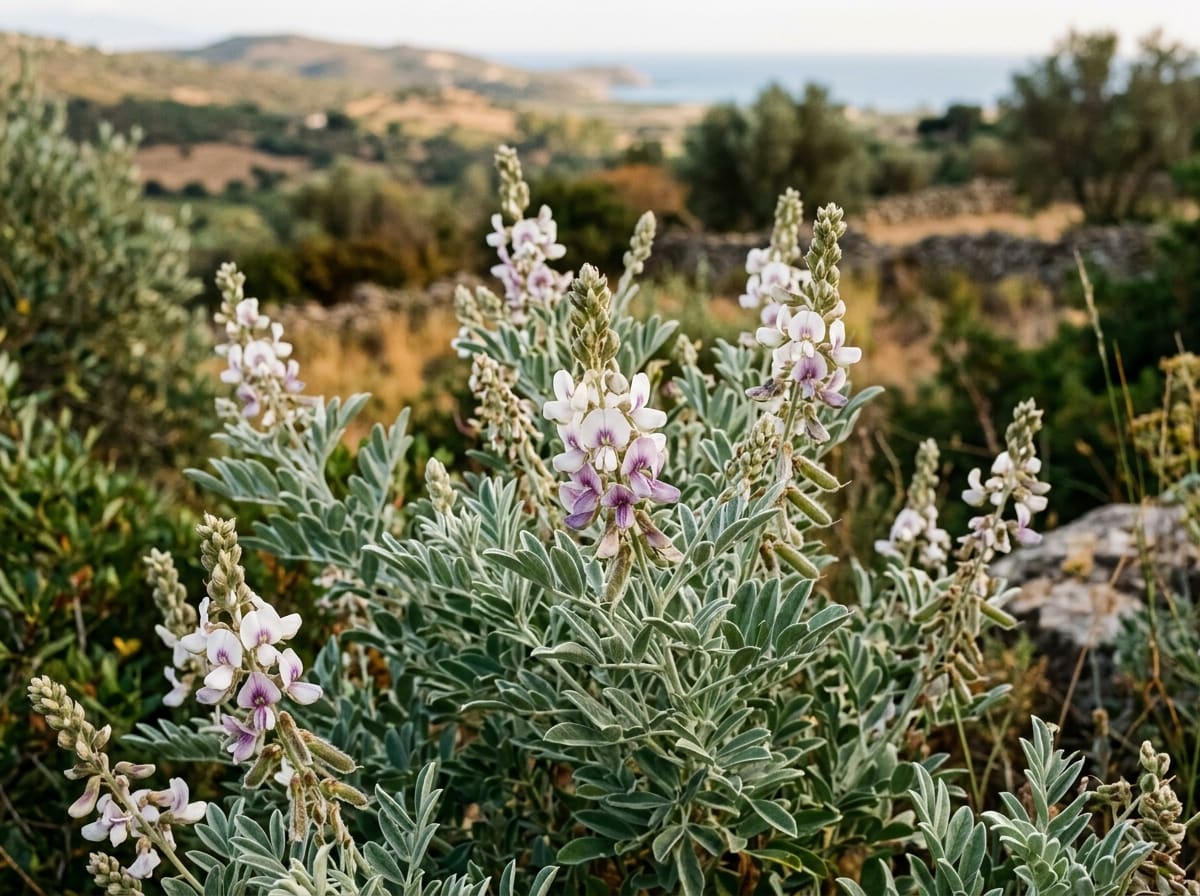
- LeucaenaLeucaena leucocephala
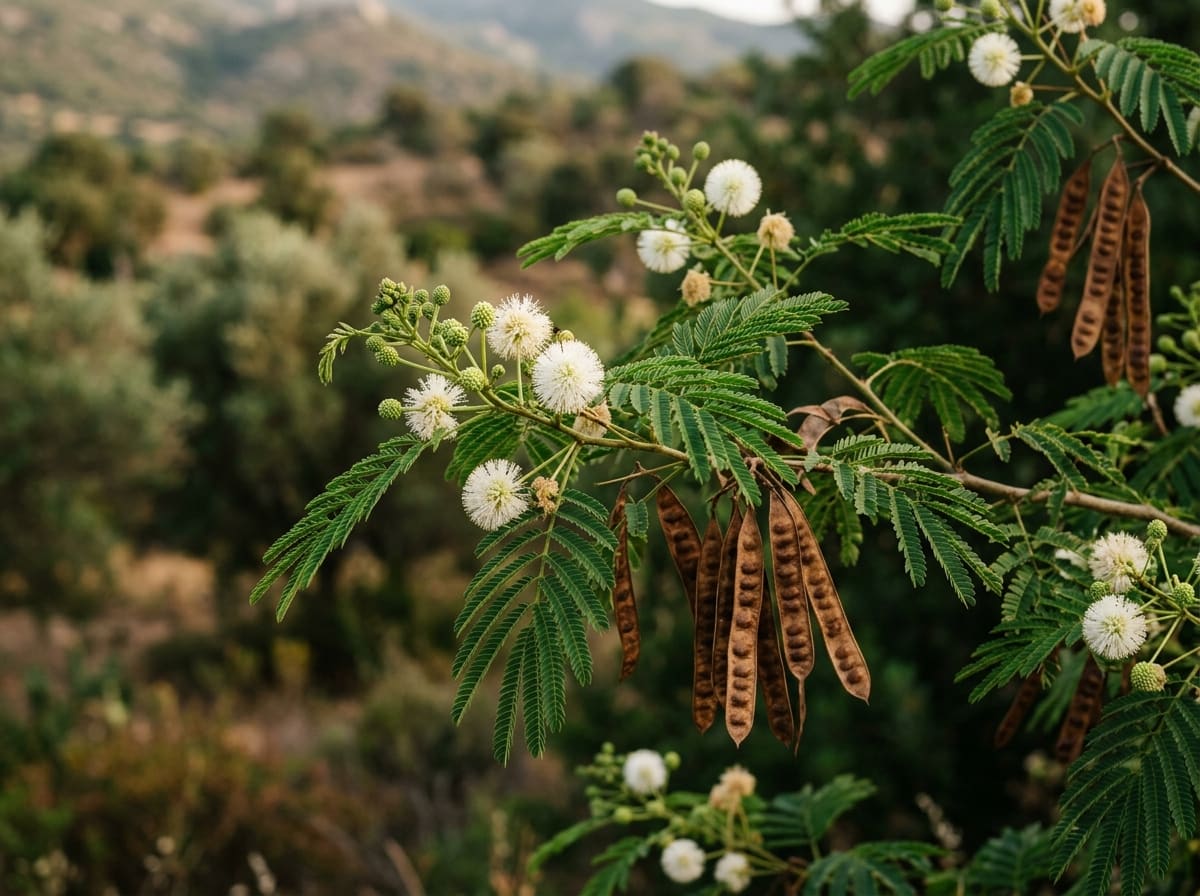
- Coral treeErythrina
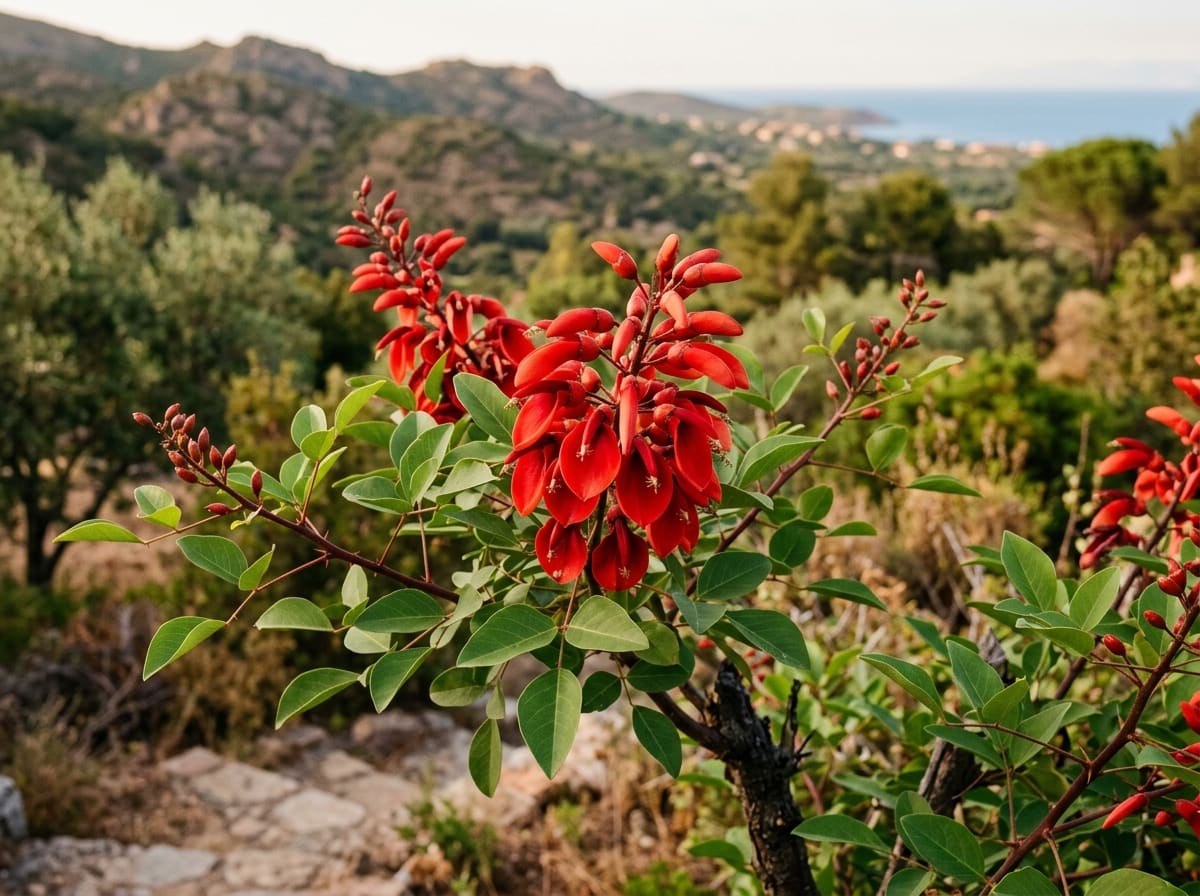
- PacayInga feuilleei
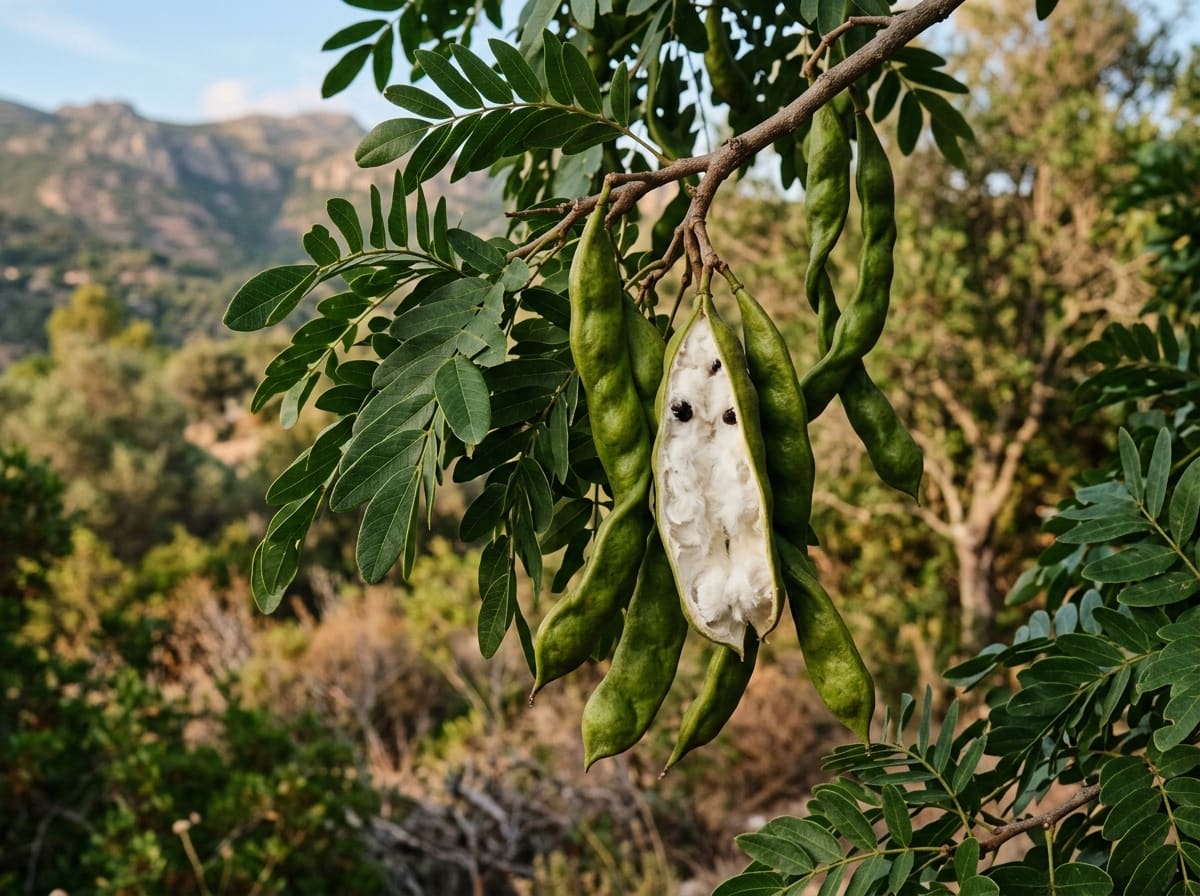
- IngaInga edulis
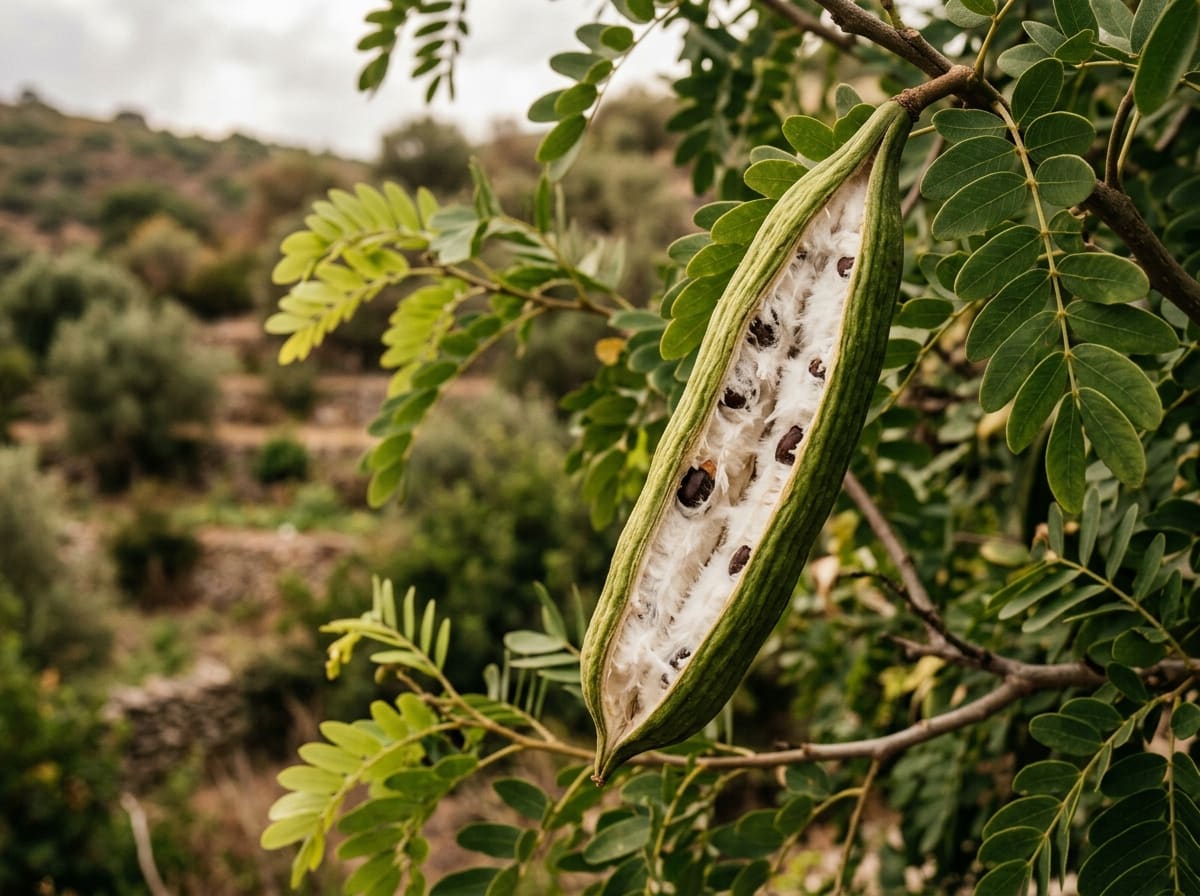
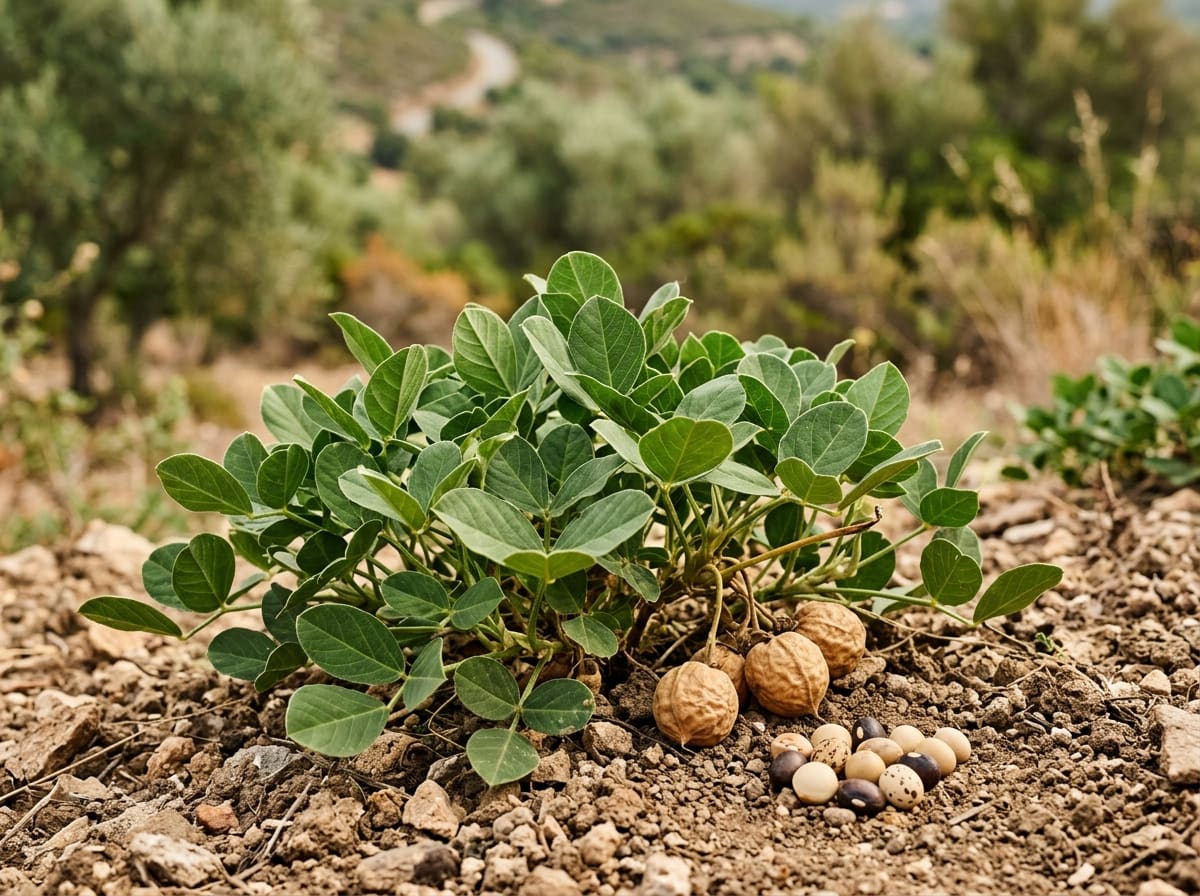
- Bambara groundnutVigna subterranea
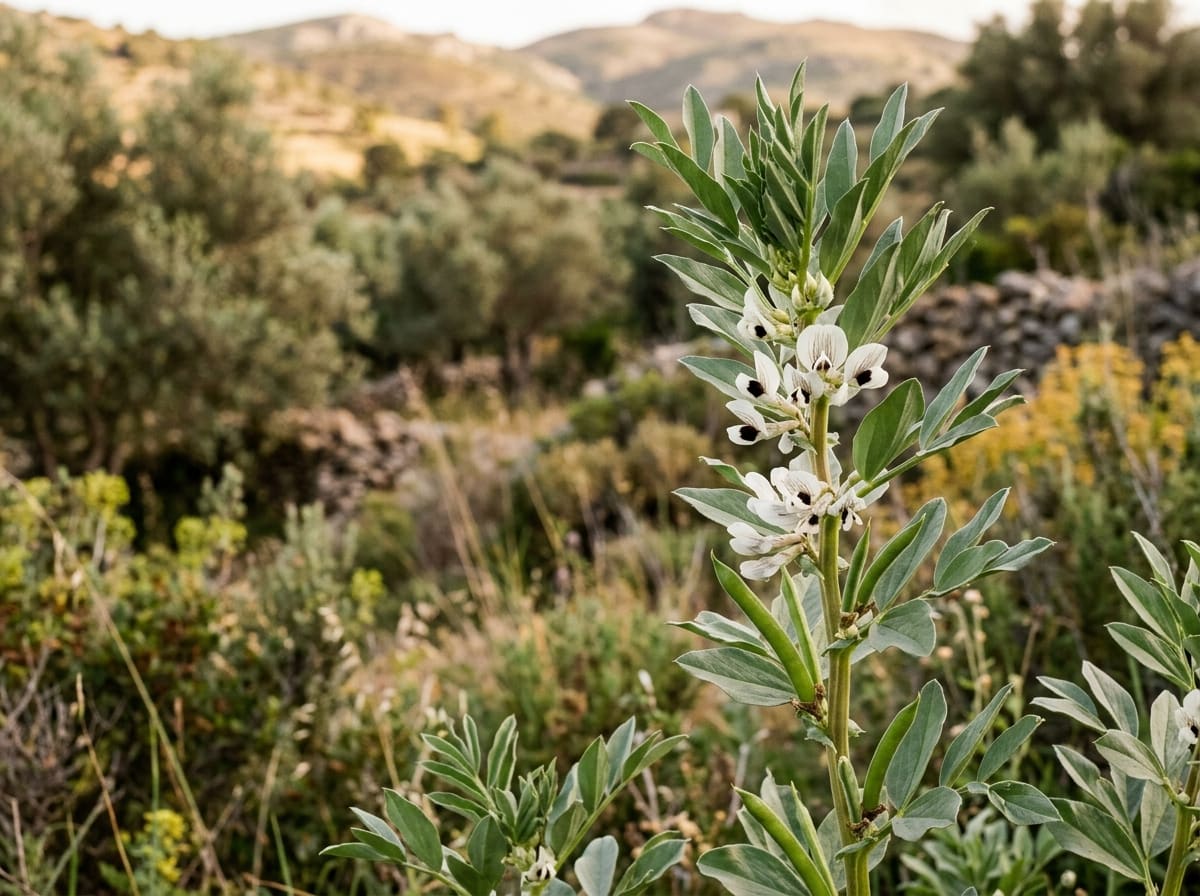
- Fava beanVicia faba
TagasasteChamaecytisus proliferus


Frequently asked
What are nitrogen-fixing plants?
Nitrogen-fixing plants live in partnership with bacteria housed in nodules on their roots, usually Rhizobium in legumes or Frankia in actinorhizal plants. These bacteria take nitrogen from the air, which most plants cannot use directly, and convert it into compounds that feed the host and, over time, the soil around it. The result is a living fertiliser factory that needs no bag, no factory and no fossil fuel. Trees, shrubs, perennials and annual ground covers all do it.
Which nitrogen-fixing plants does Terra Humana use?
In the Mediterranean climate of Sardinia, Terra Humana works with species suited to dry, sunny ground across every layer: tagasaste (tree lucerne), acacias and alder in damper spots among the woody plants, leguminous shrubs such as Spartium and Medicago arborea at the slope edges, and sulla (Hedysarum coronarium) with self-seeding medics and clovers as an undersowing between the olive rows. Vigorous pioneer species are included deliberately, because their resilience is what gets a depleted hillside moving. They are managed: pruned, thinned and progressively replaced as the planting matures, until the intended long-lived species hold the site.
What are nitrogen-fixing bacteria?
They are the actual workers of nitrogen fixation: microorganisms that convert nitrogen gas from the air (N2) into compounds plants can absorb. The best known live symbiotically inside root nodules, Rhizobium and its relatives in legumes, the actinobacterium Frankia in alders, sea buckthorn and casuarinas. Free-living soil fixers such as Azotobacter and cyanobacteria exist too, though their contribution is far smaller. Without these bacteria no plant would fix nitrogen: the plant provides sugars and lodging, the bacteria return usable nitrogen.
Where is nitrogen found, and why can plants not take it from the air?
Nitrogen is everywhere: about 78 percent of the air is nitrogen gas (N2). The paradox is that almost no plant can use it in that form, because the molecule's triple bond is too stable. Plants absorb nitrogen only from the soil, as nitrate or ammonium, produced by decomposing organic matter, rainfall or biological fixation. That is exactly where nitrogen-fixing plants change the picture: through their partner bacteria they tap the atmospheric reserve directly and bring it into the ground.
Which trees fix nitrogen in a Mediterranean climate?
Among trees and large shrubs suited to the Mediterranean: acacias, black locust, tagasaste (Chamaecytisus proliferus), oleaster (Elaeagnus), sea buckthorn, casuarina and, in cooler moist spots, alder. At Sa Medada Terra Humana uses them as nurse and support species between the olives and along the slope strips. Beware of two much-cited false friends: carob and the Judas tree are legumes but form no nodules and fix no nitrogen. With acacias there is one firm line: Acacia saligna and Acacia mearnsii are on the EU list of invasive alien species of Union concern, and Terra Humana does not use them; every acacia not on that list remains a welcome nurse.
Do all legumes fix nitrogen?
No, and this is one of the most common mistakes in planting lists. The ability to form nodules does not run through the whole Fabaceae family: large parts of the Caesalpinioideae lack it entirely. In the Mediterranean the two most important examples are carob (Ceratonia siliqua) and the Judas tree (Cercis siliquastrum), both valuable for shade, nectar and fruit, neither a nitrogen source. Before counting on a species as a fixer, check that it really forms active nodules.
Related terms


Mentioned in
- Apply self-regulation and accept feedback
- Bambara Groundnut
- Bees and pollinators
- Biomass and material
- Carbon and humus
- Chop and Drop
- Citrus
- Coral Tree
- Cover Crop
- Creatively use and respond to change
- Cycle thinking in permaculture
- Element analysis
- Energy: The Flow That Drives Everything
- Fava Bean
- Green Manure
- Inga (Ice-Cream Bean and Pacay)
- Integrate rather than segregate
- Leucaena
- Masanobu Fukuoka
- Mollison's design principles
- Moringa
- Nurse Trees
- Obtain a yield
- Produce no waste
- Rhizobia
- Soil Food Web
- Stacking in space and time
- Swale
- Tephrosia
- The Nutrient Cycle
- Use and value diversity
- Use and value renewable resources and services
See this in practice
Permaculture principles at work here
The design principles after David Holmgren that this page puts into practice.
Sources
- FAO, Nitrogen-fixing trees for soil fertility
- Agroforestry Research Trust, Nitrogen Fixing Plants publications
- Ernst Götsch, principles of syntropic support species
- Sprent, Legume Nodulation: A Global Perspective (2009)
Last updated: