
In brief
Chop and drop means cutting support plants and leaving the cuttings where they fall as mulch, so the soil is covered and fed on the spot.
What is chop and drop?
Chop and drop is the simplest way to mulch with what a place grows itself. Support plants are cut back, and their branches and leaves stay where they fall, usually around the trees they are meant to feed. The material is not carried away, composted elsewhere or burned. It covers the soil, shades it, breaks the force of the rain and is slowly taken apart by soil life. In this way the nutrients the plant took up return to the ground it grew from.
Behind the plain name lies a principle copied from the forest. In a woodland, branches break, leaves fall and plants die back, and the ground is covered all year by what grew above it. Chop and drop does the same on purpose and at the right moment. It is the practice behind biomass plants and one of the two pillars of syntropic agriculture. Compared with mulch brought in from outside, it saves transport, brings in no foreign seeds or residues and keeps the land independent of supply.
Where the practice comes from
The phrase chop and drop belongs to the vocabulary of permaculture, the design approach that Bill Mollison and David Holmgren founded in the 1970s. Who used it first cannot be traced with certainty. The practice itself is far older than the name.
Masanobu Fukuoka worked with the same idea in Japan. In The One-Straw Revolution he describes how he returned the straw of his rice and barley to the fields instead of removing it, and how he scattered it every which way, as though the stalks had fallen naturally. The straw covered the soil, held back weeds and fed the next crop.
Ernst Götsch took the principle furthest. In syntropic agriculture, strong and regular pruning is the engine of the whole system. The cut branches and leaves stay on the ground, feed soil life and protect the soil from sun and rain. For Götsch the cut does more than produce mulch: it opens the canopy, lets light down to the layers below and renews the growth of the whole planting.
Which plants supply the material
A good chop and drop plant grows fast, tolerates hard and repeated cutting and resprouts quickly. Many are legumes, which add nitrogen from the air to the system through their root nodules; these are the nitrogen-fixing plants. Others are valued for their mass or their deep roots.
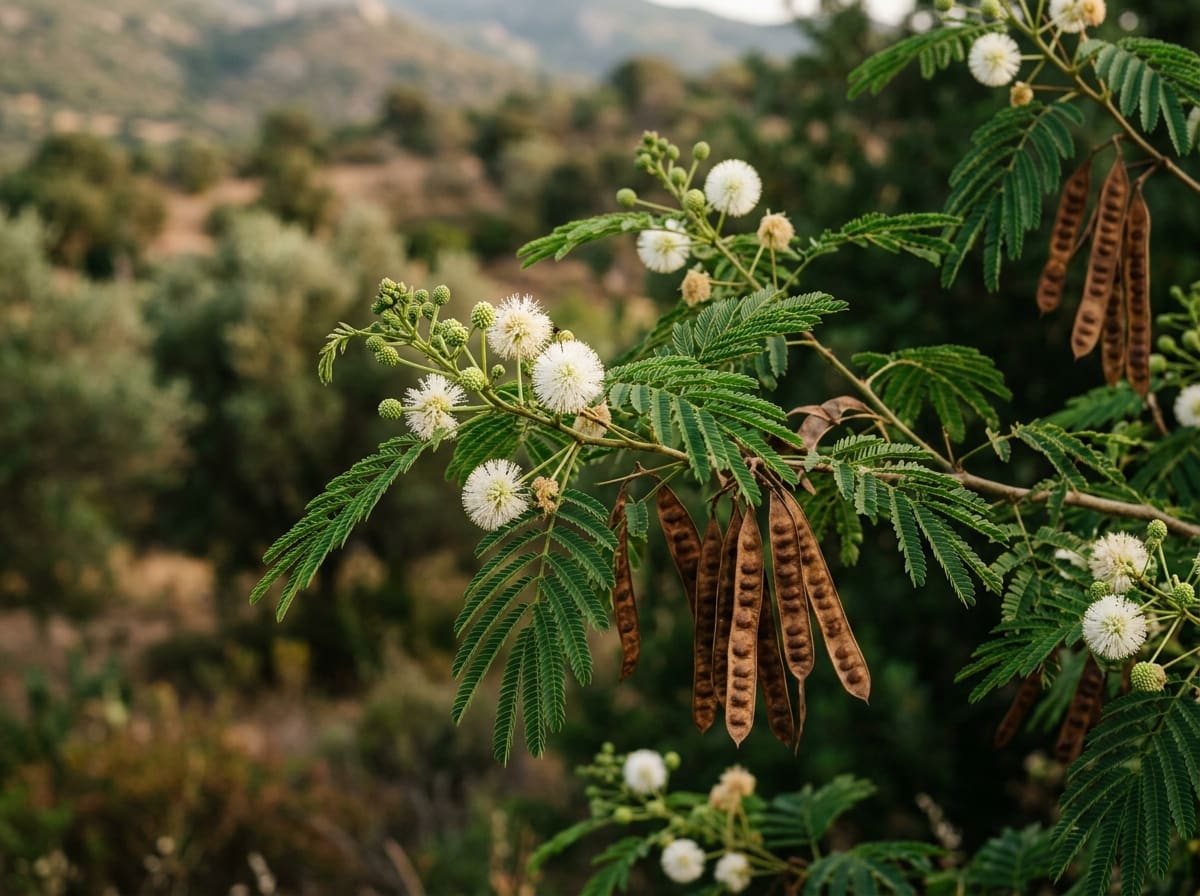
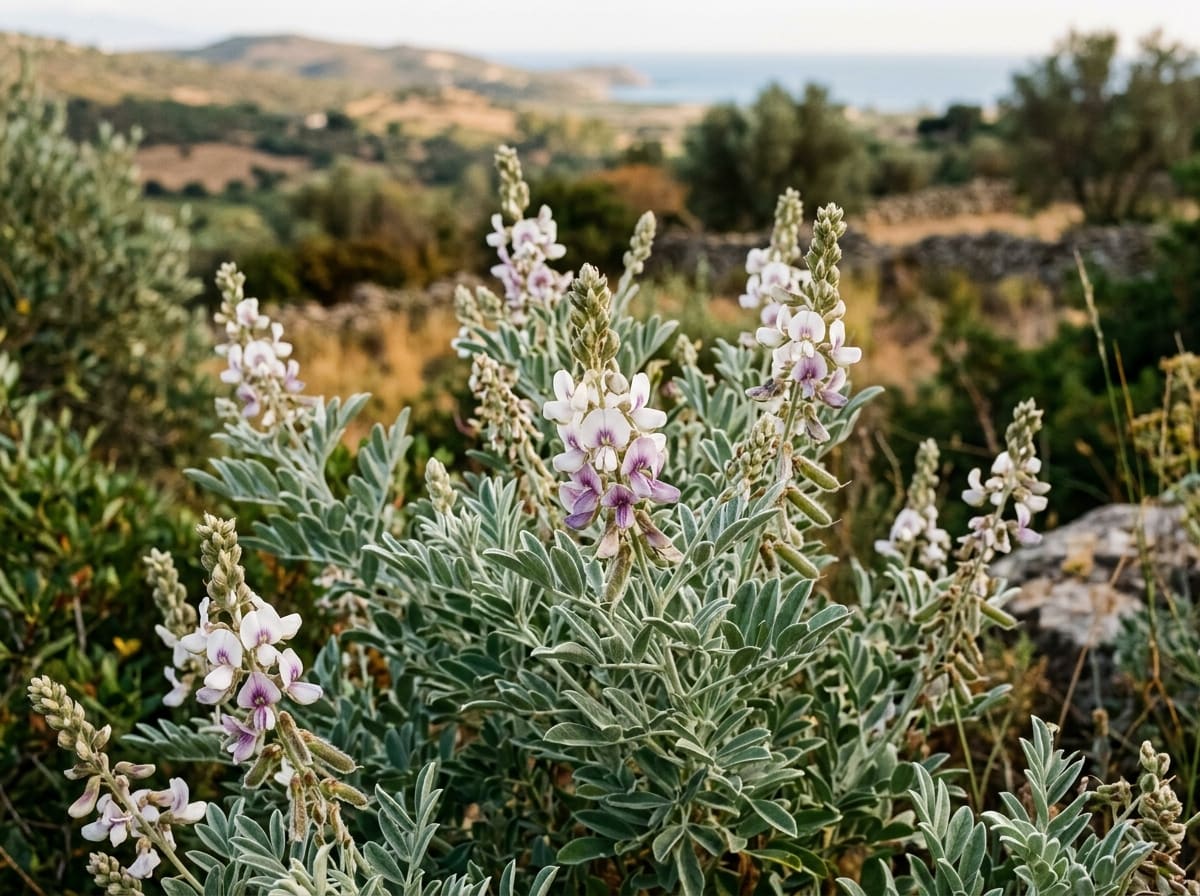
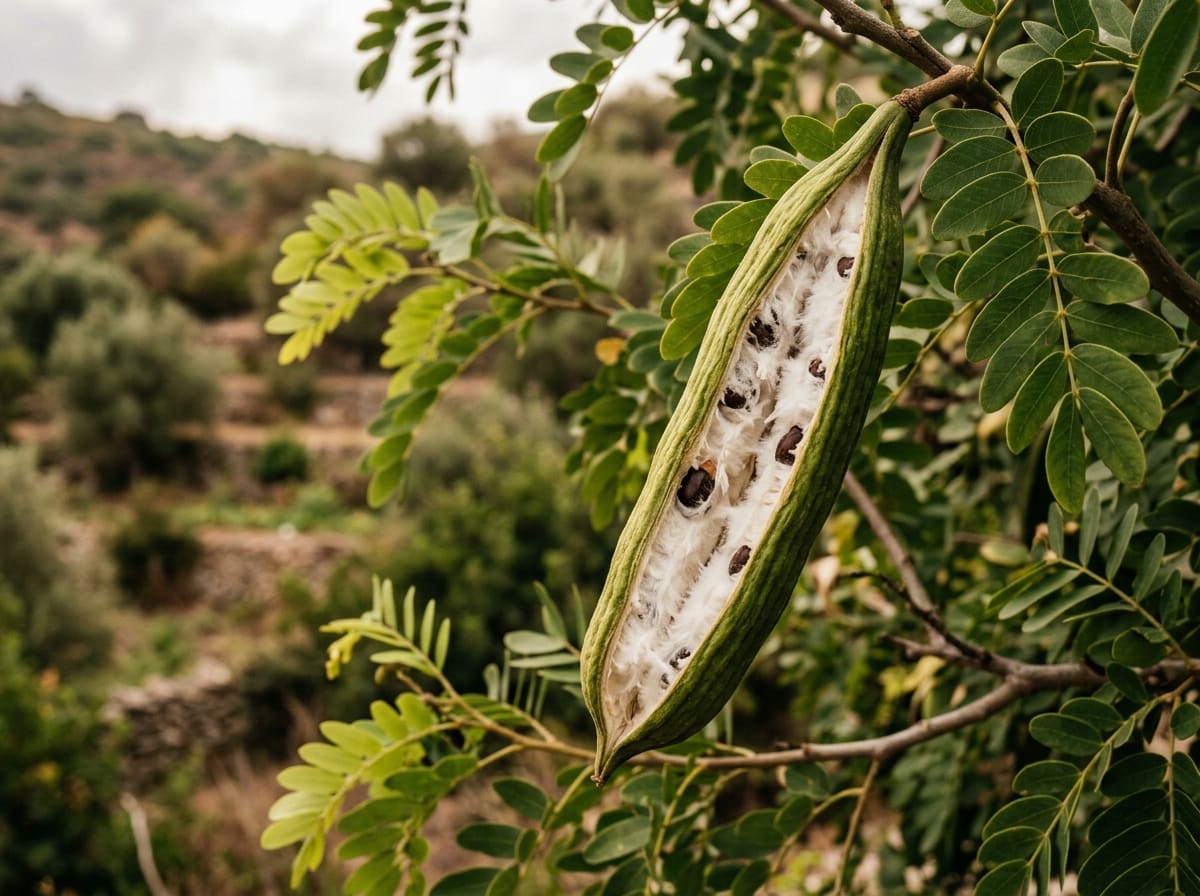
Leucaena (Leucaena leucocephala) resprouts strongly after cutting. Its fine leaves break down very quickly and release their nitrogen in a short pulse; as a lasting soil cover they are of little use. Tephrosia supplies soft, nitrogen-rich leaves; young growth is richest, which argues for frequent light cuts rather than rare heavy ones. Inga behaves the other way round: its leaves are rich in lignin and polyphenols, decay slowly and cover the ground for a long time. Tagasaste (Cytisus proliferus), a legume shrub from the Canary Islands, grows with 350 to 1600 millimetres of rain a year, survives on as little as 200 and roots ten metres deep or more.
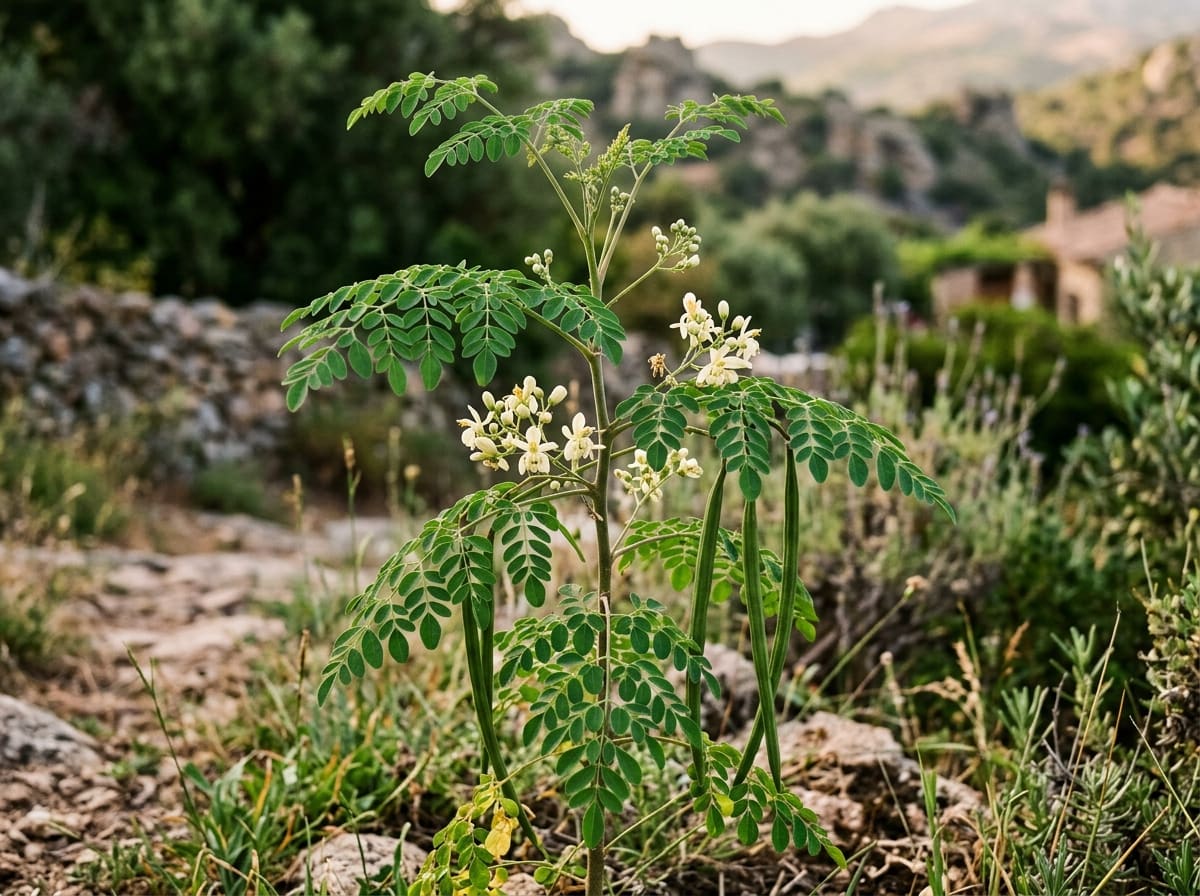
Among the non-legumes, moringa resprouts vigorously and drops quickly decaying leaves. Giant reed (Arundo donax) produces very large amounts of material. Vetiver forms hedges whose cut leaves serve as mulch for neighbouring crops. Comfrey is the classic of the home garden; its sterile variety Bocking 14 does not seed itself around.
A mix of fast and slow material works best: the quick leaves feed, the slow ones protect. None of the species named here is on the EU list of invasive alien species of Union concern. Some are vigorous all the same: leucaena seeds freely, giant reed spreads through its rhizomes, and of vetiver only sterile clones belong in the ground. Terra Humana uses such species deliberately, because their strength can set a tired soil in motion, but always in a guided way: cut before the seed ripens, placed where they cannot wander, and replaced step by step as the target trees take over. Species on the EU list are not used.
How to cut: timing, height, pieces
Timing. The cut follows the climate, not the calendar of another region. In a Mediterranean climate it falls in the wet half of the year, from autumn to spring, while rainfall exceeds evaporation. Then the cuttings lie on moist soil and decompose, and the plants regrow quickly.
Height. Each species has its own threshold. A three-year trial in Mozambique compared cutting heights in leucaena: cut at one metre, it produced 8.7 tonnes of forage per hectare and year, cut at thirty centimetres only 5.5. Inga regrows well, but not when cut below about 75 centimetres; the cut sits a few centimetres above a node. Tagasaste grown for fodder is cut at 20 to 50 centimetres and before flowering. Established vetiver hedges are cut at least once a year but never below 30 centimetres, so that the stiff stems keep slowing runoff. Comfrey is cut a few centimetres above the ground; in British gardens Garden Organic recommends cutting established plants about every six weeks during the growing season.
Pieces and placement. The material is cut into pieces that lie flat on the soil. Close contact with the ground keeps it moist and lets fungi and soil animals reach it; a loose pile of long branches dries out in the air instead of decaying. Leaves and soft shoots go close around the plants to be fed, thicker wood further out or as the bottom layer. A hand's width around the trunk stays free, as with any mulch.
Light. Every cut is also a decision about light. Removing the upper branches of a support plant gives light to the young trees below. In summer the opposite applies: shade stays.
What happens above and below ground
Above ground, chop and drop works like any organic mulch. It shades the soil, slows evaporation and breaks the impact of rain, so that water soaks in instead of running off. Field data from Mediterranean olive groves show the scale. In a three-year trial near Jaén in Andalusia, plots where the olive prunings were left on the ground without tillage lost 72 percent less soil than tilled plots. Runoff fell by only 11 percent on average: the cover held the soil far better than it held the water.
As the cuttings decay, they feed the soil food web. Earthworms, fungi and bacteria break them down and carry them into the soil, where part of the organic matter is built into humus over years.
Below ground there is a second effect. A plant that loses most of its leaves can no longer supply its whole root system. In the coral tree Erythrina poeppigiana, studied in Central American agroforestry, part of the root system and some of the root nodules break down after pruning; new roots and nodules form once new foliage is well under way. The dead roots leave organic matter and channels inside the soil. A single cut therefore feeds the soil from above and from within.
Chop and drop in a Mediterranean climate
Most of the experience with chop and drop comes from the humid tropics, where rain falls through much of the year and pruning can follow growth. In the Mediterranean the summer changes the rules. For months hardly any rain falls, and a hard cut in the heat would expose both the soil and the young trees to the sun at the very moment they most need protection. In summer, standing shade protects the soil better than any layer of cuttings.
The rhythm is therefore turned around. Cutting happens in autumn, winter and early spring. The cover laid down then lies through the spring and goes into the summer as protection. In summer support plants are left standing.
Fire needs particular care. A layer of dry cuttings is fuel. Laid flat and in contact with the soil, it stays moist longer and decays, while a loose heap of branches dries out in the air. Along paths, near buildings and in firebreaks no dry material is piled up; here the soil is better covered with green, living plants or with gravel.
Limits and common mistakes
Nutrients are moved, not made. Apart from the nitrogen that legumes fix from the air, chop and drop creates no new nutrients. It moves them from the support plant to its neighbours and from deeper layers to the surface. On very poor soils it starts a cycle but cannot replace what was never there.
Seed in the mulch. Plants cut after their seed has ripened sow the next generation with their own mulch. With vigorous species such as leucaena, the cut comes before the pods ripen.
Too coarse, too loose. Long, thick branches left as they fall bridge the ground, dry out and take years to break down. Cut into shorter pieces and laid flat, they decay much faster.
Snails and mice. A moist, thick layer gives cover to snails, slugs and voles. Around seedlings and young vegetables a thinner layer or a short gap helps.
Wrong season. Cutting in the summer heat removes shade when it is most needed, and the cuttings dry to fuel instead of decaying.
How Terra Humana understands chop and drop
For Terra Humana chop and drop is the most direct answer to the question of where the soil's protection comes from: from the land itself. A planting that grows its own mulch closes its cycle at the point where the soil needs it, and every cut feeds the ground from above and from below. We follow the principle of Götsch and Fukuoka, not the calendar of the tropics: we cut in the wet season, keep shade in summer and guide vigorous species before they guide themselves. What the cuttings achieve in the soil of a given place has to be observed there; we report what we measure, not what we hope.
Sa Medada
What this looks like at Sa Medada
At Sa Medada, pruned material in the plantings of Project Eden is returned to the ground as mulch rather than removed. We prune when rainfall exceeds evaporation, which here means winter and spring; in summer every bit of shade stays. The nitrogen fixers already in the ground, among them Tephrosia, Inga edulis and around seven Leucaena, can supply cuttings in this way. How much their cuttings give the soil has not been measured.
More about Project EdenPlants in this entry
- LeucaenaLeucaena leucocephala
- TephrosiaTephrosia
- IngaInga edulis
TagasasteChamaecytisus proliferus - MoringaMoringa oleifera
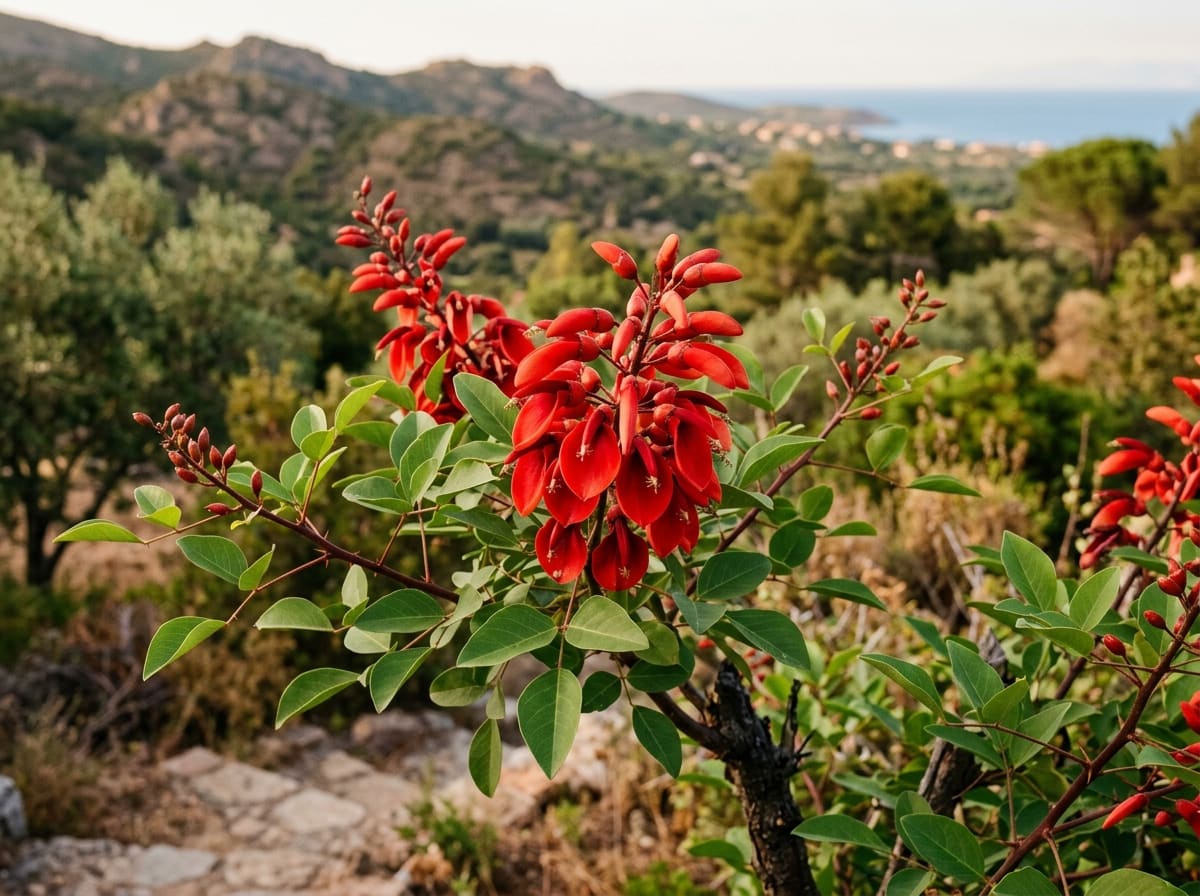
ComfreySymphytum officinale - Coral treeErythrina


Frequently asked
What is chop and drop?
Chop and drop is a way of making mulch on the spot. Support plants are cut back, and the cut branches and leaves stay where they fall, usually around the trees they are meant to feed. Nothing is carried away, composted elsewhere or burned. The material covers the soil, shades it and slowly breaks down, so that the nutrients it holds return to the place where they were taken up. Chop and drop is the practice behind biomass plants and a core element of syntropic agriculture.
Where does the term chop and drop come from?
The phrase belongs to the vocabulary of permaculture, the movement founded by Bill Mollison and David Holmgren in the 1970s; who used it first is not documented. The practice is much older. Masanobu Fukuoka returned the straw of his rice and barley to the fields and scattered it as though it had fallen naturally. Ernst Götsch made strong, regular pruning with the cuttings left on the ground the engine of syntropic agriculture.
Which plants are suitable for chop and drop?
Plants that grow fast, tolerate hard and repeated cutting and resprout quickly. Nitrogen-fixing legumes such as leucaena, tagasaste, tephrosia and inga are classics, alongside moringa, giant reed, sterile vetiver and sterile comfrey. Their cuttings differ: leucaena and tephrosia leaves break down fast and feed the soil quickly, Inga litter decays slowly and covers the ground for longer. None of the species named here is on the EU list of invasive alien species of Union concern; vigorous ones are still only planted in a guided way.
When and how high is the cut made?
In a Mediterranean climate, in the wet half of the year, from autumn to spring, while rainfall exceeds evaporation. The height depends on the plant. A three-year trial in Mozambique found that leucaena cut at one metre produced more leaf and wood than leucaena cut at thirty centimetres. Inga is not cut below about 75 centimetres, established vetiver hedges never below 30 centimetres, comfrey a few centimetres above the ground. The cuttings are reduced to pieces that lie flat on the soil.
What does chop and drop do below ground?
A plant that loses most of its leaves can no longer feed its whole root system. In the coral tree Erythrina poeppigiana, part of the root system and some of the root nodules break down after pruning, and new ones form once new foliage is growing well. The dead roots add organic matter inside the soil, while the cuttings feed it from above. A single cut therefore works on two levels.
What are the most common mistakes with chop and drop?
Cutting in the summer heat and exposing the soil when it needs shade most. Letting plants set seed before the cut, so that the mulch sows the next generation. Leaving thick branches in a loose heap, where they dry out instead of decaying. Piling dry cuttings along paths, firebreaks or buildings in a fire-prone summer. Expecting fertility from nowhere: apart from nitrogen fixed from the air, chop and drop moves nutrients within the site but does not create them.

Related terms


Mentioned in
See this in practice
Sources
- Fukuoka, M., The One-Straw Revolution, translated by C. Pearce, T. Kurosawa and L. Korn, Rodale Press (1978)
- Götsch, E., Break-through in agriculture, AS-PTA, Rio de Janeiro (1995)
- Mollison, B., Permaculture: A Designers' Manual, Tagari Publications (1988)
- Oyen, L.P.A., Erythrina poeppigiana, in Faridah Hanum, I. & van der Maesen, L.J.G. (eds.), Plant Resources of South-East Asia No 11: Auxiliary plants, PROSEA Foundation, Bogor (1997)
- Muir, J.P., Effect of cutting height and frequency on Leucaena leucocephala forage and wood production, African Journal of Range & Forage Science 15 (1998)
- Orwa et al., Agroforestree Database 4.0, World Agroforestry Centre (2009): Leucaena leucocephala, Inga edulis, Tephrosia vogelii
- Heuzé et al., Tagasaste (Cytisus proliferus), Feedipedia, INRAE, CIRAD, AFZ and FAO (2017)
- The Vetiver Network International, How to Plant and Maintain Vetiver Grass, vetiver.org (accessed October 2026)
- Garden Organic, Comfrey: Harvesting and Use, gardenorganic.org.uk (accessed October 2026)
- Royal Horticultural Society, O. Drake, Why comfrey is the superplant you need (31 March 2026)
- Rodríguez-Lizana et al., Pruning Residues as an Alternative to Traditional Tillage to Reduce Erosion and Pollutant Dispersion in Olive Groves, Water, Air, and Soil Pollution 193 (2008)
- Regulation (EU) 1143/2014 with Implementing Regulation (EU) 2016/1141, Union list of invasive alien species, consolidated version of 7 August 2025
Last updated: 2026-10-19