

In brief
The ecological principle that plants can help each other: one species measurably improves the living conditions of another instead of merely competing with it.
What is ecological facilitation?
For a long time, ecology mostly told the story of struggle: plants compete for light, water and nutrients, and the loser disappears. That is true, but it is only half the truth. The other half is called facilitation: plants can measurably improve the living conditions of their neighbours, and in the hard landscapes of this earth they do it constantly.
The mechanisms are unspectacular and effective precisely because of it. A crown casts shade and takes the lethal midday heat off the ground below. A shrub breaks the wind that desiccates seedlings. Roots loosen compacted ground, leaf fall builds humus, nitrogen-fixing species enrich the soil through their nodule bacteria, and mycorrhizal fungi link the roots of whole neighbourhoods into a supply network. Whoever looks closely in a dryland finds the traces everywhere: young trees stand conspicuously often in the shelter of older shrubs, not out in the open.
The most important discovery of facilitation research is a rule of great practical reach, the stress gradient hypothesis: the harsher the site, the more help outweighs competition. On good soil, neighbours mostly take from one another. In drought, in wind, on salt and rock, the neighbour becomes a shield. For Mediterranean slopes under a scorching sun, with months of summer drought, this is not an academic footnote but a construction manual.
How Terra Humana understands it
Facilitation is the scientific foundation beneath almost everything Terra Humana plants. Nurse trees, pioneer species, plant guilds, the mycorrhizal network in the soil: four expressions of the same principle, that building in hard landscapes runs on relationship, not on lone fighters.
At the same time, facilitation is a corrective against romantic idealisation. Help and competition act simultaneously, and the balance tips with site, age and year. A nurse that is never cut back becomes a competitor. And the cutting has its window too: work happens while rainfall exceeds evaporation, because where evaporation runs high the helper's shade protects more than her prunings could ever contribute. Whoever wants to use facilitation must steer it: plant, observe, intervene. Precisely this stewardship, and its honest documentation, is what Terra Humana understands as its contribution to practice.

Sa Medada
What this looks like at Sa Medada
Sa Medada has a first documented nurse relationship: a Leucaena, now two metres tall, stands as nurse over two avocados. It becomes the first measuring point for the stress gradient hypothesis on this slope, avocado in the nurse's shade against avocado in the open. A hot, dry south-facing slope is exactly the kind of site for which the hypothesis predicts the greatest benefit.
More about Project EdenPlants in this entry
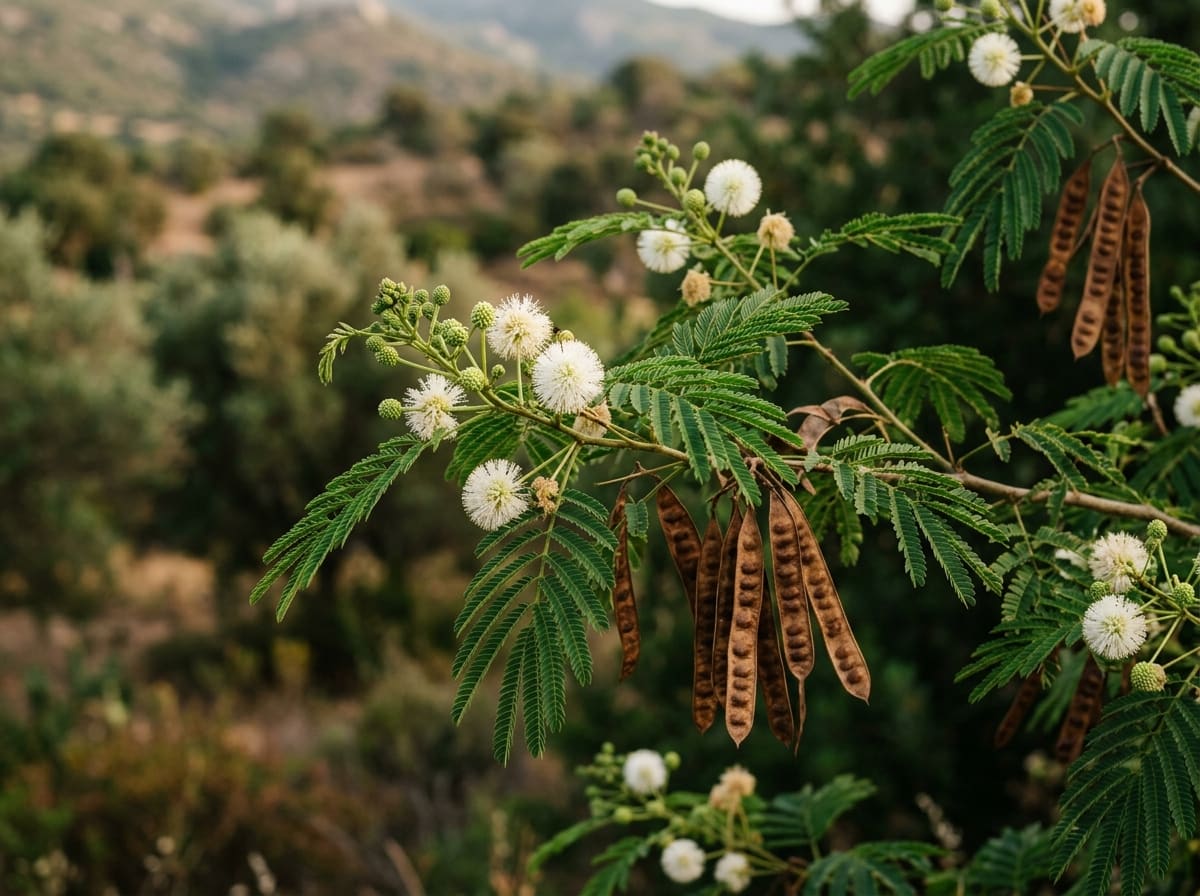
LeucaenaLeucaena leucocephala 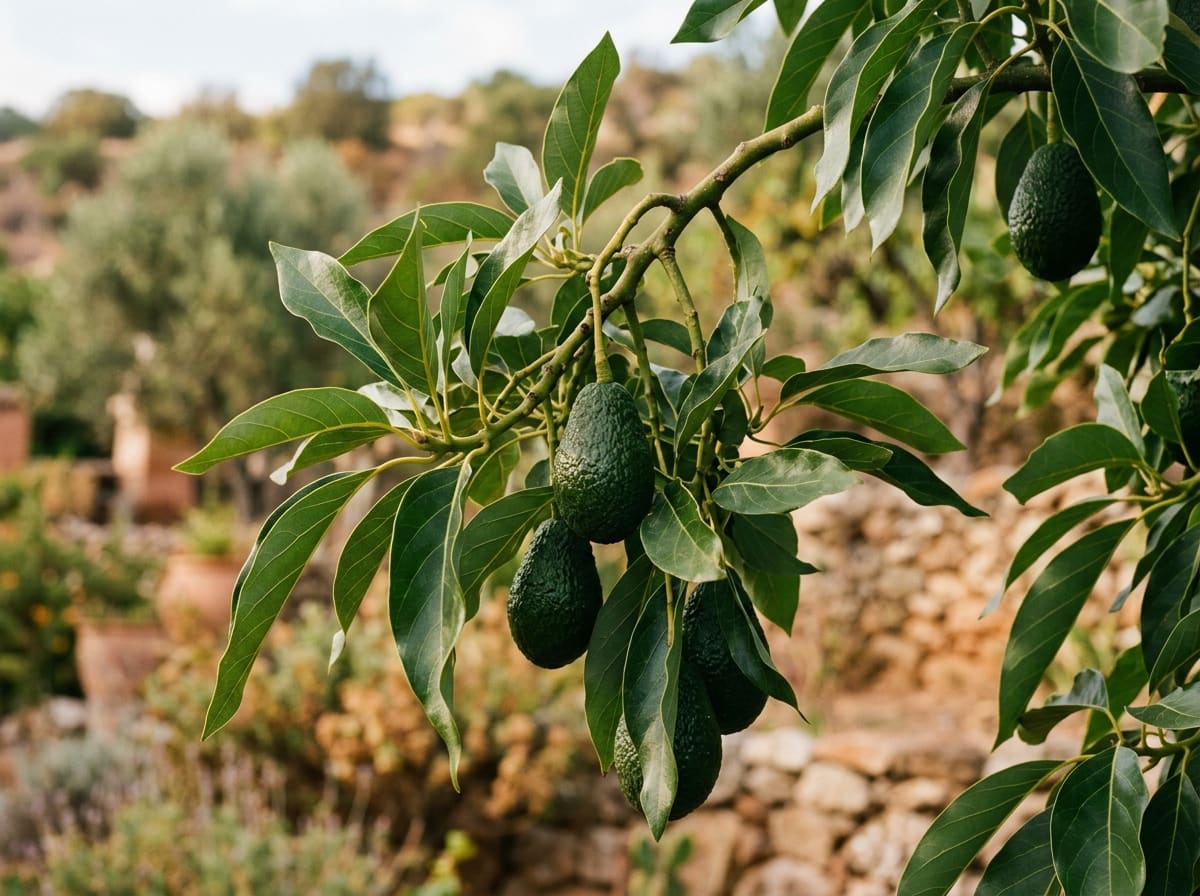
AvocadoPersea americana


Frequently asked
What is facilitation in ecology?
Facilitation is any interaction in which one plant improves the living conditions of another without being harmed itself. The mechanisms are tangible: shade lowers ground temperature, wind shelter slows desiccation, leaf fall and roots enrich the soil, and some species even make nitrogen available to the neighbourhood through partner bacteria. For a long time ecology dealt almost exclusively with competition; since the work of Ragan Callaway and others, mutual help has been recognised as an equally fundamental force in the building of plant communities.
What does the stress gradient hypothesis say?
It is the most important rule of facilitation research: the harsher the site, the more help outweighs competition. On mild, fertile ground neighbouring plants mostly take light, water and nutrients from each other. In drylands, high mountains or on saline soils the balance flips: there the shelter of a neighbour is often the difference between life and death. The hypothesis was formulated by Bertness and Callaway in 1994, and it has been confirmed many times over, particularly in Mediterranean drylands.
How is facilitation used in ecological restoration?
By planting the help before planting the sensitive. In practice that means setting nurse plants in whose shelter young target trees establish, sending pioneers ahead to prepare soil and microclimate, and leaving established shrubs standing as nuclei instead of clearing them. Studies from Mediterranean reforestation show markedly higher establishment rates under nurse plants than in open ground. Facilitation thus makes restoration cheaper and more robust: the plants take over part of the care that irrigation and protective structures would otherwise have to provide.
Is facilitation the opposite of competition?
They are two sides of the same neighbourhood, and usually both act at once. The same nurse that shades a seedling also drinks from the same soil; what comes out on balance depends on the site, the age of the participants and the year's weather. That is exactly why nurse plantings are managed: while the protégé is weak, help predominates, and once it takes hold the nurse is cut back before the helper becomes a competitor. Facilitation is not an idyll but a balance sheet that has to be read and kept.

Related terms


Mentioned in
See this in practice
Sources
- Bertness & Callaway, Positive interactions in communities, Trends in Ecology & Evolution (1994)
- Ragan M. Callaway, Positive Interactions and Interdependence in Plant Communities (2007)
- Gómez-Aparicio et al., Applying plant facilitation to forest restoration, Ecological Applications (2004)
- Brooker et al., Facilitation in plant communities: the past, the present, and the future, Journal of Ecology (2008)
Last updated: 2026-10-01