
In brief
A deep-rooted plant that draws minerals up from the subsoil and returns them to the surface through its leaves, feeding neighbouring plants.
In the whole: Principles at work 5 Use and value renewable resources and services
What is a dynamic accumulator?
A dynamic accumulator is a plant (typically one with a deep, strong taproot) that gathers minerals and nutrients from far down in the subsoil and concentrates them in its own leaves and stems. When the plant sheds its leaves, or is cut and left to decompose on the surface, those stored nutrients are released into the topsoil, where plants with shallower roots can take them up. In effect the accumulator acts as a living pump and a slow-release fertiliser rolled into one.
The classic example is comfrey, whose roots reach deep and whose leaves are rich in potassium; cut several times a season and laid around fruit trees, it becomes a steady supply of nutrient-dense mulch. Other plants often cited for this role include yarrow, dandelion, nettle, borage and many deep-rooted "weeds" that gardeners spend effort removing.
It is worth being precise: the idea that particular plants reliably mine specific minerals is partly supported and partly folklore, and hard data is thinner than the popular literature suggests. What is well established is that deep-rooted plants recycle nutrients from lower soil layers to the surface, add organic matter, and turn leached minerals back into plant-available form. That recycling function, rather than any magic mineral shopping list, is the solid core of the concept.
How Terra Humana understands dynamic accumulators
For Terra Humana, dynamic accumulators embody a principle we return to often: fertility should be grown in place, not trucked in. A plant that lifts minerals from the subsoil and hands them to its neighbours is a small, self-renewing fertiliser factory, powered by sunlight and rain rather than by bought inputs. That fits our preference for systems that become more self-reliant over time.
We also try to hold the idea honestly. We use accumulators for what is demonstrable (deep nutrient recycling, biomass and mulch) and we avoid overstating precise mineral claims that the evidence does not firmly support. Working with the land means respecting what is actually known about it.
Dynamic accumulators in practice
At Sa Medada, near Jerzu in the Ogliastra region of Sardinia, deep-rooted accumulator plants are grown deliberately among the fruit and nut trees as part of each planting community. Their role is to be cut and dropped: their leafy growth is laid on the soil surface as mulch, where it breaks down and returns nutrients and organic matter to the ground.
On dry, stony Mediterranean soil this serves two ends at once. The falling and cut biomass feeds the topsoil and slowly builds it, while the same layer of leaf litter shades the ground and slows the loss of precious moisture through the long summer. Fertility and water conservation come from the same simple act.
Project Eden is still in its early stages, and we treat our use of accumulators as ongoing observation rather than settled recipe: noting which deep-rooted species establish well, survive the drought, and actually improve the ground around them under Sardinian conditions.
Sa Medada
What this looks like at Sa Medada
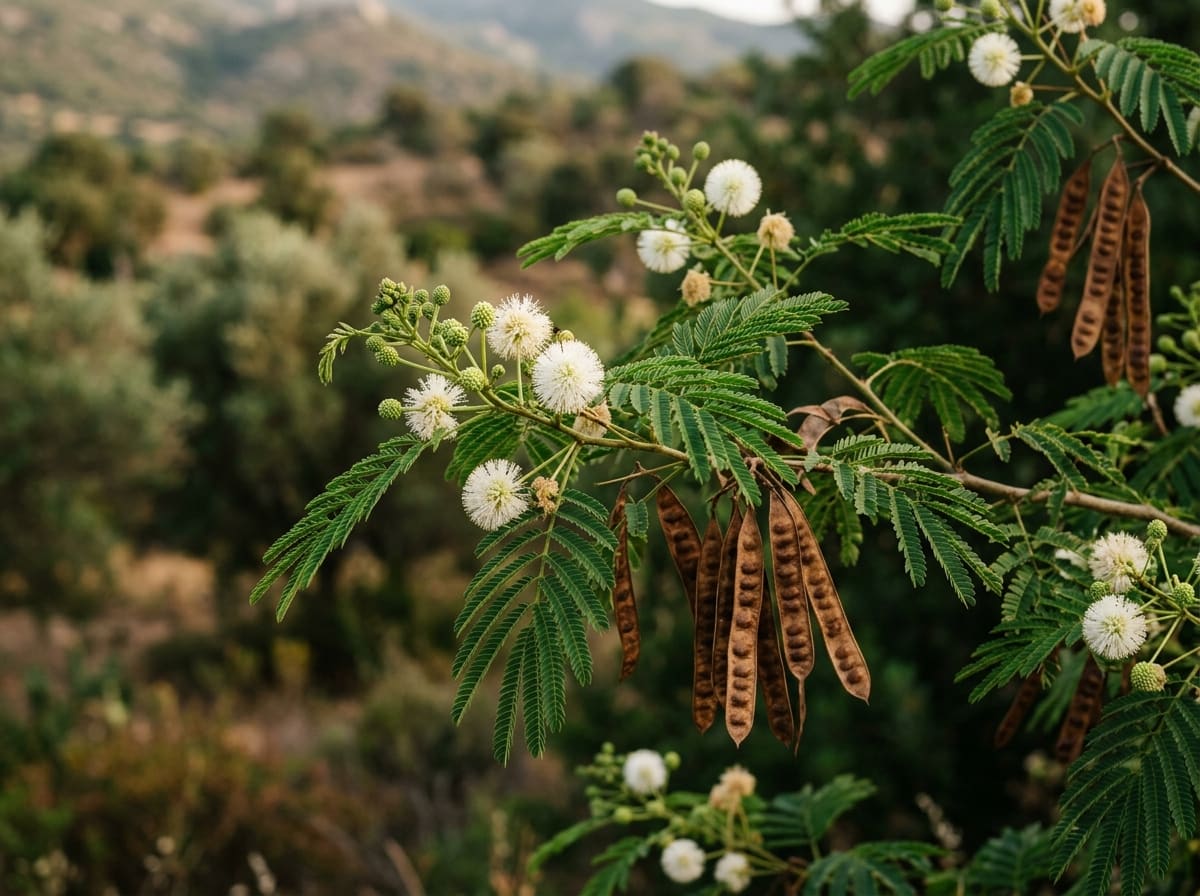
At Sa Medada there are around seven Leucaena, a deep-rooted species that produces biomass in quantity. Their cuttings are meant to stay where they fall and return as mulch what the roots brought up from depth. We prune only in the rainy season, from the first heavy autumn rains into early spring. In summer every bit of shade stays.
More about Project EdenPlants in this entry
ComfreySymphytum officinale - LeucaenaLeucaena leucocephala

Frequently asked
What is a dynamic accumulator?
A dynamic accumulator is a plant, usually deep-rooted, that takes up minerals and nutrients from deep in the subsoil and concentrates them in its leaves and stems. When that growth is cut and left to break down on the surface, or the leaves simply fall, those nutrients are released into the topsoil, where shallower-rooted plants can reach them. Comfrey is the best-known example.
How does Terra Humana use dynamic accumulators?
At Project Eden in Sardinia, deep-rooted accumulator plants are grown among fruit trees as a living source of mulch and fertility. Cut and dropped on the soil, their mineral-rich leaves feed neighbouring plants and build topsoil, reducing the need for imported fertiliser on the dry, stony ground of Sa Medada.
Related terms


Mentioned in
See this in practice
Permaculture principles at work here
The design principles after David Holmgren that this page puts into practice.
Sources
- Toby Hemenway, Gaia's Garden, A Guide to Home-Scale Permaculture (2nd ed., 2009)
- Robert Kourik, Designing and Maintaining Your Edible Landscape Naturally (1986)
Last updated: