

In brief
Soil bacteria that live inside root nodules and turn air nitrogen into plant food there: the smallest fertiliser factories in the world.
What are root-nodule bacteria?
The most consequential partnership in the plant world is almost invisible. On the roots of clover, bean, acacia or alder sit small nodules, often no bigger than a pinhead, and inside them happens what otherwise only lightning and fertiliser factories achieve: nitrogen from the air is turned into plant food.
The inhabitants of these nodules are bacteria. In legumes they are the rhizobia; in woody plants like alder and sea buckthorn it is the actinobacterium Frankia. The partnership begins as a chemical conversation: the root sends signal compounds, the bacteria answer, and the plant then builds them an organ of their own, the nodule. Inside, conditions exist that the open soil never offers, above all a finely regulated oxygen level maintained by a reddish pigment, leghaemoglobin, a close relative of the pigment in our blood. Only under its protection can the bacteria's delicate enzyme do its work of cracking open the stubborn nitrogen molecule.
The result is a trade of rare elegance: the plant delivers sugars from its photosynthesis, the bacteria deliver nitrogen. When roots or leaves die, the captured nitrogen passes into the soil and feeds the neighbourhood too. Without these microbes there would be no nitrogen-fixing plants, no green manures, no pioneer species with built-in fertiliser factories: the bacteria are the actual workers, the plant only provides the building.
This symbiosis can even be tapped deliberately. A tree is essentially a water pump, driven by evaporation from its leaves. Take away its leaf area with a hard prune and it can no longer supply its root system, so it reduces it itself. In doing so it sheds root nodules together with their bacteria, and the captured nitrogen ends up directly in the soil. A single cut therefore fertilises twice over: nitrogen-rich mulch falls above, while the root zone of the neighbours is supplied below. Nature does the same at every major leaf loss; the gardener's art lies only in choosing the moment.
How Terra Humana understands them
For Terra Humana, root-nodule bacteria are the invisible ground beneath the visible method. Sa Medada's nitrogen strategy, pioneers and nurses making a dry slope fertile from within, stands or falls with microbes no visitor will ever see. Whoever takes restoration seriously must therefore think at this scale as well: soil is not a substrate but a society.
Part of that is an honesty rarely found in gardening guides: the partnership is selective. Not every bean finds its bacteria in every soil, and a plant without matching partners is a nitrogen fixer in name only. Precisely this gap between label and reality is a research subject at Sa Medada.

Sa Medada
What this looks like at Sa Medada
At Sa Medada every nitrogen fixer is so far in the ground without inoculation, from Tephrosia to the fava bean, because species-specific strains are hard to obtain in Europe. For fava bean and Bambara groundnut there are inoculants available here; for Pacay and Inga narrow host specificity is likely, and matching strains have been requested. That makes it possible to watch which species finds its partners in unfamiliar soil on its own.
More about Project EdenPlants in this entry
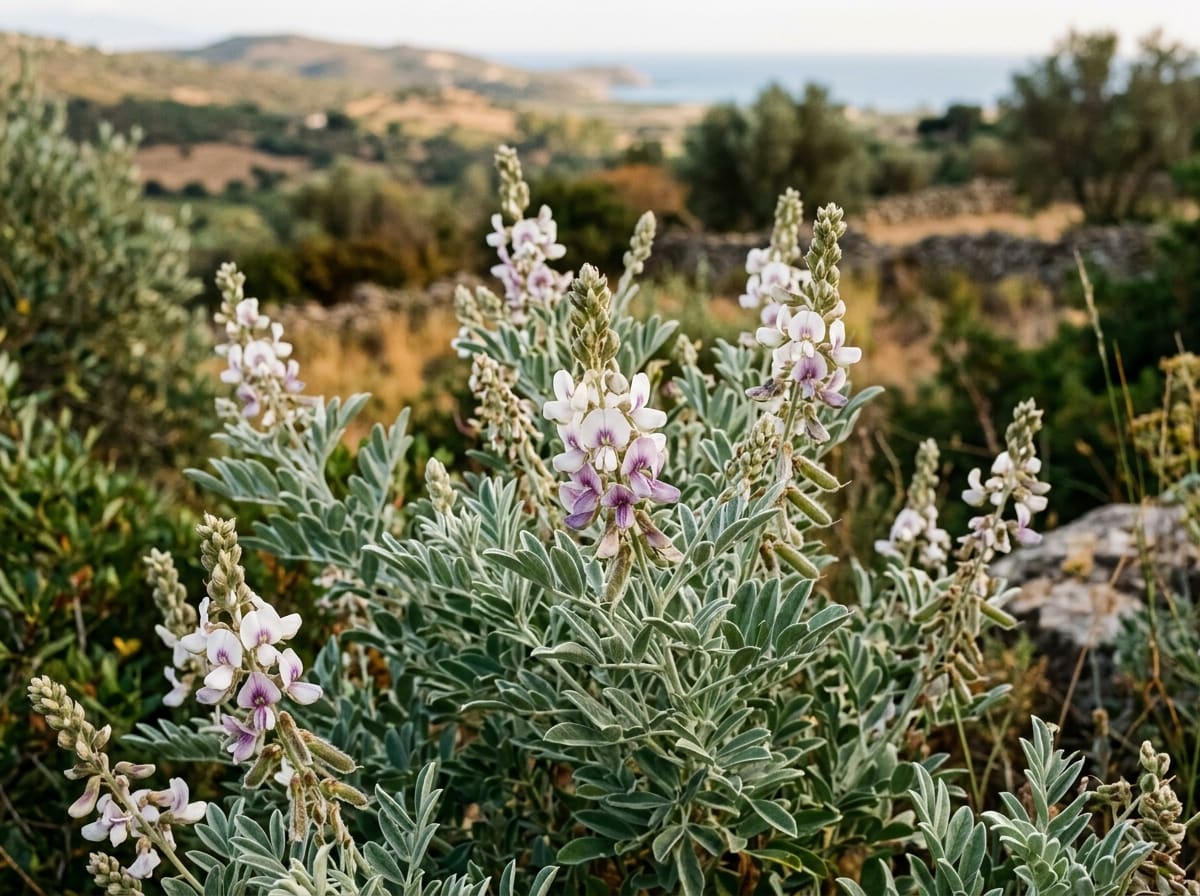
TephrosiaTephrosia 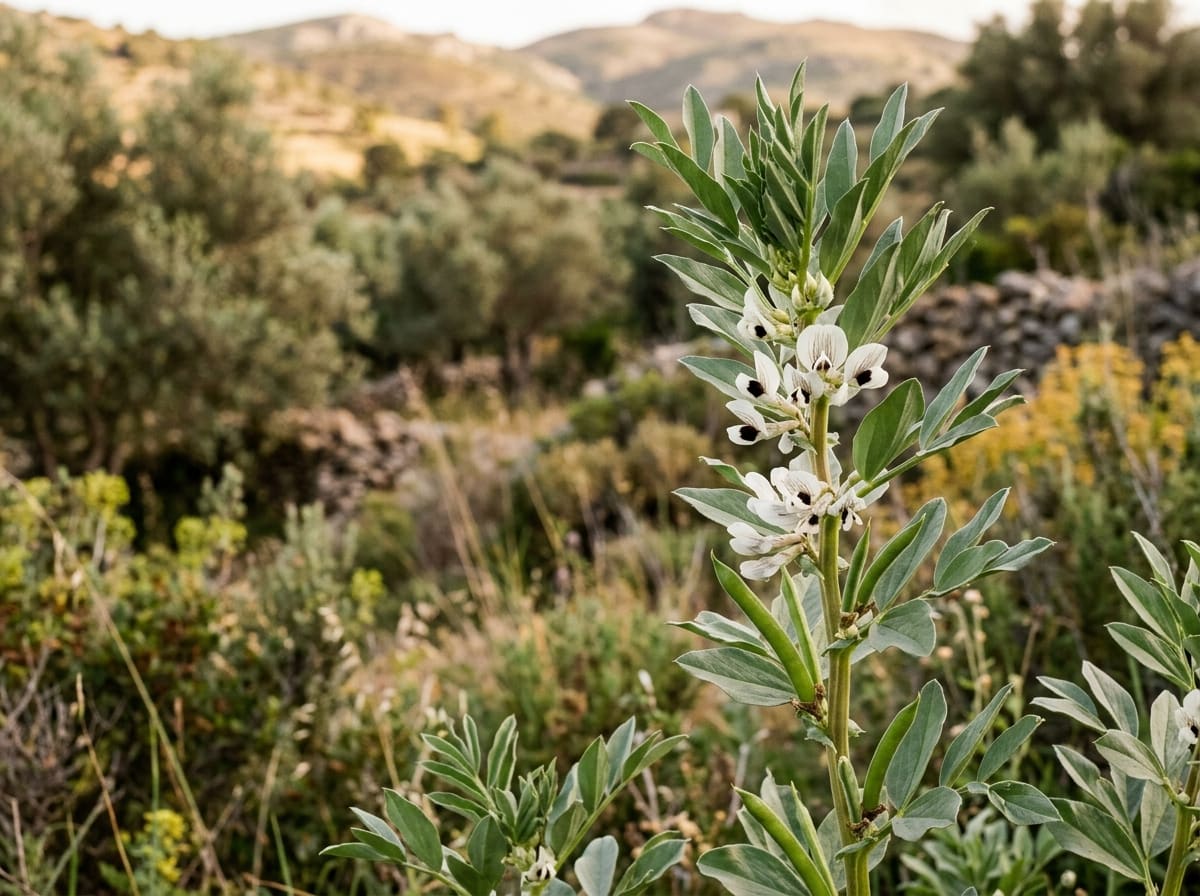
Fava beanVicia faba 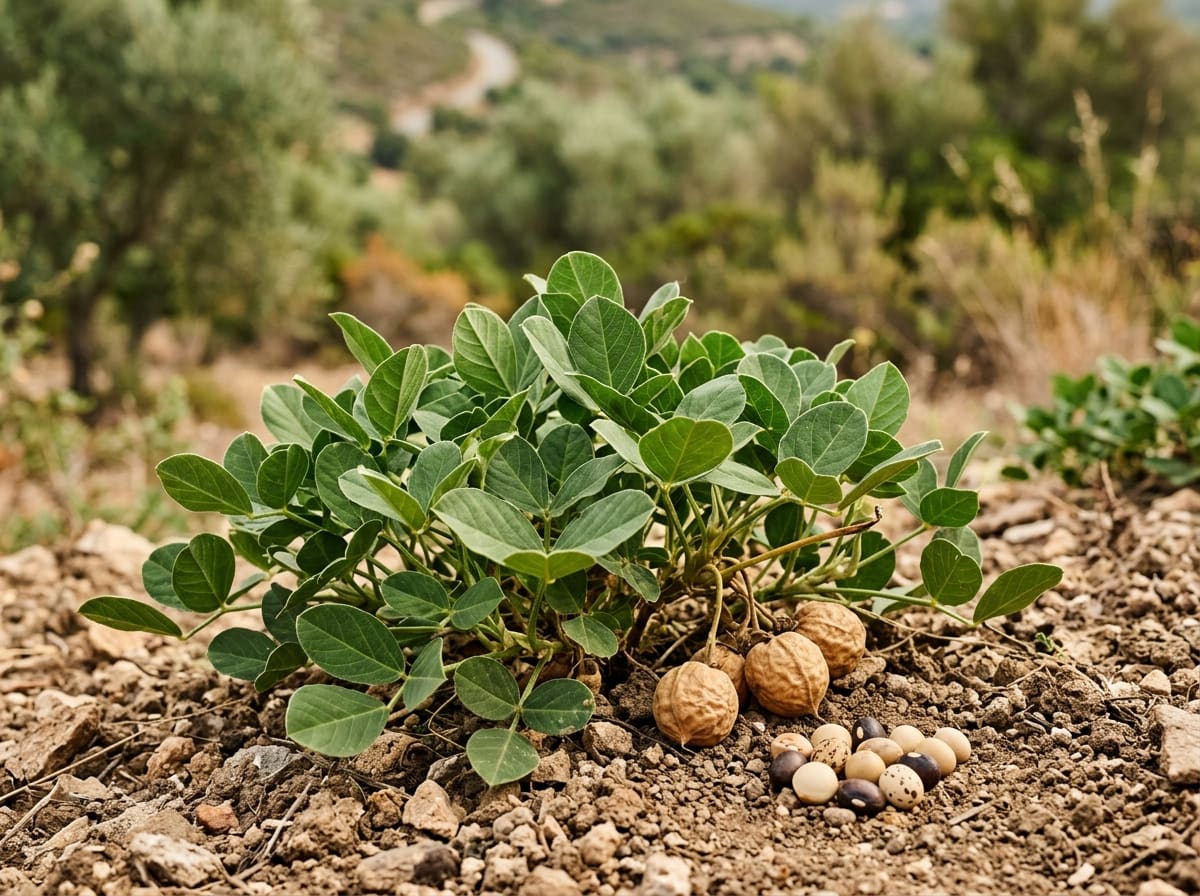
Bambara groundnutVigna subterranea 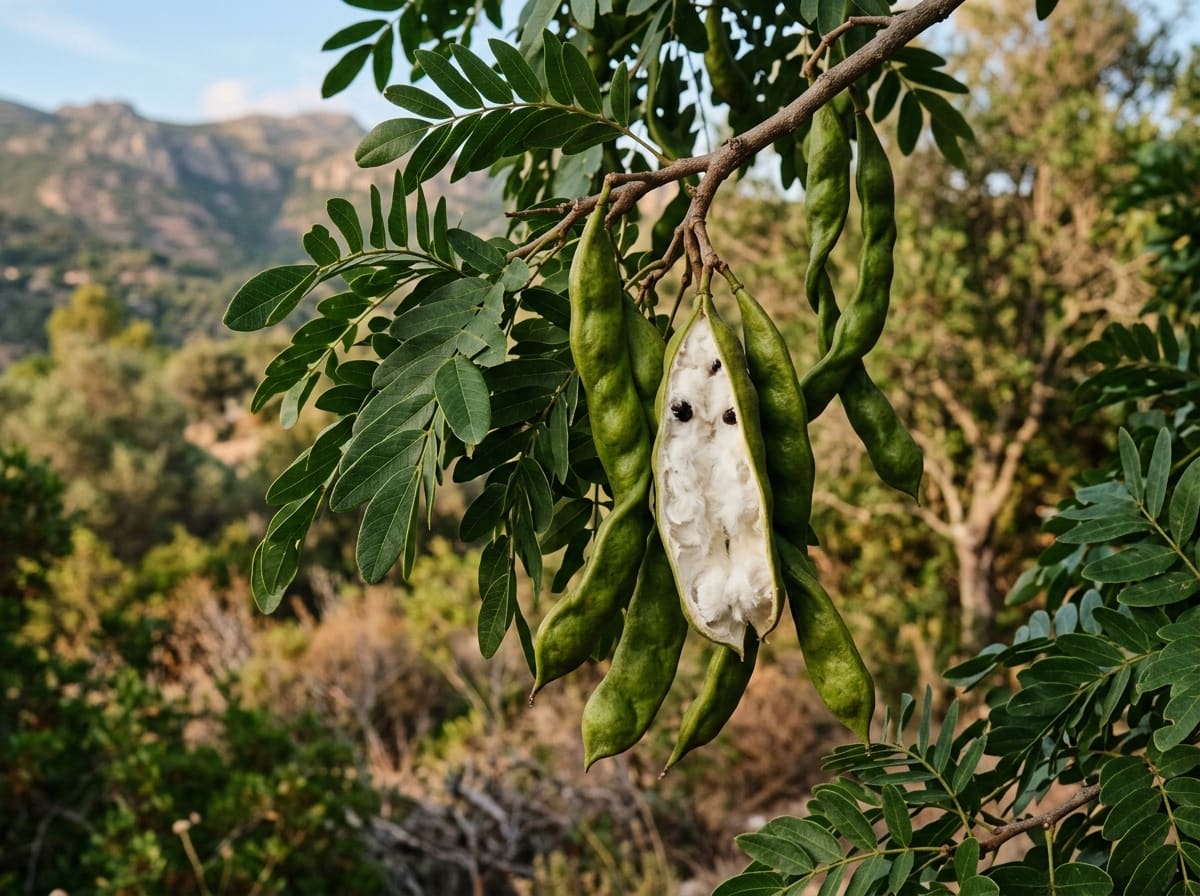
PacayInga feuilleei 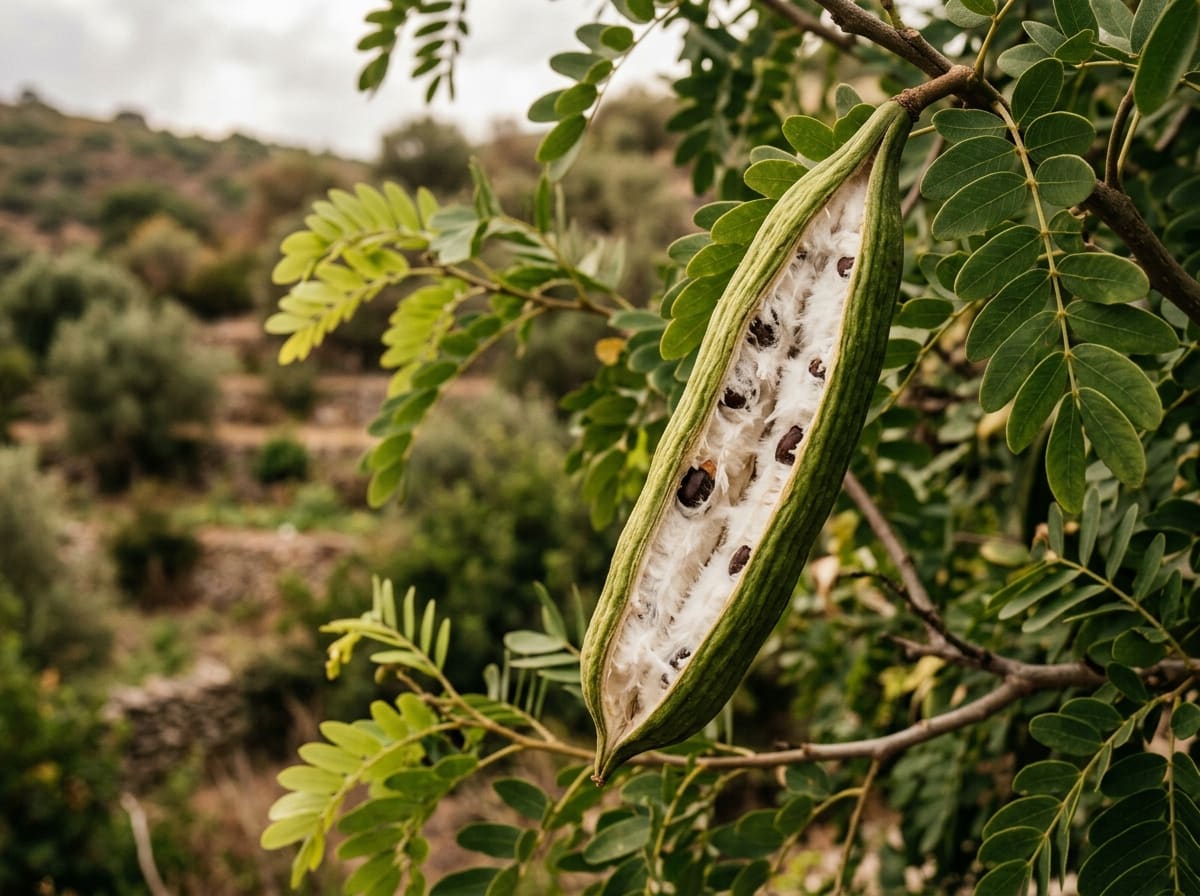
IngaInga edulis


Frequently asked
What are rhizobia and root-nodule bacteria?
Root-nodule bacteria are soil microbes that enter one of nature's most consequential partnerships with certain plants. Following a chemical exchange between root and bacterium, the plant grows small nodules on its roots and takes the bacteria in. There they convert nitrogen from the air, which no plant can use directly, into compounds the plant lives on; in return they receive sugars and a sheltered home. In legumes these partners are called rhizobia, while in alder or sea buckthorn the actinobacterium Frankia does the same job.
How can you tell whether nodules are actually working?
By cutting one open and reading the colour. A nodule sliced carefully shows a pink to flesh-red interior when nitrogen fixation is active. The colour comes from leghaemoglobin, a relative of the pigment in our own blood, which regulates oxygen inside the nodule so that the delicate fixing enzyme can work. White or greenish nodules are idle or spent. This simple check, expose a root, cut a nodule, read the colour, makes the invisible symbiosis verifiable with the naked eye.
Do legumes need to be inoculated with rhizobia?
Not always, but often it pays. The bacteria are choosy: many plants form nodules only with particular strains, and whether those live in your soil depends on what has ever grown there. Native clovers and vetches usually find their partners on their own; but whoever introduces a species the site has never seen may be planting into bacterial emptiness. That is where inoculation helps: matching strains are added to the seed or applied to the soil. Young plants can also be inoculated after planting through a soil drench.
What is the difference between Rhizobium and Frankia?
Both do the same work, for different partners. Rhizobia, a group of closely related bacterial genera, ally with the legumes, from bean to acacia. Frankia is an actinobacterium and chooses an entirely different clientele: the so-called actinorhizal woody plants such as alder, sea buckthorn, oleaster and casuarina. For practice this means the plant family decides which partner is needed, and a commercial rhizobia inoculant is of no use to an alder.

Related terms


See this in practice
Sources
- Howieson & Dilworth, Working with Rhizobia, ACIAR (2016)
- Sprent, Legume Nodulation: A Global Perspective (2009)
- Peoples et al., Biological nitrogen fixation contributions to agriculture, Plant and Soil
- FAO, Legume inoculants and their use
Last updated: 2026-10-01