

In brief
The dense, hard-leaved shrubland of the Mediterranean, from knee height to small trees, tough enough to hold ground that woodland has lost.
Learning path: Trees that stay
Station 1 of 7
What is maquis?
Maquis is the dense, hard-leaved shrubland that covers much of the Mediterranean. The Italian name is macchia, the French maquis, and English has borrowed the French. Its plants share one striking feature: small, thick, often leathery and aromatic leaves that lose as little water as possible. That is not decoration, it is how a plant survives five rainless months.
Height gives the rough divisions. Where tree-form species carry the stand, holm oak, cork oak, strawberry tree, mastic, Phillyrea and juniper, it is called high macchia and can reach several metres. Where it stays lower it is low macchia. Where soil is shallow and stony and the cover breaks into patches under about knee height, the name changes to garrigue, in Italian gariga. These limits are approximate; the literature draws them differently, and the plants ignore them.
Sardinia's own environmental service names the leading species of the island's macchia plainly: strawberry tree, mastic, juniper, wild olive, rock roses, myrtle, Phillyrea, heather, broom, rosemary, viburnum and spurge. Toward garrigue the list shifts to thyme, everlasting, cistus and spurge. Sardinian variants are distinct enough to be mapped separately in the regional forest classification.
European nature law protects these formations by type rather than by name. The relevant Annex I habitats are arborescent matorral with juniper, thermo-Mediterranean scrub, and Olea and Ceratonia forests. None of them is a priority habitat, but all three appear regularly in Sardinian Natura 2000 site records.
One detail matters for reading statistics. In Italian forest inventory, macchia is not counted as forest but as other wooded land. In the 2005 national inventory, Sardinia held roughly 583,000 hectares of forest and roughly 630,000 hectares of other wooded land, together about 1.2 million hectares, more than any other Italian region. The figure is from 2005 and should be read as that.
How Terra Humana understands it
Macchia covers the steeper slopes of Sa Medada, and understanding it correctly decides how we work there.
The official landscape survey of the Ogliastra describes the district's macchia as a stage of degradation of the oak woodland that stood there before, lost to fire and overgrazing, and it notes how extremely slowly soil rebuilds on limestone. Read carelessly, that sounds like a verdict against the shrubs. It is not.
We see macchia as an achievement under difficult conditions. It is what still holds the thin soil, what keeps some moisture in the system, and what shelters the animals. Clearing it to plant would be the fastest way to lose both the soil and the shade, and the species that live in it are not a lesser form of life than the trees that preceded them.
At the same time we do not treat it as an endpoint. It sits in a succession that can move on if the pressures that stopped it are lifted. Our work is to lift those pressures and to add what is missing, not to replace what is there.

Sa Medada
What this looks like at Sa Medada
At Sa Medada the macchia stands on the steeper slopes; according to the LiDAR maps the flanks of the land reach gradients of 25 to 45 degrees. Most of the remaining area is olive grove. To us the macchia there is protection against erosion and the shade under which young trees can get through their first summers.
More about Project EdenPlants in this entry
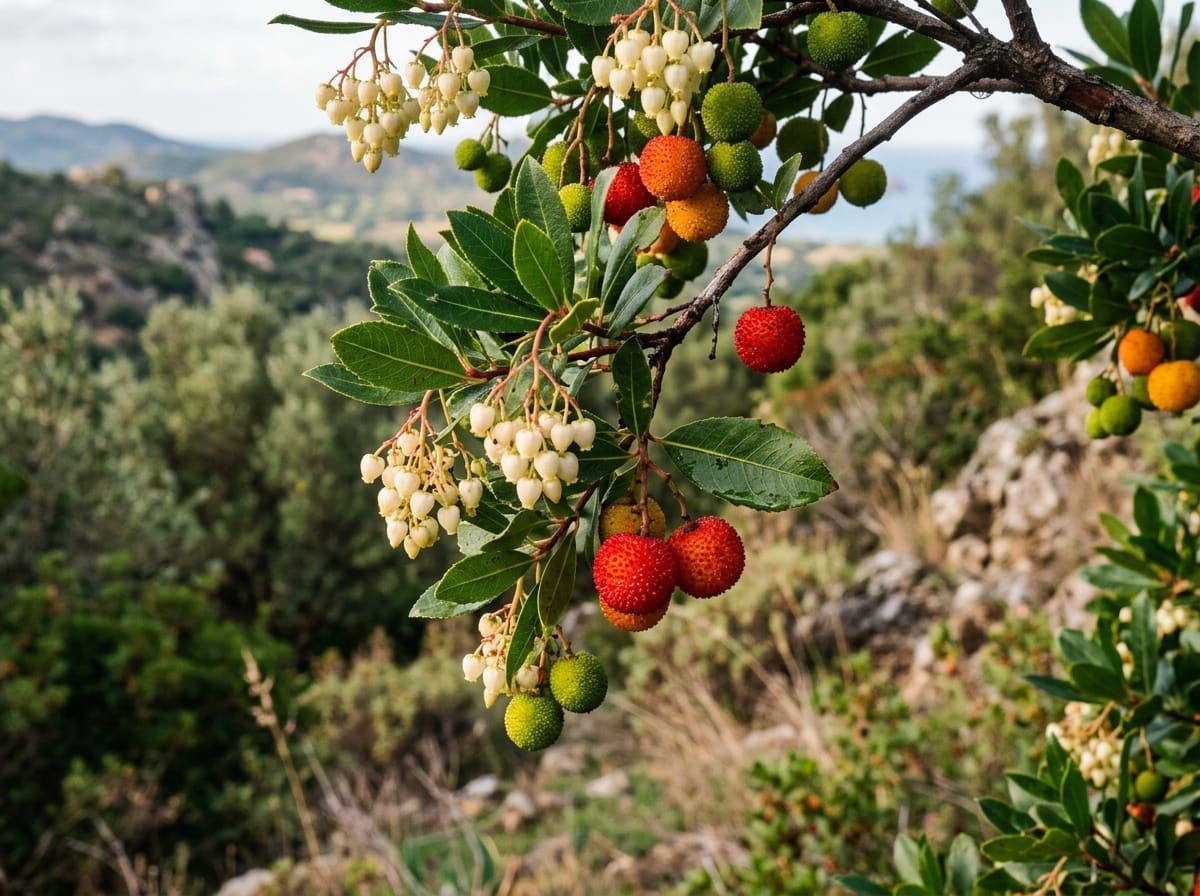
Strawberry treeArbutus unedo 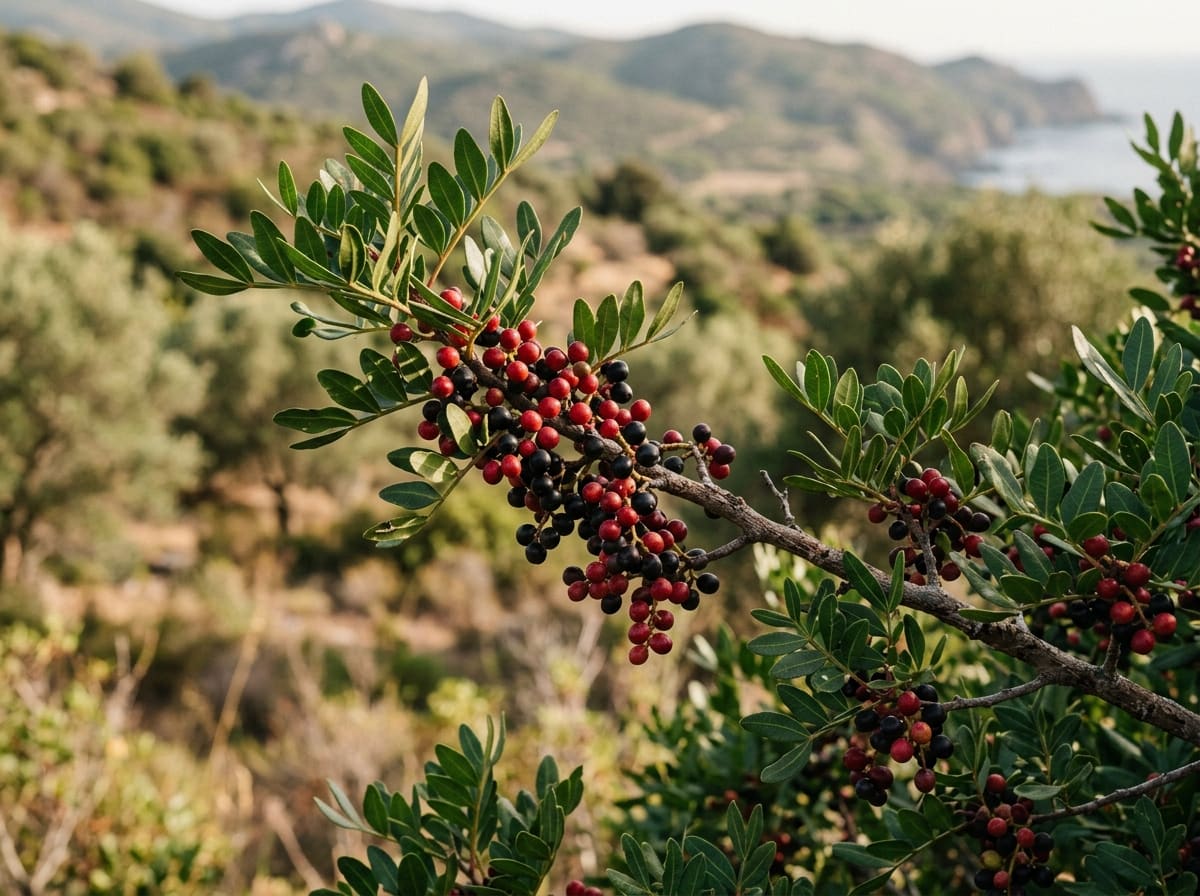
Mastic treePistacia lentiscus 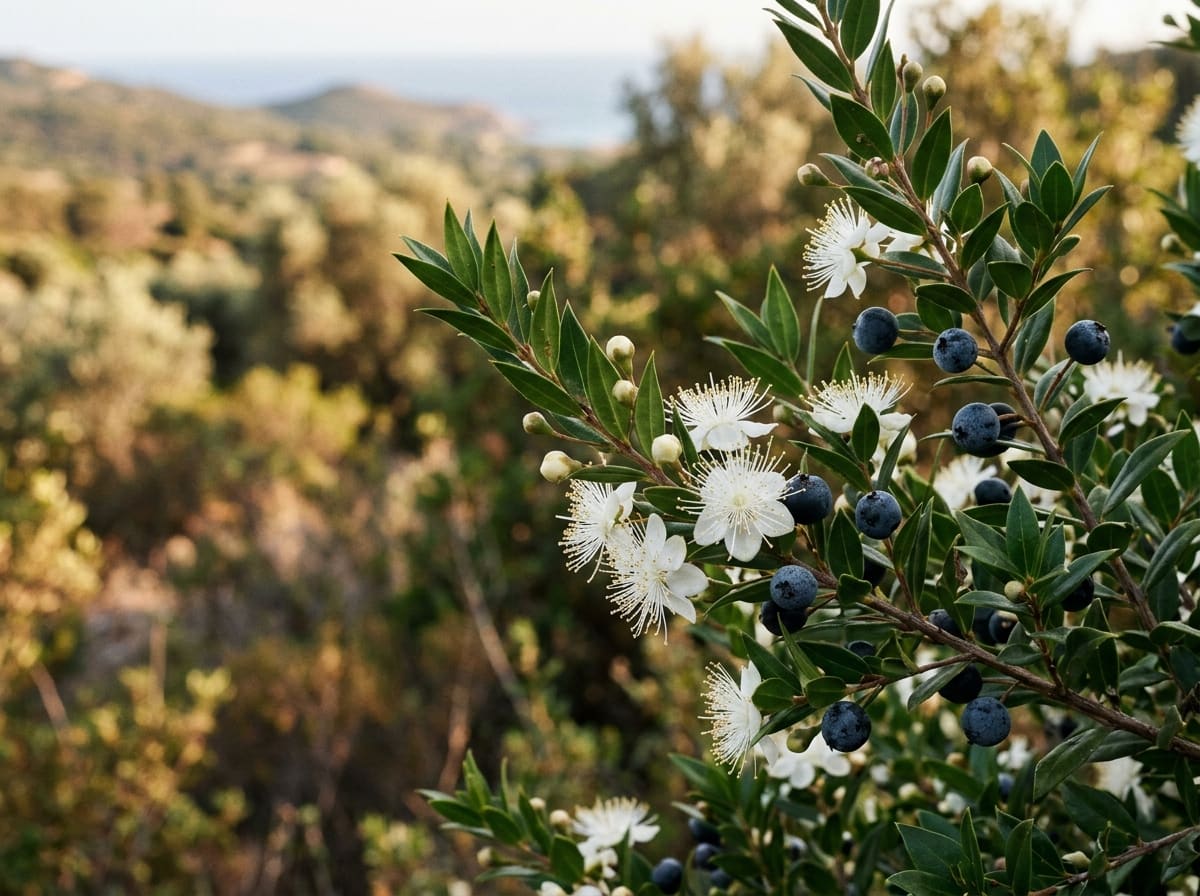
MyrtleMyrtus communis 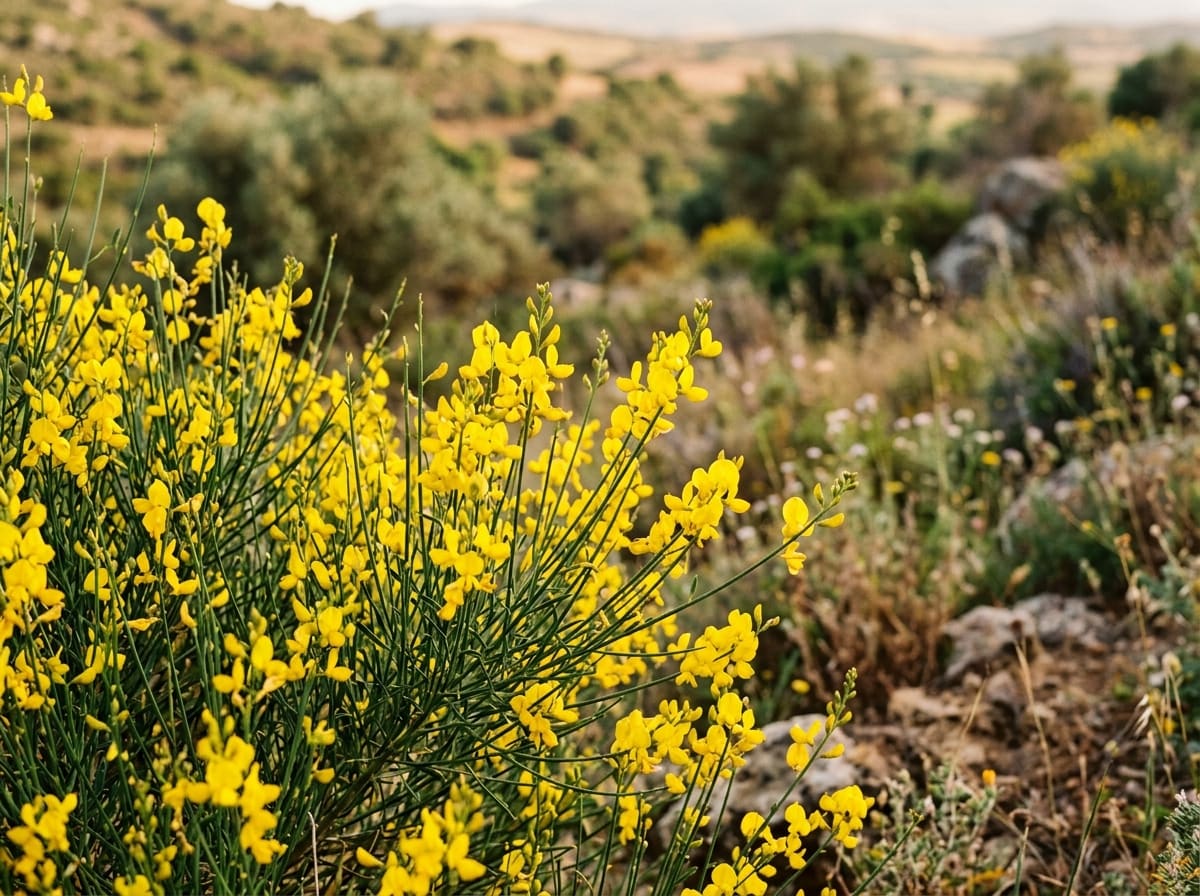
BroomSpartium junceum 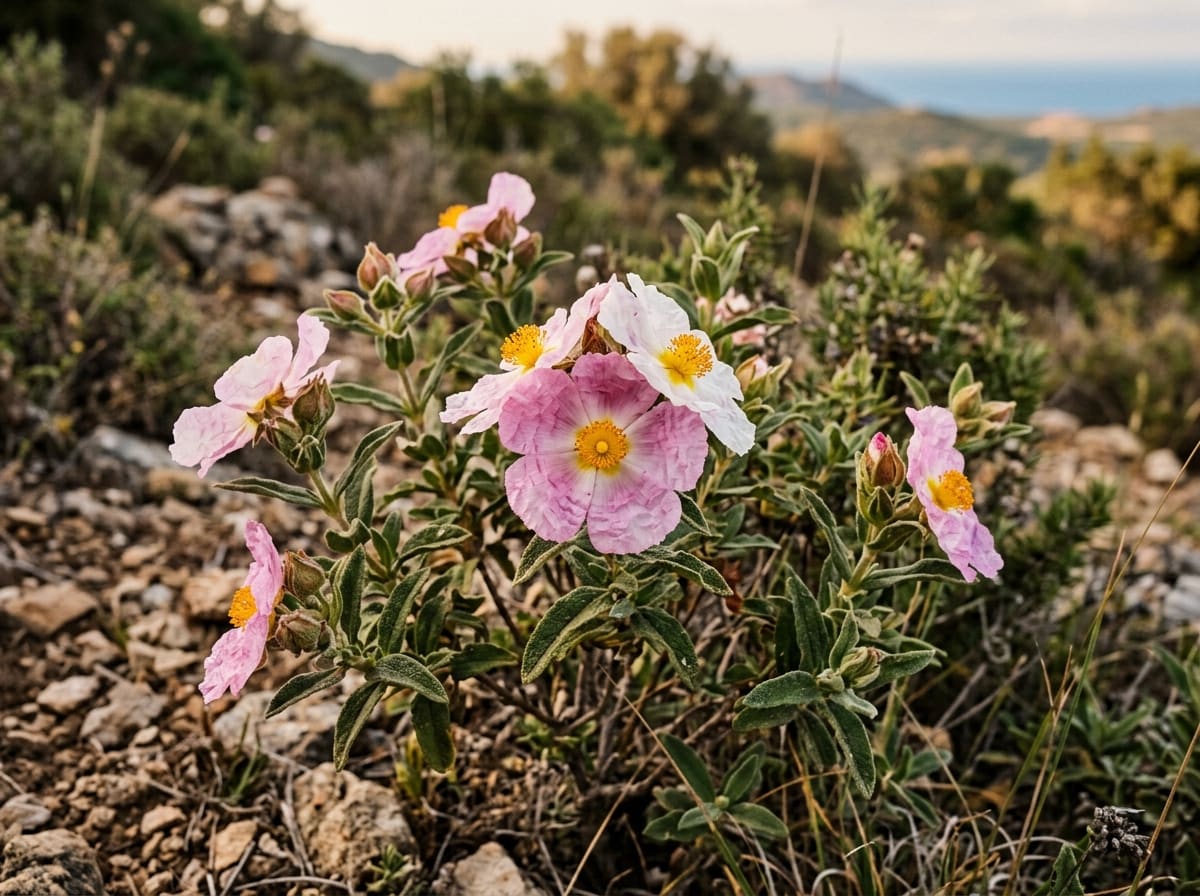
RockroseCistus


Frequently asked
What is maquis, or macchia?
Maquis, in Italian macchia, is the dense evergreen shrubland characteristic of the Mediterranean. Its plants have hard, small, often leathery leaves that lose little water, an adaptation to hot dry summers. Heights range roughly from half a metre to four metres. Where tree-form species dominate it is called high macchia; where it stays low and patchy on shallow stony ground it becomes garrigue, in Italian gariga, a more degraded stage.
Is maquis natural vegetation or a sign of damage?
Both, and that is the point. Much Mediterranean maquis stands where oak woodland once stood and was lost to fire, grazing and cultivation. In that sense it is a stage of degradation. At the same time it protects the thin soil that remains, holds water in the system, and is itself rich in species. Left undisturbed it can carry succession back toward woodland. It is damage and repair in the same plant community.
Related terms


Mentioned in
See this in practice
Sources
- Regione Autonoma della Sardegna, SIRA portal, section on vegetation and fauna
- Council Directive 92/43/EEC, Annex I habitat types 5210, 5330 and 9320; Interpretation Manual EUR 28 (2013)
- Regione Autonoma della Sardegna, I Paesaggi Forestali della Sardegna, CORINE biotope classification
- Segretariato Regionale MiC per la Sardegna, Atlante dei Paesaggi della Sardegna, macro-unit Ogliastra
Last updated: 2026-10-01